Emails are supposed to fail
📬 Engagement Emails Aren’t Supposed to Perform, they’re supposed to just engage, Don’t chase organic and forget your creative engine, and more!
Welcome to a space where every edition delivers insights, strategies, and inspiration to fuel your advertising brilliance. 🤯
📬 Engagement Emails Aren’t Supposed to Perform
If your engagement emails don’t drive huge revenue days, that doesn’t mean they’re failing.
It means you’re finally playing the long game.
Most brands send one value-driven email, see revenue dip, and immediately revert back to “20% off” mode. But engagement emails are not built to convert instantly. They’re built to train behavior.
And behavior is what compounds.
When someone opens your emails every week because they actually want what’s inside, you’re building something most brands never achieve: attention that doesn’t need a discount to activate.
Over time, that shows up as:
More consistent opens, Longer subscriber lifespan, Higher quality clicks, Stronger first-party data
None of that looks sexy in a weekly dashboard. But give it six months and the difference is obvious.
Where Most Brands Miss It
They obsess over what happens after the click.
Landing page tweaks. Funnel optimization. Button color tests.
All important.
But very few monitor what’s shaping brand perception before someone even joins the list. Conversations are happening inside videos. Creators are mentioning products without tagging. Sentiment is building long before it hits comments.
That’s why smarter teams are layering in video-first listening tools like Syncly Social to catch spoken and untagged brand mentions across TikTok, Instagram, and YouTube before narrative momentum shifts against them.
You can book a call today and see exactly what Syncly Social would uncover for your brand.
The Real Point
Engagement emails are not about this week’s spike. They’re about building: Habit Trust Predictability. And predictable attention is one of the most underrated growth assets in ecommerce. Short-term dips scare reactive brands. Long-term compounding rewards patients.
Together with Modash
The Creator Strategy That Finally Scales
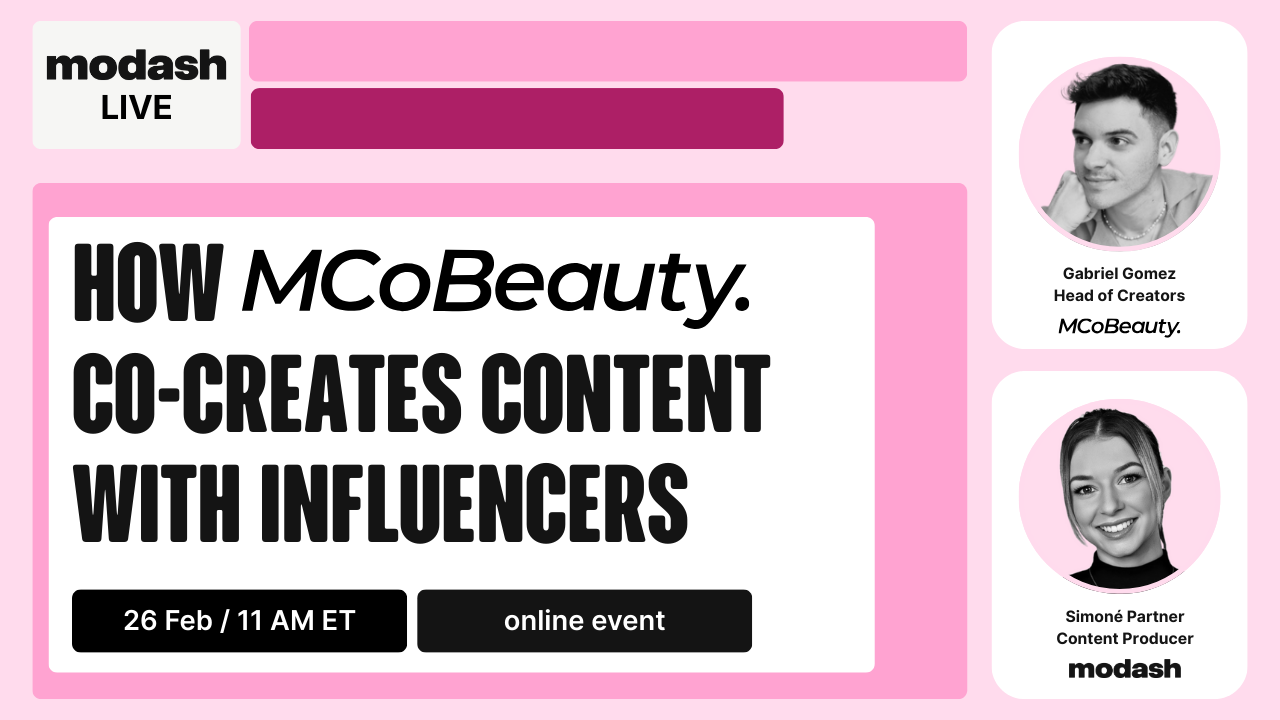
Ever wonder how some teams ship endless creator content without studio budgets or production chaos?
It’s rarely bigger teams. It’s co-creation done right.
Most brands rely on standard sponsored posts. One brief. One deliverable. One spike in performance. Then it stalls. That constant reset drains time, budget, and momentum.
Modash is hosting Gabriel Gomez, Head of Social and Creators at MCoBeauty, for a behind-the-scenes breakdown of the exact system they use to scale creator output without burning out their team.
In this session, you’ll learn:
- When co-creation beats a standard sponsored post, and why it compounds
- How MCoBeauty selects creators who can actually co-create at scale
- The low-lift production workflow that increases output without adding headcount
- How top teams measure co-creation performance beyond surface metrics
By the end, you’ll see how a clear co-creation model unlocks stronger performance and a creator pipeline that stays full.
No Hollywood crew required. Just a repeatable process that scales.
Can’t make it live? Register anyway, and we’ll send you the replay
⚡Don’t chase organic and forget your creative engine
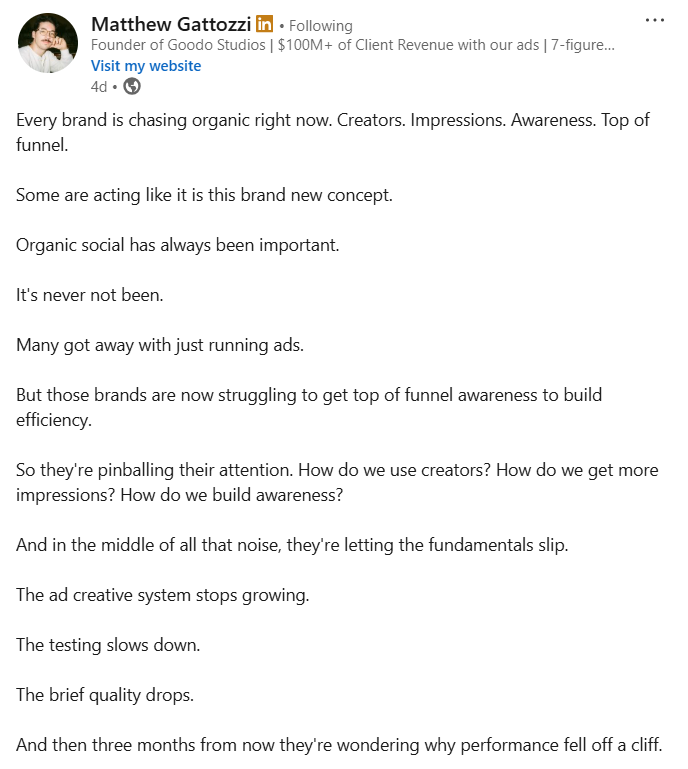
Right now, every brand is sprinting toward organic, creators, impressions, and awareness. As if it just got invented. Organic has always mattered. The difference is that some brands relied only on paid for years, and now that efficiency is tightening, they are scrambling for top of funnel oxygen.
Why it works: Layering organic and creators on top of a strong ad system expands reach without breaking performance. When your creative testing machine is still running, new channels simply feed it better insights and warmer audiences. Paid and organic compound each other when the fundamentals stay tight.
Where it needs balance: If you shift all attention to awareness and let testing, briefs, and iteration slow down, performance quietly decays. Organic does not replace a structured creative engine. The winners will be the brands that keep their ad system sharp while expanding into creators and content, not abandoning one for the other.
🎥 Reel of the Day
What Works:
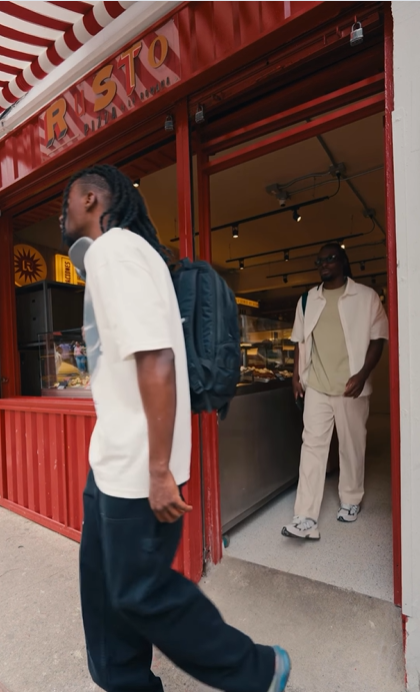
1. Repetition makes it addictive - Same doorway, same walk, same frame. Only the outfits change. That predictability makes your brain stay for the switch. It boosts completion rate and rewatches without feeling forced.
2. It sells lifestyle, not clothes - No pricing, no push. Just different weekend versions of the same guy. Gym, chill, clean neutrals. You see yourself in at least one look. That’s how saves and outfit inspiration happen.
3. “Weekend rotation” is identity bait - That caption is smart. Every guy has a mental rotation. It invites comparison without asking for it. People start ranking the fits in their head, which quietly drives comments.
This reel works because it’s effortless. Clean loop. Relatable concept. Zero hard sell. It feels like style confidence, not marketing. And that’s exactly why people watch it more than once.
🪩Events
⚡ When Good Enough Gets Expensive
March 10–11 | Virtual Event
If your site feels “fine” but conversions lag, speed might be quietly taxing your growth. At Cloudways Bootcamp, experts tear down real production websites live, exposing performance leaks from heavy scripts to Core Web Vitals failures and server gaps. Eight sessions, 20+ speakers, and 1,500+ operators focused on fixes you can implement immediately.
🎯 Trying to Break Into Creative Strategy?
Starts March 17 | Tuesdays at 1 PM EST | Virtual Bootcamp
Execution is common. Strategic thinking is rare. Motion’s free live 8-week program trains you through real sprints, real hooks, and real iteration so you graduate with proof you can design winning systems, not just produce ads.
Thanks for reading this edition! Keep pushing boundaries, testing ideas, and staying inspired. See you in the next edition with more ways to ignite your marketing success. 🥰