Ending the Meta Debate
🤌Motivators vs. Personas: the framework switch that changes how you ideate, Lo-Fi ads bypass ad detection and increase trust, and more!
Welcome to a space where every edition delivers insights, strategies, and inspiration to fuel your advertising brilliance. 🤯
🤌Motivators vs. Personas: The Framework Switch That Changes How You Ideate
Most creative briefs start with a fictional person. That person doesn’t tell you why anyone buys. Motivators do, and switching to them changes everything about how you build creativity.
Here’s how to actually do it.
Start by listing purchase moments, not audience traits
For any product, write out 4-5 specific situations where someone would decide to buy. Not “women 25-34 who care about wellness” but “I need something to wear to a holiday party that doesn’t look like I overthought it.”
Each one is a motivator. It describes a moment, a feeling, and a problem in the same breath.
Map one core benefit to each motivator
Once you have your motivators, assign a single product benefit that directly solves each one. Not multiple benefits, one. This forces the creative to stay focused. If the motivator is urgency-driven, the benefit should resolve the urgency. If it’s identity-driven, the benefit should reinforce that identity.
Build one ad per motivator
Each motivator becomes a separate creative brief. Different hook, different visual direction, different emotional angle. A motivator about fitting in calls for different copy than one about standing out, even if the product is identical. This is how you get five distinct ads from one product without inventing new audiences.
Use creator content to pressure-test each angle
Once you have your motivator-led creatives, run them through creator placements to see which emotional territory converts. If you’re whitelisting or running advertorials, Grapevine lets you distribute across creators so each angle hits the right feed without overlap. You can book a free strategy call for your first campaign strategy session - no commitment required.
Track which motivators drive action, not just clicks
Each creative angle will perform differently at different funnel stages. A “solve this now” motivator tends to drive faster conversions. An identity-based motivator builds longer consideration windows. Tag your creatives by motivator type so the data tells you which emotional entry points are worth scaling.
By the time you’ve built against four or five motivators, you have a full creative portfolio, different themes, different emotional registers, all for the same product. No format chaos, no creative fatigue, no brief that reads like a census form.
Write to the reason someone buys. Everything else follows.
Together with Omnisend
Email marketing that doesn't need your attention.
Email marketing doesn't need to take your breath away. Actually, it shouldn't. As a business owner, you have enough "exciting" stuff happening.
Let Omnisend be the reliable, stable, and effective platform you don't need to worry about.
- No guessing if that campaign pays off. Brands using Omnisend on average make $79 for every $1 spent.
- No need to learn anything new. It's a platform so intuitive, it's like you designed it.
- No unwanted adventures. Their support team is available 24/7 to help you.
Over 150,000 brands already trust Omnisend - and 69% of their revenue runs on autopilot through automations they set once, with 17.3% higher CTRs to show for it.
You're up and running in 30 minutes. Fully migrated in 5 days.
⚡Lo-Fi ads bypass ad detection and increase trust
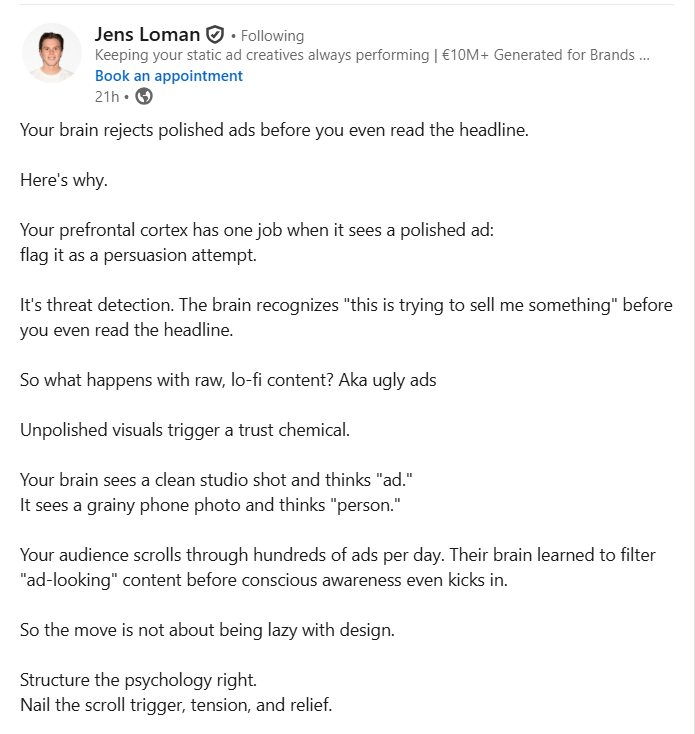
This idea suggests that overly polished ads trigger immediate resistance because they signal persuasion. In contrast, raw, lo-fi creatives feel more human and less like advertising. By mixing both formats, brands can reach audiences with different trust thresholds and attention filters.
Why it works: Consumers are conditioned to ignore “ad-looking” content. Lo-fi creatives blend into organic feeds and feel more authentic. This reduces resistance, increases attention, and improves engagement before conscious skepticism kicks in.
Where it needs balance: Lo-fi doesn’t automatically mean effective. Poor messaging or weak hooks still fail. Overusing “ugly” ads can also harm brand perception, especially for premium products that rely on a strong visual identity.
🚀 Reel of the Day
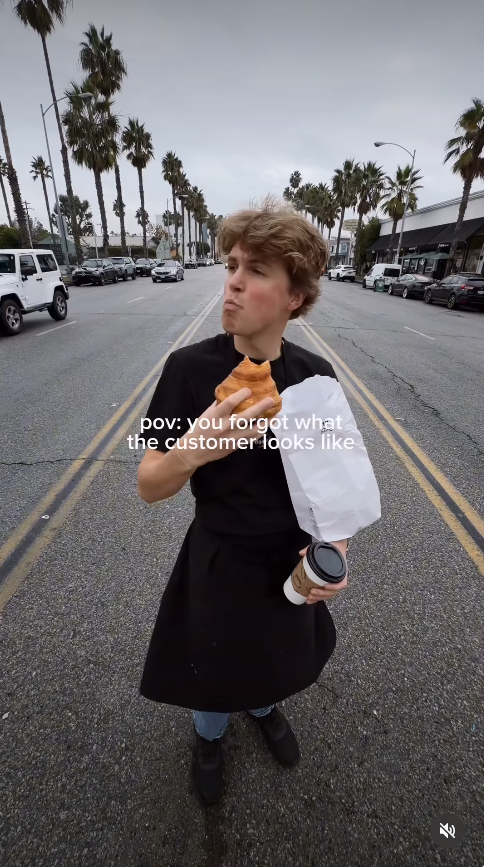
What Works:
1. Identity Trigger - This reel hooks viewers instantly by making them feel seen, not entertained, using a relatable POV that mirrors real work chaos and triggers strong self-recognition, driving comments, shares, and emotional engagement.
2. Hidden Tension - It taps into an unspoken frustration, mental overload during busy shifts, creating emotional relief through humor, which makes people comment, share, and feel connected to the experience.
3. Proof Marketing - Instead of directly promoting, it subtly signals high demand through chaos, making the brand feel popular and busy, which builds trust and desirability without feeling like an advertisement.
Turn everyday operational chaos into relatable POV content, escalate it beyond reality, and let the struggle subtly communicate demand instead of directly selling your product or business.
Thanks for reading this edition! Keep pushing boundaries, testing ideas, and staying inspired. See you in the next edition with more ways to ignite your marketing success. 🥰