Loyalty Erosion Mapping
🧯The retention leak that doesn’t show up in your dashboards, 5 evergreen ad formats that don’t die after one campaign, and more!
Welcome to a space where every edition delivers insights, strategies, and inspiration to fuel your advertising brilliance. 🤯
🧯 Loyalty Erosion Mapping
Brands think retention is a marketing problem. It often isn’t. The leak usually starts after checkout, when the experience quietly drops from “premium brand” to “generic shipment,” and customers subconsciously decide they won’t come back.
This is what Loyalty Erosion Mapping is for. It’s a simple diagnostic that shows you exactly where your brand promise breaks, and which break is costing you the second order.
Step 1: Map the “Trust Timeline,” Not the Funnel
The biggest mistake is looking at retention only through purchase dates. You want to map the emotional timeline instead, because that’s where loyalty gets damaged.
Start with the first 10 days after purchase and track the moments that shape confidence: order confirmation clarity, tracking visibility, delivery control, unboxing feel, and what happens if something goes wrong. If any one of those feels sloppy, the customer doesn’t complain, they just disappear.
Step 2: Score the 3 Silent Killers
You’re looking for three failure modes that reliably kill repeat behavior.
First is forgettability, where the box arrives like it came from a marketplace seller. Second is loss of control, where the customer can’t choose speed or adjust delivery expectations. Third is post-purchase silence, where emails stop at confirmation instead of building trust.
None of these show up in ROAS. They show up later as “why is repeat rate stuck?”
Step 3: Run the “Second Order Readiness” Test
Here’s the operator move. Pull 25 recent customers and ask one question internally: if they had to buy again today, would anything in the delivery experience make them hesitate?
If the answer is yes, you don’t need more campaigns. You need to fix the erosion point. The tradeoff is obvious, this work isn’t glamorous, but it compounds harder than another discount ladder ever will.
Step 4: Use Benchmarks, Not Opinions
This is where teams usually argue. Marketing blames ops. Ops blames carrier delays. Nobody ships a fix.
Shipfusion placed five real orders across leading clear protein brands and tracked everything after checkout, and what they found explains why repeat purchases quietly drop off: 0 brands used exterior or interior branding, only 40% offered more than one delivery speed, and most post-purchase emails stopped at confirmations instead of building trust.
Want to know how your brand stacks up? Download the DTC Delivery Files and audit your post-checkout experience today.
Even though the test case was protein, the pattern applies to any brand shipping physical products.
The Payoff
Loyalty erosion is expensive because it hides inside “normal operations.” Once you map it, you stop guessing why customers don’t return, and you start fixing the exact moment they lose confidence.
If you want, I can turn this into a one-page scorecard you can use to audit any brand in under 15 minutes.
Together with Insense
HACK: Get 20+ ad variations (per creator) to scale your Q1 ads effortlessly
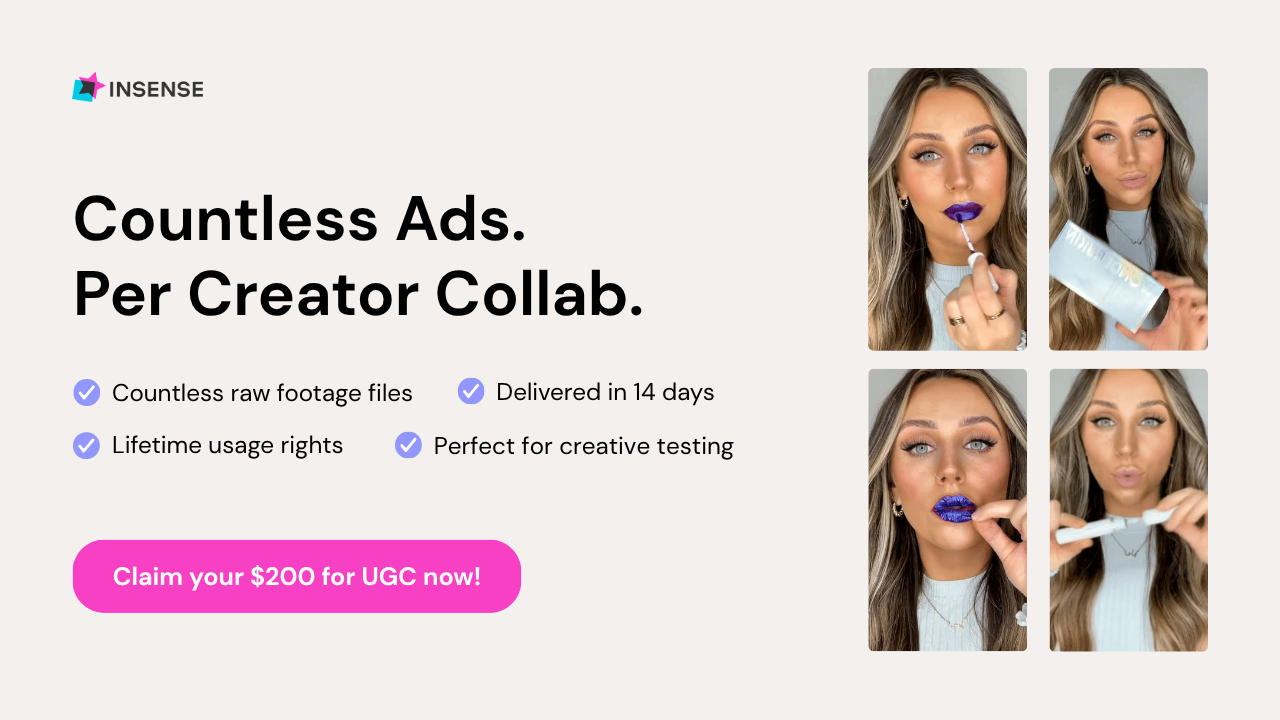
This is the quarter where brands start strong, then performance quietly slips as last quarter’s winners fatigue and CPMs rise again. Doing nothing means wasting January and February spend on creatives that’re already tapped out
This is exactly where Insense saves you. You get fast, affordable UGC at the volume Q1 demands without blowing up your team’s bandwidth.
- 20+ raw assets from each creator you can spin into dozens of variations.
- 14-day turnaround so you never fall behind rising CPMs.
- Lifetime usage rights, so every winning cut keeps earning for months.
- Cost-efficient sourcing that lets you test aggressively
Over 2,000+ brands like Quip, Revolut, and Matys use Insense for one reason: it keeps creative supply high when everything else slows down.
Imagine finishing Q1 with a full folder of fresh ads ready to deploy instead of praying old winners magically revive.
Book a free strategy call by Jan 30th and get $200 for your first campaign.
⚡ 5 Evergreen Ad Formats That Don’t Die After One Campaign
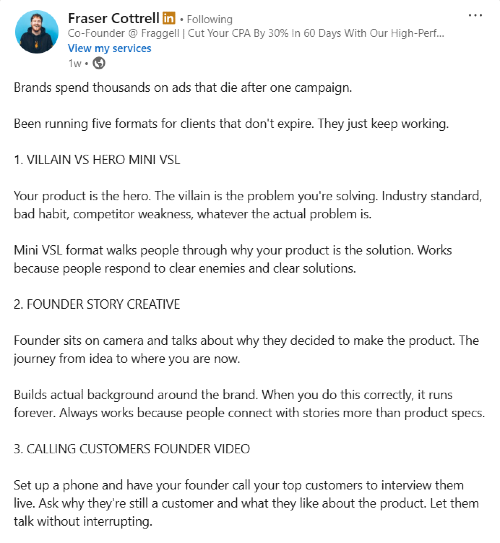
A lot of brands keep paying for “new ads” that only work for two weeks, then fall off a cliff. These five formats are different. They’re built on human psychology, not trends, which is why they can keep running long after the first campaign ends.
Why it works - Each format taps into a timeless trigger. Villain vs Hero gives the brain a clear enemy and a clear solution. Founder story builds trust and meaning beyond specs. Customer call videos feel real because they are real. Evergreen offer statics keep the same conversion lever alive while creatives refresh around it.
The real takeaway - Evergreen ads are not “one perfect video.” They’re repeatable containers that let you refresh angles without rebuilding from scratch. Pick one format, ship a clean version this week, and keep iterating inside the same structure until it becomes a long-term asset.
🎥 Reel of the Day

What Works:
1) Pattern interrupt + curiosity hook The escalator setup creates a hard pattern interrupt, instantly breaking scroll behavior. Your brain wants context and resolution. Caption supports it. This drives retention, rewatches, and algorithmic distribution.
2) Controversy framing to boost watch time - “People do anything for attention” is polarizing framing that triggers judgment, reactions, and comments. Even skeptics keep watching. That emotional tension increases watch time, fueling reach and repeat exposure.
3) Native ad delivery with low resistance - The product isn’t pushed, it’s revealed inside entertainment. That removes ad resistance and keeps it feeling organic. This is native content marketing that earns attention before selling.
This reel wins because it captures attention first, then converts attention into brand memory through repetition, identity cues, and effortless product placement. It’s viral storytelling disguised as streetwear marketing.
Thanks for reading this edition! Keep pushing boundaries, testing ideas, and staying inspired. See you in the next edition with more ways to ignite your marketing success. 🥰