Predict your ceiling and break it
📈 Since you'll hit the ceiling. The question is how hard, Not all traffic is equal. Optimize for intent, not volume, and more!
Welcome to a space where every edition delivers insights, strategies, and inspiration to fuel your advertising brilliance. 🤯
📈 You'll Hit The Ceiling. Question Is How Hard.
Every ad account has a natural efficiency ceiling. It's determined by how deep your creative portfolio is, how broad your addressable audience is, and how frequently your category converts. That ceiling exists whether you know about it or not. The moment spend crosses it, efficiency doesn't gradually decline. It drops fast enough to hurt.
The problem isn't scaling. It's scaling before the infrastructure is ready to hold the weight.
Reactive scaling is always more expensive than proactive scaling. Always.
What proactive scaling actually looks like.
Three questions need real answers before touching spend.
How many genuinely distinct narrative angles are running right now? Not variations of the same hook. Distinct angles with different emotional entry points and different reasons to buy. Fewer than five means the creative portfolio isn't deep enough to absorb a budget increase without frequency becoming a problem within four weeks.
What does the addressable audience actually look like at the next spend tier? Broad audiences behave differently at $50k a month than they do at $150k. If that hasn't been mapped before scaling, every decision made after is a guess.
Where is performance already showing early stress signals? Slight CTR drops, slight CPC increases, frequency ticking up on core ad sets. These are the accounts telling you the ceiling is closer than the ROAS number suggests. Most teams don't check until the number is already broken.
The infrastructure audit most accounts skip.
Scaling spend is a lagging decision. Creative depth, audience infrastructure, and stress signal monitoring are the leading decisions that determine whether the scale works or breaks. By the time CPAs climb, the damage is already done. You're now paying premium CPMs to diagnose a problem that was visible in the data three weeks earlier.
Galactic Fed audits your full channel setup, builds a competitor breakdown, and hands you a growth plan built from real spend data across 600-plus brands. Crowd Cow grew revenue 137% and customer acquisition 122% through this process. Real people reviewing your actual account before you get on a call. Reserve your session. 10 spots. No cost.
You don't find the ceiling by hitting it. You find it by looking for it first.
Together with Grapevine
📉 Consumers Are More Media-Savvy Than Ever. Here's What Still Converts.
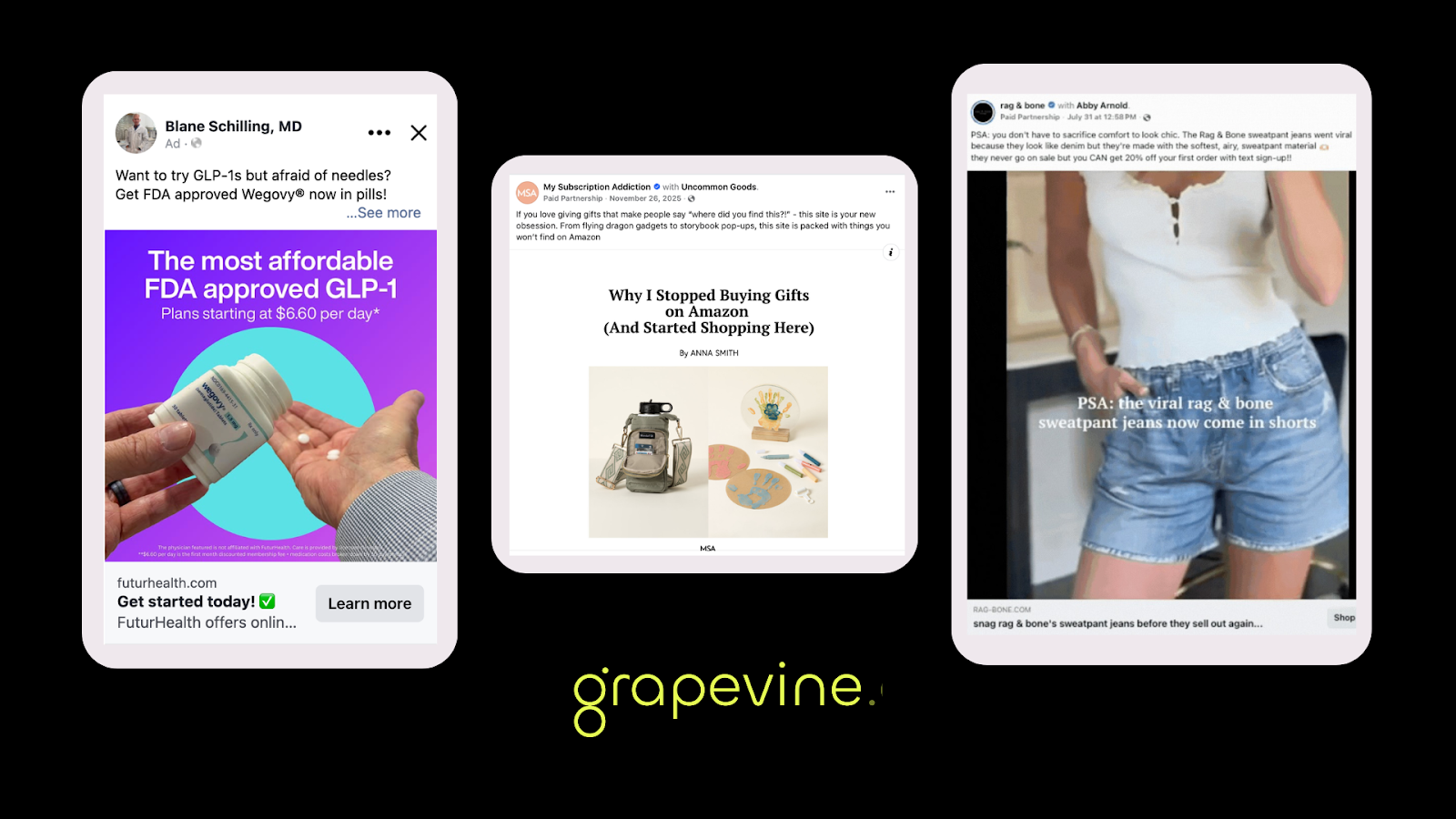
Today's buyer knows the difference between a brand speaking for itself and a credible voice speaking independently. Ads from branded handles are easy to discount.
A clinical pharmacist reviewing scrubs. A veterinarian recommending a supplement. A makeup artist breaking down an ingredient. That's harder to scroll past.
Grapevine works across some of the most trust-dependent categories - GLP-1s (Futurhealth), telehealth (Alloy), finserve (Better), and DTC (Fabletics, Particle for Men, Arrae) precisely because expert creator voice and publisher advertorial move audiences that branded creative can't.
- Just Food for Dogs scaled Grapevine assets from 15% to 45% of paid media in 6 months
- Madison Reed unlocked 20% efficiencies over Target CPA and 50% higher LTV
- Mathnasium cut Meta CPL by 33% in under 30 days
The brands winning right now are running both creator whitelisting and publisher advertorial whitelisting at the same shop, as one fully managed service.
No platform juggling. No separate agency relationships. Brief to launch, handled.
👉 Book a free strategy call for your first campaign strategy session - no commitment required.
⚡ Not all traffic is equal, optimize for intent not volume
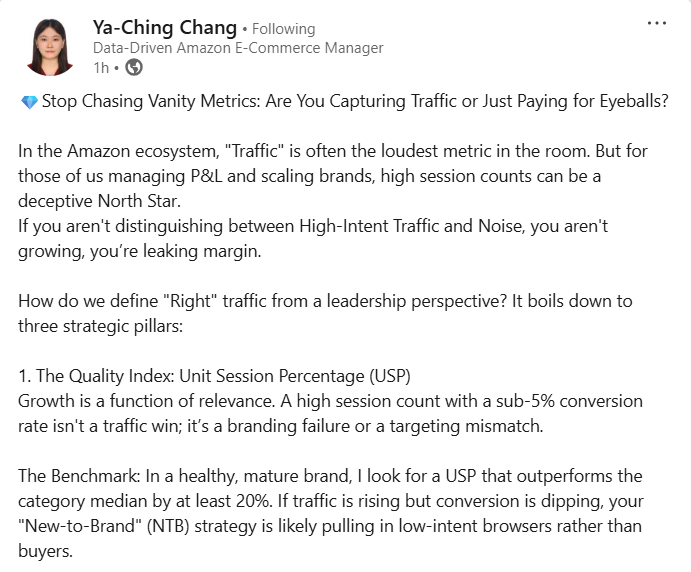
This post reframes traffic as a quality problem, not a volume goal. Instead of chasing sessions, it focuses on intent alignment through conversion rate, TACOS efficiency, and keyword relevance. The goal is to attract buyers, not browsers, so growth improves profitability rather than just scale.
Why it works: High intent traffic converts better and improves overall efficiency. Metrics like TACOS and USP reflect real business impact, not just activity. Aligning traffic with purchase intent strengthens both paid performance and organic growth loops.
Where it needs balance: Over-filtering traffic can limit discovery and long-term growth. Some low-intent traffic contributes to awareness and future conversions. Focusing only on high intent may reduce scale and new customer acquisition opportunities.
🚀 Reel of the Day
What Works:
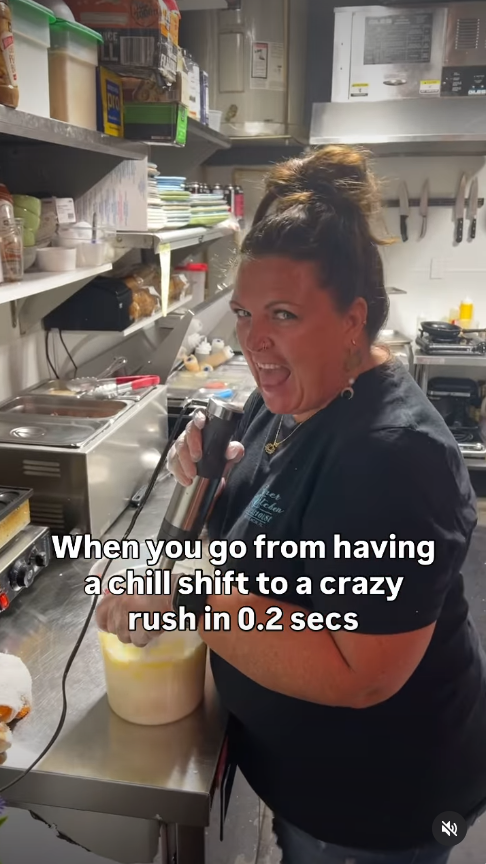
1. Workplace Cinema - This is not filmed like “content.” It feels like you just happened to witness a shift exploding in real time. That accidental, handheld, slightly messy energy makes it more believable, and believable always travels further than polished.
2. Demand Without Saying - This is the clever part. They never say, “we’re busy,” “we’re popular,” or “come visit us.” They just show the team getting swallowed by a rush, and your brain fills in the rest: this place must be good.
3. Emotional Compression - In a few seconds, they squeeze in peace, shock, humor, stress, teamwork, and survival mode. That emotional range makes the reel feel fuller than its runtime. Tiny video, big experience.
Do not just show that your business gets busy. Show the exact emotional whiplash of going from quiet to overwhelmed, because people relate to the feeling faster than they relate to the product.
Thanks for reading this edition! Keep pushing boundaries, testing ideas, and staying inspired. See you in the next edition with more ways to ignite your marketing success. 🥰