Reach doesn’t mean growth
🚀Scaling didn't break their meta performance. Bad signal did, Brand creative must trigger conversation, not just views, and more!
Welcome to a space where every edition delivers insights, strategies, and inspiration to fuel your advertising brilliance. 🤯
🚀 Reach doesn’t mean growth
The budget tripled. The results followed. Revenue didn't. Here's what actually happened.
The team had a campaign performing well at $500/day. CPA was strong. The logical move was to scale. They pushed to $1,500/day. Meta reported more conversions at a similar cost. The channel said it was working.
It wasn't.
What wasn't scaled was performance. It was reach. And with reach came impressions. And with impressions came 1-day view conversions, people who saw an ad, then converted through another channel entirely, with Meta claiming the credit.
At $500/day, view conversions were maybe 30% of reported results. Manageable. Uncomfortable, but manageable. At $1,500/day, that number crept past 55%. More than half of everything Meta was reporting was incidental. The algorithm found more people who were already going to buy. Then took a bow.
Nobody caught it because nobody was segmenting attribution windows. The campaign-level CPA looked identical whether a conversion came from a click or a view. Meta doesn't make that distinction obvious. It's buried. Most buyers never dig for it.
This is the mechanical reality of scaling on Meta that rarely gets explained clearly: view conversions don't scale proportionally; they inflate. More budget forces Meta into broader audiences.
Broader audiences mean more impressions on people with existing purchase intent. More impressions on in-market buyers means more incidental view attribution. The problem doesn't stay the same size. It grows faster than you spend.
The confirmation bias machine runs perfectly. Spend goes up. Reported conversions go up. CPA stays flat. Every signal inside the platform says keep going.
The only thing that tells the truth is blended revenue, and most buyers aren't watching that number on a short enough time horizon to catch the divergence before the budget review.
The fix, once they found it, was straightforward. Segment every campaign by 1-day click, 7-day click, and 1-day view. Identify which campaigns were click-heavy versus view-heavy. Reallocate toward click-dominant performance.
Watch blended revenue over the following two to four weeks, not Meta's reported figures.
Revenue did not move dramatically at first. But it moved in a way it hadn't when spend was higher.
The lesson isn't that scaling is bad. It's that scaling amplifies whatever signal you're feeding the algorithm. Clean signal scales well. Polluted signal scales into noise, expensive, convincing, dashboard-friendly noise.
Before you touch the budget, know what you're scaling.
Together with Modash
📊 Most Affiliate Programs Fail Because Brands Skip These Steps
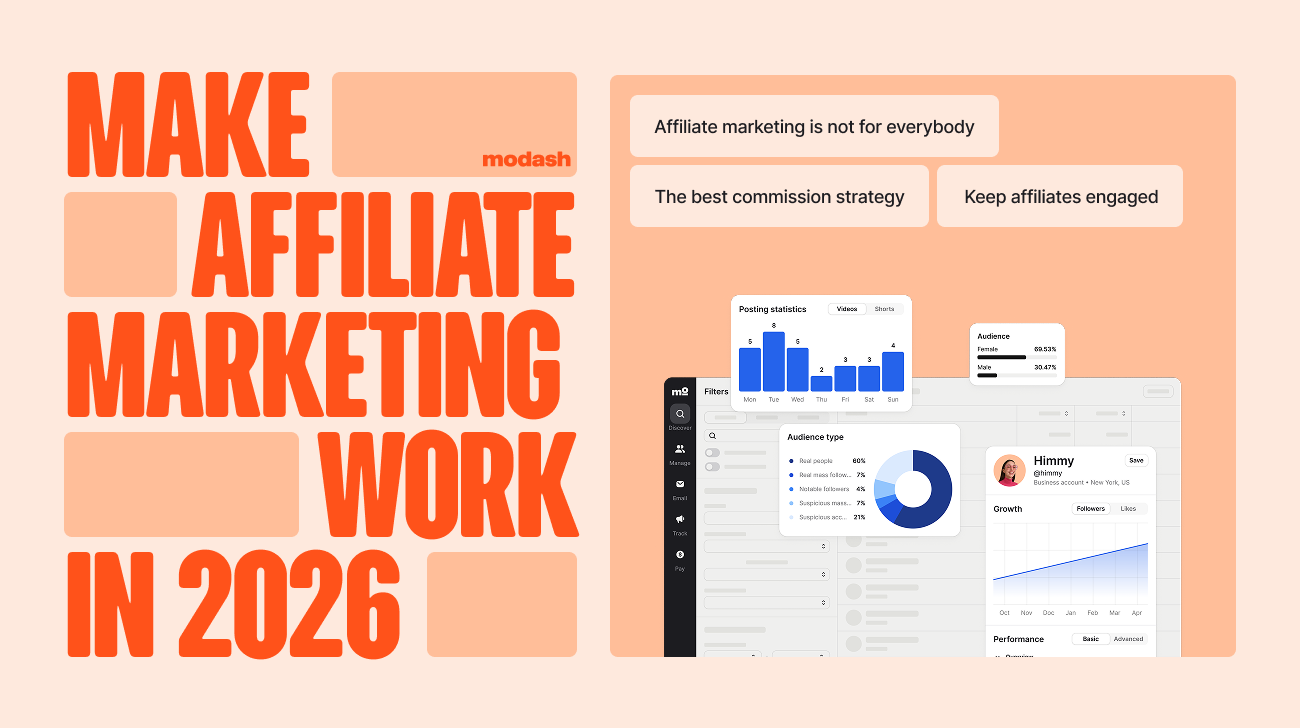
You set commission rates. You recruit a few creators. You wait for sales to roll in. They don’t.
Affiliate marketing isn’t passive revenue. It’s a growth channel that only works when the structure behind it is built correctly.
Most brands treat it like a side experiment. The successful ones design it to compound.
Modash just published the complete A-Z guide to building an affiliate program that won’t flop.
Inside, you’ll learn:
- How to set commission and discount rates using real AOV and margin math
- How to recruit affiliates who drive repeat revenue, not one-off spikes
- How to structure tiers, codes, and tracking so attribution and motivation hold
It includes real commission benchmarks by industry and step-by-step frameworks used by 7 and 8-figure brands.
If you’re building affiliate as a real growth channel in 2026?
⚡ Brand creative must trigger conversation, not just views
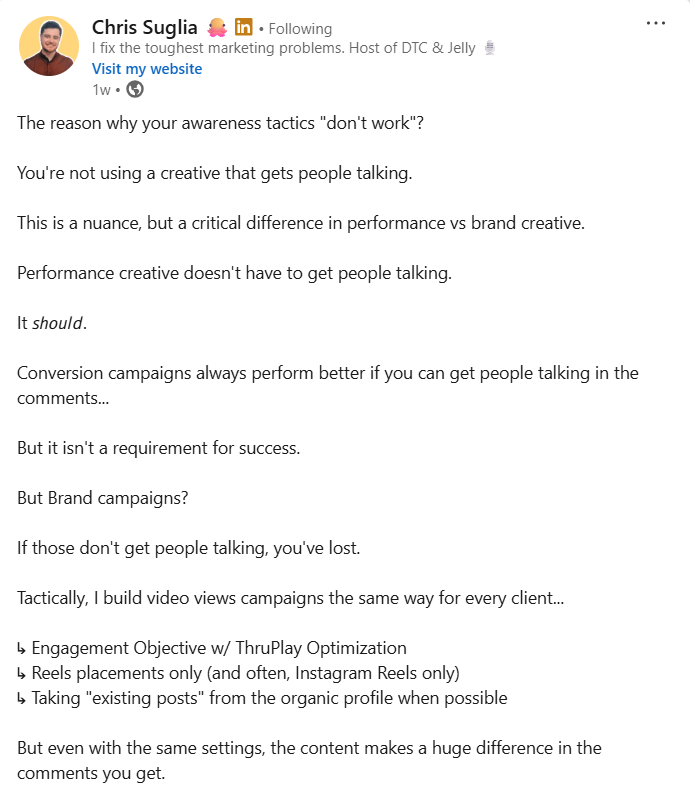
This strategy argues that awareness campaigns should be designed to provoke discussion, not just passive consumption. While performance ads can succeed without comments, brand campaigns depend on interaction to strengthen memory and recognition.
Why it works: Active participation strengthens memory encoding. When viewers comment, they process the message more deeply and attach personal context. Conversation also amplifies reach through platform engagement signals and social proof among similar audiences.
Where it needs balance: Not all effective brand ads generate comments. Some categories or audiences engage silently. Over-optimising for conversation can distort creative strategy and favor controversy or bait rather than meaningful brand positioning.
Together with Norton Neo
Trust-First AI Built Directly Into Your Browser
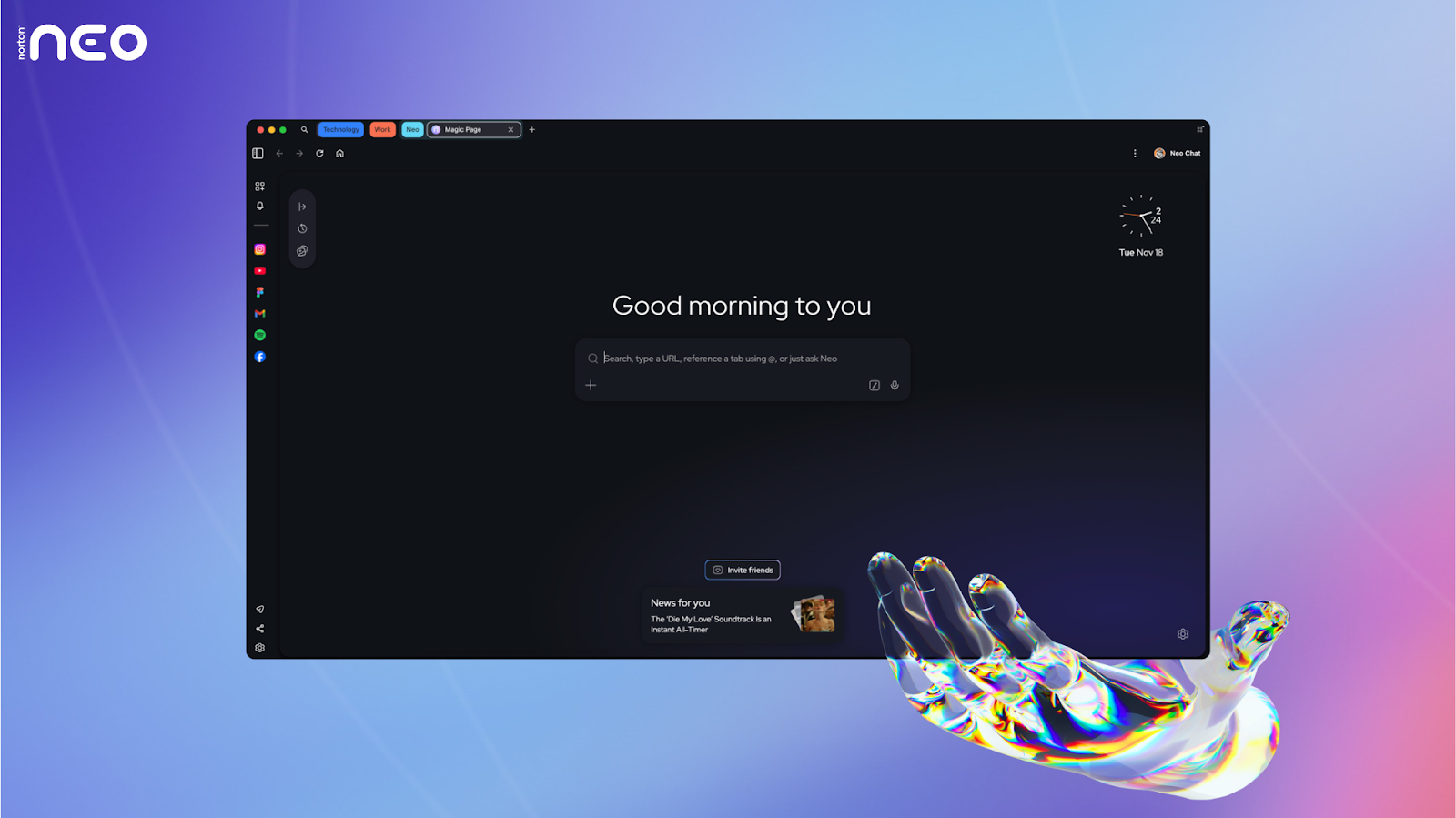
Most AI tools sit on top of your browser. Norton Neo builds AI directly into it.
Norton Neo is the world’s first AI-native browser designed for speed, clarity, and privacy from the ground up.
You browse, search, stream, shop, and work as usual, but with AI that organizes your tabs, adapts to how you work, and helps you move without constant prompting.
- Chats and browsing history remain local, ensuring your data stays private.
- You choose what Neo remembers, or turn memory off anytime.
- Norton Web Shield blocks malicious sites and phishing before you click.
No extra extensions stacking up. No AI tools floating in separate tabs. Just a browser built for how people actually use the web today.
If you want early access to what’s coming next, join the Norton Neo Discord and connect directly with the team building it.
🎥 Reel of the Day
What Works:
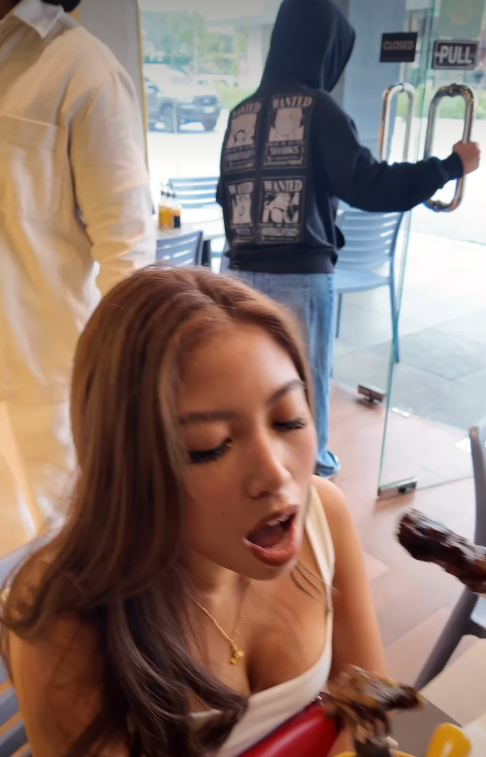
1. The “Time Freeze” Hook - The reel opens by breaking reality instantly. A girl grabs her drink, runs out, music starts, and suddenly the entire restaurant freezes. That confusion creates pattern interruption and immediately stabilizes the retention curve.
2. Every Frozen Customer Becomes a Mini Story - Instead of relying on one gimmick, the creator turns every frozen customer into a small narrative moment. Fork swaps, menu redirections, and sauce additions. Those micro stories keep curiosity alive throughout.
3. The Restaurant Quietly Becomes the Hero - While viewers focus on the time-freeze illusion, the camera quietly tours the restaurant. Tables, food, sauces, customers, and lighting. It becomes subtle environmental storytelling that builds perceived value and removes visit hesitation.
Build a curiosity-driven moment first, then let the product live naturally inside the story. When storytelling carries the narrative, engagement rises, and brand recall happens without the audience feeling advertised to.
Thanks for reading this edition! Keep pushing boundaries, testing ideas, and staying inspired. See you in the next edition with more ways to ignite your marketing success. 🥰