Rewrite your funnels
⚡️ Demand gen isn’t a new traffic source, Live video ads are not for boosting, and more!
Welcome to a space where every edition delivers insights, strategies, and inspiration to fuel your advertising brilliance. 🤯
⚡️Rewrite your funnels
Demand Gen isn’t a new traffic source.
It’s the layer that shapes how everything else performs.
When it’s wired correctly, Search converts cleaner. PMax monetizes warmer users. Branded queries rise without aggressive bidding. When it’s wired poorly, it becomes another line item that produces clicks but doesn’t influence revenue.
The difference lies in architecture.
Demand Gen now runs across YouTube Shorts, Discover, Gmail, and in-market signals. It overlaps with Search and PMax by design. If you evaluate it in isolation, you’ll misread its contribution.
The real leverage comes from how you feed and measure it.
Where Demand Gen Actually Wins
Signal architecture.
If you optimize for raw leads, you’ll scale raw leads. Feeding CRM-qualified stages, offline revenue imports, or high-LTV users changes who the algorithm looks for. The system mirrors what you reward.
Creative sequencing.
Targeting is abstracted. Creative carries the weight. Problem-aware, solution-aware, and product-aware assets should exist simultaneously so the system can gain exposure. Forcing every asset to convert compresses learning.
Audience inputs.
Audience lists don’t limit reach; they guide optimization. High-intent seeds, such as SQLs or repeat buyers, accelerate learning. Broad affinity layers can inflate reach but dilute clarity if you’re not intentionally testing awareness.
Outcome-based measurement.
Clicks move early. Revenue moves later. If you’re not importing enhanced conversions, GA4-qualified events, or offline outcomes, the system optimizes to shallow behavior. It can only learn from what you feed it.
This is also where visibility beyond Google Ads matters. If Demand Gen is truly warming intent, you should see movement in branded search, competitive visibility, and AI search mentions.
Platforms like Semrush One help track performance across traditional search and AI-driven discovery while tying visibility back to revenue impact. You can try free for 7 days.
What changes the game in 2026 is how interconnected everything is.
Demand Gen should influence search conversion rates. It should affect branded query volume. It should make PMax more efficient over time. If those relationships don’t tighten, the campaign is running in isolation.
The accounts that get this right stop treating Demand Gen as a separate experiment.
They define clear roles:
Demand Gen warms intent. Search captures it. PMax monetizes it.
When those roles are aligned, Demand Gen stops being top-of-funnel spend. It becomes pipeline infrastructure.
Together with Modash
Influencer Risk Is Changing Faster Than Budgets
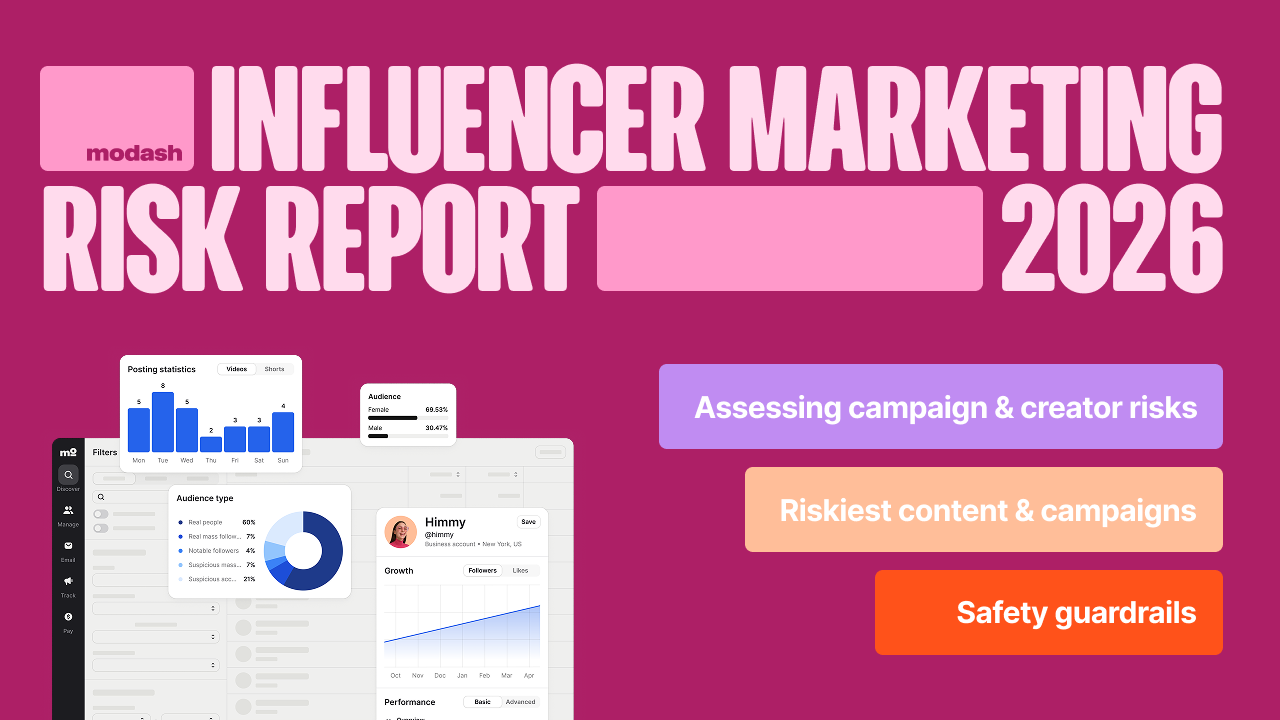
Spending money is part of marketing. But when it comes to influencers, it often means betting on variables you can’t fully control: will the algorithm push the content? Will the audience engage? And more importantly, will they buy?
Modash’s latest influencer marketing study, marketers need a 30% budget increase to feel safe experimenting, but only a 24% cut to shut risk-taking down entirely.
Influencer risk isn’t about confidence. It’s about how fragile experimentation becomes under pressure.
Inside the report, Modash breaks down the decisions marketers are struggling with right now:
- What actually happens to experimentation when KPIs rise faster than budgets?
- At what point does a “smart test” quietly turn into a reputational risk?
- How are top teams protecting upside when one bad collab can kill future spend?
Access the full report for free here (non-gated).
⚡Live video ads are not for “boosting.”
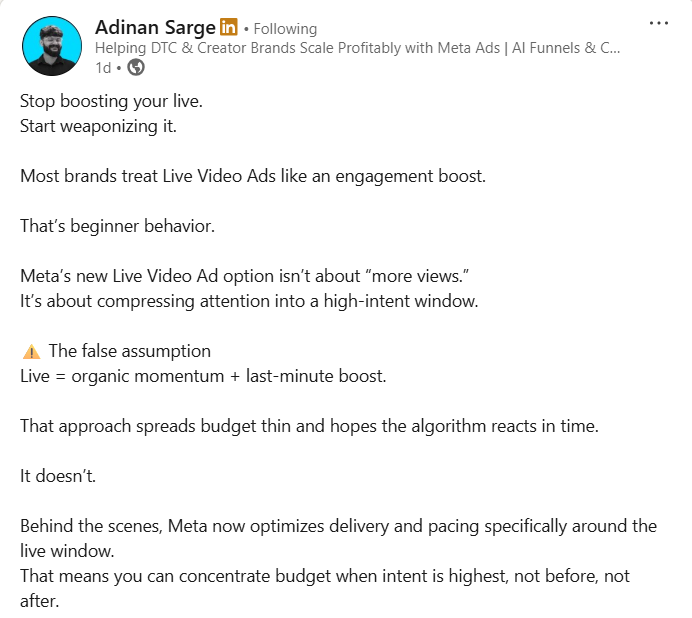
Going live and throwing budget at it last minute feels productive, but it’s usually scattered. Live Video Ads aren’t about chasing extra views. They’re about concentrating attention into a short window when intent is naturally higher and signals are strongest.
Why it works: When structured properly, delivery tightens around the live window. Early view velocity increases, comment activity clusters fast, and retargeting pools build within hours. That signal spike strengthens short-term conversions and feeds stronger data back into your broader campaigns.
The real takeaway: The live itself isn’t the asset, the momentum is. Pre-warm audiences, focus spend during the event, then retarget immediately while attention is still fresh. Used casually, live is just content. Used intentionally, it becomes a controlled demand surge.
🎥 Reel of the Day

What Works:
1. It weaponizes tension as the hook - You think it’s road rage. That instant conflict spikes emotion, boosts retention, and strengthens the first three-second hook performance.
2. The coffee throw creates curiosity - When he throws it, you expect escalation. The surprise product reveal increases watch time, replays, and memorability.
3. The emotional flip drives sharers - Anger suddenly turns into promotion. That unexpected shift sparks comments and fuels organic reach.
This works because it doesn’t “advertise.” It hijacks a relatable human moment, builds tension, then converts that attention into brand memory. Conflict earns the watch. Surprise sells the latte.
Thanks for reading this edition! Keep pushing boundaries, testing ideas, and staying inspired. See you in the next edition with more ways to ignite your marketing success. 🥰