Right Answers Don’t Create Demand
😎 Your best feedback can come from the wrong audience, Is TikTok Shop Actually Profitable for Brands, and more!
Welcome to a space where every edition delivers insights, strategies, and inspiration to fuel your advertising brilliance. 🤯
Together with Insense
HACK: Get 20+ ad variations (per creator) to scale your Q5 ads effortlessly
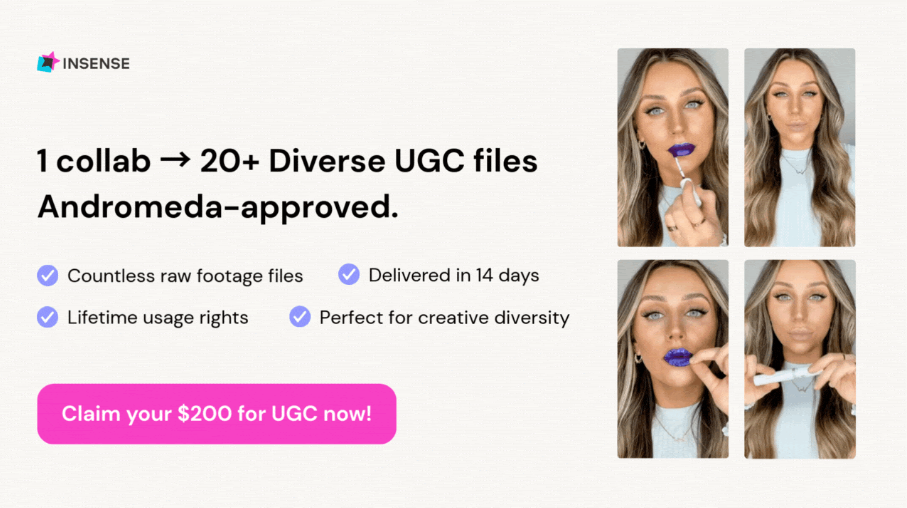
With Black Friday behind us, it’s officially the scramble phase, the part of Q5 where performance depends entirely on how quickly you can ship fresh creatives.
There’s still time to source fresh content - and Insense makes UGC ads insanely cost-effective.
With Insense, each collab gives you a full bank of raw footage you can mix, match, and turn into multiple scroll-stopping ads. One creator can fuel an entire round of Q5 testing without draining your team’s bandwidth.
- 20+ raw assets per creator you can spin into countless variations.
- Fast 14-day turnaround so you stay ahead of Q5 spend.
- Lifetime usage rights, so every winning asset keeps paying off.
That’s how over 2000+ brands like Beauty Pie, Bones Coffee, Flo Health, and Chomps scale UGC without killing team bandwidth.
Cost-effective UGC with lifetime usage rights? Yes please!!
Book a free strategy call by December 12th and get $200 for your first campaign!
😎Right Answers Don’t Create Demand
There is a specific kind of failure that never looks like failure while it is happening.
The product is exceptional. The sourcing is correct.
The details are obsessive. The feedback from “people who know” is glowing.
And yet, month by month, the business tightens instead of loosening. Growth stalls. Ads get harder. CAC creeps up. Eventually, the brand disappears quietly, without scandal or drama.
This is not a marketing failure. It is a customer selection error. Most brands do not die because they are bad. They die because they built themselves around the wrong audience first.
The seduction of the people who know too much
Every category has a small group of people who care deeply. Sometimes obsessively.
They read labels. They compare specs. They notice details that no normal buyer would ever see. They are generous with feedback and ruthless with criticism. When they approve of something, it feels like validation.
Founders love these people because they feel like peers.
They speak the same language. They care about the same details. The problem is not that they are wrong. The problem is that they are rare.
A brand can feel “respected” long before it is actually wanted.
The quiet majority you accidentally intimidate
Outside that expert bubble sits a much larger group. These people are not ignorant. They are busy.
They want outcomes, not explanations. They want confidence, not credentials.
They want to feel smart for choosing, not tested for choosing.
When messaging is built for purists, this group feels friction immediately. The language feels heavy. The decisions feel stressful. The product feels like work.
They do not complain. They simply leave. And because they leave silently, founders often assume the solution is more education, more detail, more precision. The exact thing that drove them away in the first place.
The brands that escape this trap make the same pivot
They stop trying to prove how good they are.
Instead, they ask a harder question:
“How do we let normal people succeed with this, immediately?”
This does not mean lowering standards. It means hiding complexity behind ease.
The best operators do this instinctively: They keep the expert backbone but change the surface language.
They translate craft into reassurance. They remove cognitive effort without removing quality. They design for confidence, not admiration.
The product remains serious. The experience becomes light.
The uncomfortable truth is that founders learn late
Applause does not pay invoices. Respect does not scale distribution. Being impressive is not the same as being chosen.
Most brands fail while being technically correct.
The ones that survive make a different trade. They choose to be understood before they choose to be admired. They let the experts recognize the depth quietly, while the majority feel invited, not examined.
In the end, survival does not belong to the brand with the most refined taste.
It belongs to the brand that made the most people feel capable of choosing it and that decision, more than any ad or algorithm, decides who stays alive.
⚡ Is TikTok Shop Actually Profitable for Brands?
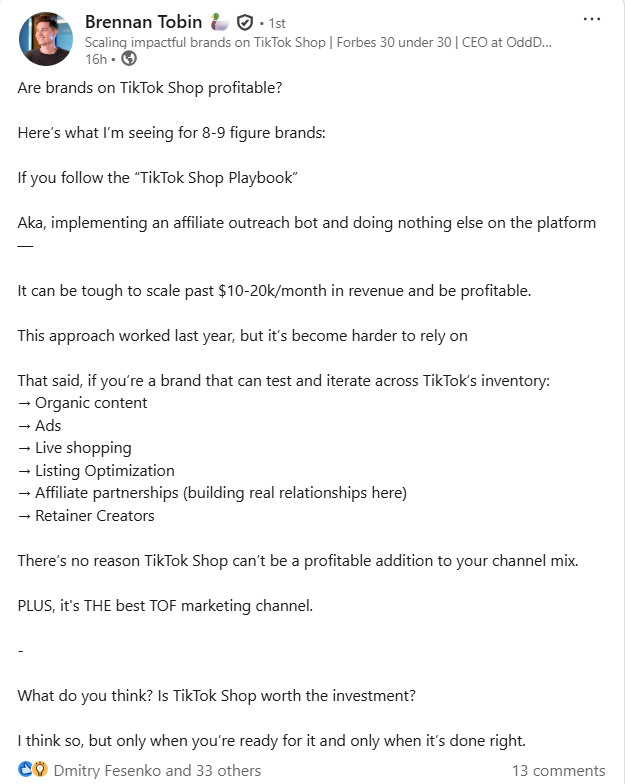
TikTok Shop can make money, but not if you treat it like a shortcut. Brands running only affiliate bots often stall at $10–20k a month and struggle with margins. The ones seeing real results treat TikTok Shop like a real channel, not a hack.
Why it works: - Brands that win don’t rely on one lever. They mix organic content, ads, live shopping, strong listings, creators, and real affiliate relationships. TikTok Shop then becomes both a revenue stream and a powerful top-of-funnel engine that feeds the rest of the business.
Where it needs balance: - This isn’t set-and-forget. TikTok Shop needs creative output, operational focus, and time to iterate. Jumping in too early or expecting instant scale usually leads to frustration. It works best when the brand is ready, resourced, and committed to learning the platform properly.
Together with Lindy
Give Your Marketing Team Superpowers with AI Agents
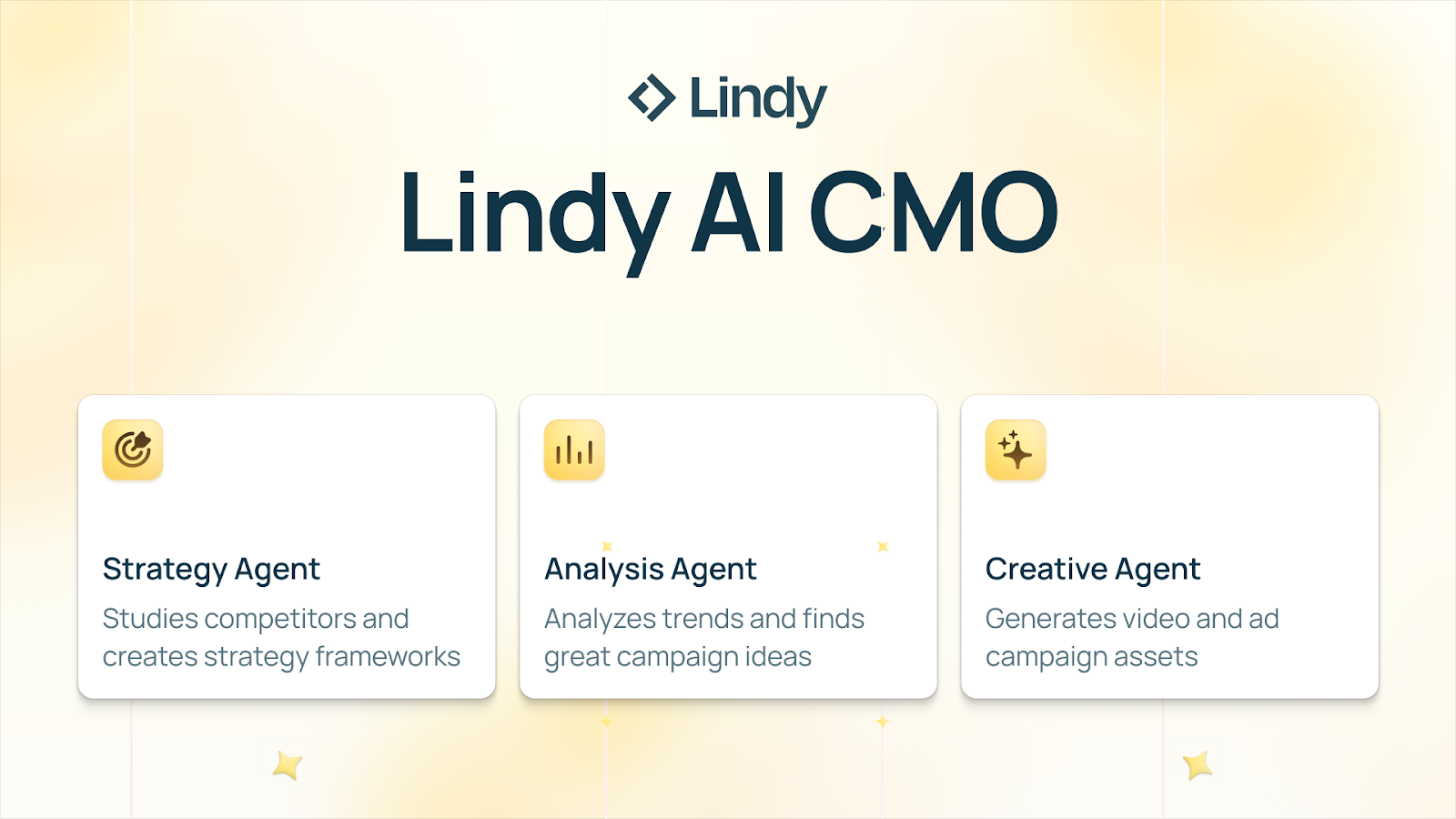
Lindy AI CMO is a suite of powerful agents that ship beautiful marketing campaigns quickly.
Simply enter your business's website, and watch AI agents study competitors, create messaging docs and campaign briefs, and generate creative assets. Everything is automatically organized in Airtable, ready to deploy.
With Lindy, marketing isn't a grind; it's a system that runs 24/7, handling strategy, analysis, and creative work while you focus on growth.
See AI Agents in Action today!
🎥 Reel of the Day

What Works:
1. It feels like a tiny Halloween skit, not an ad - You’re pulled in by a story first. The ghost gag makes you curious, not defensive. By the time you realize it’s about apartments, you’re already watching till the end.
2. The rented apartment makes it instantly relatable - Nothing looks staged or aspirationally fake. It feels like a real renter’s space. That quietly tells viewers, “You can do this too,” which builds trust without saying it out loud.
3. The CTA feels playful, not pushy - Commenting “GHOST” feels like continuing the joke, not entering a funnel. That lowers friction while still driving engagement, which is why people actually respond.
This reel wins because it treats apartment hunting like an emotional journey, not a search problem. It entertains first, reassures second, and converts quietly without ever feeling like an ad.
Thanks for reading this edition! Keep pushing boundaries, testing ideas, and staying inspired. See you in the next edition with more ways to ignite your marketing success. 🥰