Safety capped your upside
📈The budget permission layer that quietly decides your meta ceiling, A simple way to know if your funnel is ready to scale, and more!
Welcome to a space where every edition delivers insights, strategies, and inspiration to fuel your advertising brilliance. 🤯
📈Safety capped your upside
At a certain scale, Meta performance stops failing loudly.
It simply stops expanding.
Efficiency appears stable, and reporting looks reassuring enough to justify keeping budgets steady. That sense of order is exactly where many accounts lose forward momentum without realizing it.
The mechanism is straightforward.
Meta constantly chooses between reinforcing what already works and testing what might work next. Bids, budgets, and how tightly the account is structured are the signals that tell the system which behavior you value more.
When efficiency constraints dominate, exploration becomes mathematically unattractive to the model.
This failure pattern shows up repeatedly.
A brand finds a set of winning formats and protects them with ROAS targets and tight budgets. A new creative is introduced into the same environment and receives minimal delivery. Spend does not move.
The takeaway becomes “the creative failed,” even though the account never created conditions for it to be evaluated.
That diagnosis is off.
This is rarely a creative issue. It is a permission issue.
Strict controls teach Meta one lesson: avoid uncertainty. When unproven variables enter the system, they spend routes toward patterns the model already trusts.
Early on, that behavior feels efficient. Over time, it becomes restrictive because nothing new is allowed to generate enough signal to compete.
This is why testing often breaks as accounts mature.
High-performing structures are exploitation engines by design. They exist to protect known winners. Introducing exploration into those same constraints forces new ideas to compete against fully trained patterns. They lose before they learn.
The practical fix is separation, not optimism.
Exploration environments need tolerance for failure. Looser bids and explicit budgets, combined with isolation from efficiency mandates, allow new variables to generate signal without threatening core performance.
Exploitation environments need the opposite. Tight controls and predictable spend keep proven patterns efficient. When both objectives share one structure, one of them quietly suffocates the other.
Creative depth matters here, but only as an enabler.
Exploration collapses when every test relies on one or two assets. Systems that generate reusable footage libraries change the economics by lowering the cost of being wrong.
This is where Insense turns a single creator brief into twenty or more raw ad variations with lifetime usage rights, making structured exploration viable without restarting production each cycle.
You can book a free strategy call by Jan 30th and get $200 for your first campaign.
There is a real tradeoff.
Accounts built to explore will look less efficient in the short term. Some ads will sit above the target. Spend dispersion will increase. That discomfort is the cost of preventing yesterday’s winners from setting tomorrow’s ceiling.
The operator's move is to decide deliberately.
Which parts of the account are allowed to explore, and which exist solely to exploit? Then structure budgets and bids to reflect that decision.
Meta does not resist learning. It follows incentives.
If you do not design the permission layer intentionally, the platform defaults to safety. And safety rarely compounds.
Together with Shipfusion
Most brands think fulfillment is a backend function. Your customers experience it as the brand itself.
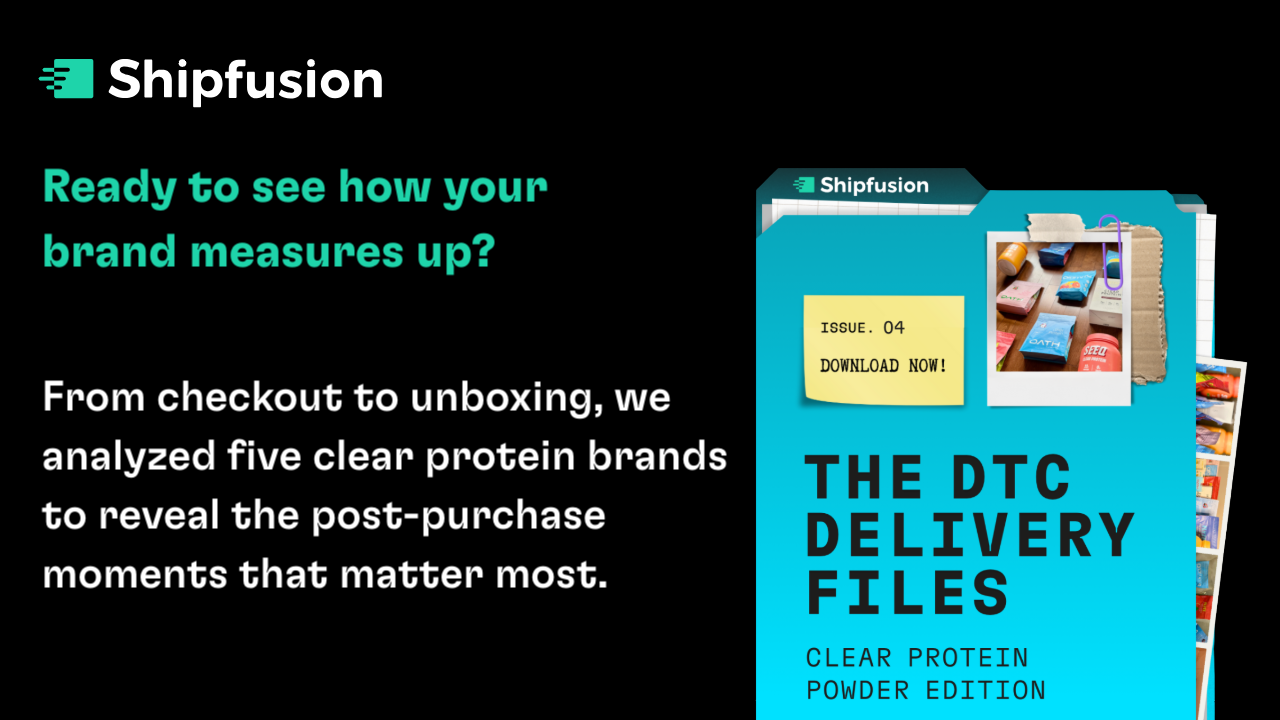
Shipfusion placed five real orders across leading clear protein brands and tracked everything after checkout, from tracking visibility and delivery speed options to unboxing and post-purchase communication.
What they found explains why repeat purchases quietly drop off. Here’s what stood out immediately:
- 0 brands used exterior or interior branding, so every box arrived forgettable
- Only 40% offered more than one delivery speed, limiting customer control
- Most post-purchase emails stopped at confirmations instead of building trust
Want to know how your brand stacks up?
If you ship products to customers, this report gives you a clear, benchmarked look at what great post-purchase checkout experiences actually include and where brands are leaving revenue on the table.
Download the DTC Delivery Files and audit your post-checkout experience today.
⚡ A simple way to know if your funnel is ready to scale
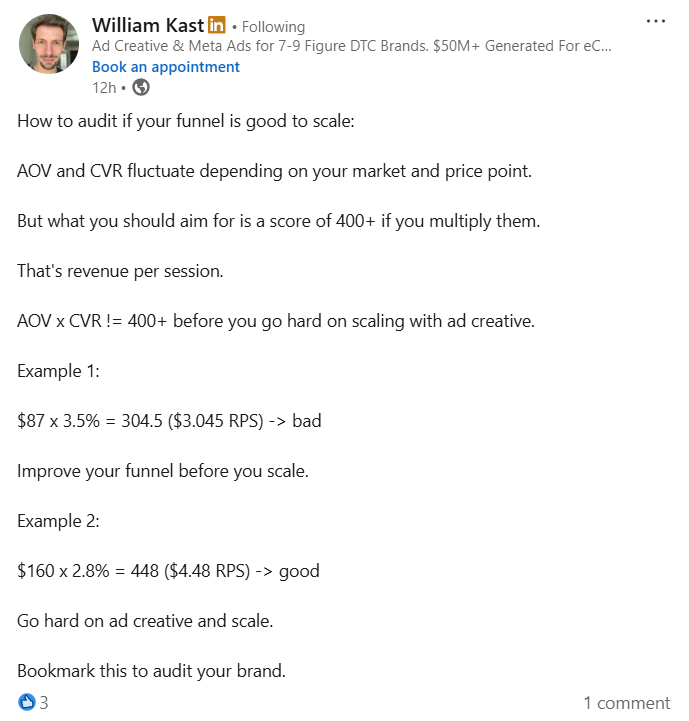
Before throwing more money at ads, there’s a quick reality check most brands skip. Look at revenue per session, not vanity metrics. Multiply your AOV by your conversion rate. If that number isn’t around 400+, scaling creative will usually just scale inefficiency.
Why this works: Revenue per session tells you how much value each visitor generates. A low AOV or weak CVR means ads have no room to breathe. Once RPS crosses that 400 mark, you’ve built enough margin for paid traffic to work without constantly fighting CPA.
The real takeaway: Don’t guess if you’re ready to scale. Do the math. If the number is low, fix the funnel. If it’s strong, push creative and spend with confidence.
🎥 Reel of the Day

What Works:
1) The hook pulls you in instantly - The chase scene creates urgency and curiosity in the first second. Your brain wants resolution, not a product pitch, so you keep watching. That high retention pushes the reel everywhere.
2) The product reveal feels clever, not salesy - The jacket flip is the punchline, not an explanation. You instantly understand the value without text or talking. That kind of visual proof builds trust faster than any caption.
3) The setting accidentally strengthens the brand - The Protect Lane sign makes the moment feel intentional and memorable. It anchors the story visually, reinforces the brand name, and makes the reel stick in your head longer.
This works because it feels like entertainment first and marketing second. When the product becomes part of the story, people don’t skip, they lean in, remember, and buy.
Thanks for reading this edition! Keep pushing boundaries, testing ideas, and staying inspired. See you in the next edition with more ways to ignite your marketing success. 🥰