Score creators by handle now
📊 Meta now breaks down partnership ad results by creator handle. Here's how to turn it into a scorecard that decides your Q1 creator roster.
Welcome to a space where every edition delivers insights, strategies, and inspiration to fuel your advertising brilliance. 🤯
📊 Meta's new creator breakdown is live. Use it to pick your Q1 creator roster.
The signal
On November 5, Meta added an Ads Insights breakdown that groups partnership ad results by the creator's Instagram handle, at account, campaign, ad set and ad level, per Ads Uploader's November changelog. It covers impressions, reach, link clicks and video watch metrics. Conversions aren't in the supported list yet, and the breakdown can't be combined with others.
The read
You can now compare creators directly without tagging every ad by hand. But on its own, the breakdown only shows you attention. Purchase data still has to come from somewhere else, so the scorecard needs two halves.
The moves
- Pull the breakdown for every partnership ad that ran since November 1. Export reach, link clicks, 3-second plays and ThruPlays by handle.
- Add attention metrics per creator: hook rate (3-second plays ÷ impressions) and click-through rate.
- Add the purchase half from your own naming. Put the creator's handle in each ad's name and UTM, then match store orders to handles in your analytics.
- Rank creators on two lines: attention and cost per purchase. Illustrative: Creator A has a 32% hook rate and $28 CPA; Creator B has 41% and $46. A is the January rehire. B is the hook supplier: ask B for openings, then put them in front of A's product demo.
- Rebook the top three before December fills up. Insense keeps your roster in one place, so rehiring proven creators for the next round of ads is one message, and you get licensed raw and edited footage to recut. Book a free strategy call by December 4 and $200 goes toward your first campaign.
The watch list
- Creators with high reach but low hook rate. Their audience is big; their openings aren't working for you.
- Any creator whose CTR drops more than a third week over week. Rotate them out of prospecting.
- Sample size. In our view, don't rank a creator on fewer than 5,000 impressions.
- Creators who only ran during Black Friday week. Discount-heavy days flatter everyone's numbers, so re-check them against a normal week in December before you commit January budget.
Before you log off
Check that every partnership ad name includes the creator's handle. Without it, the purchase half of the scorecard won't connect, and you'll be choosing your January roster on clicks alone.
Together with Insense
Fresh UGC every week, from 115k+ responsive creators you can hire again. And again.
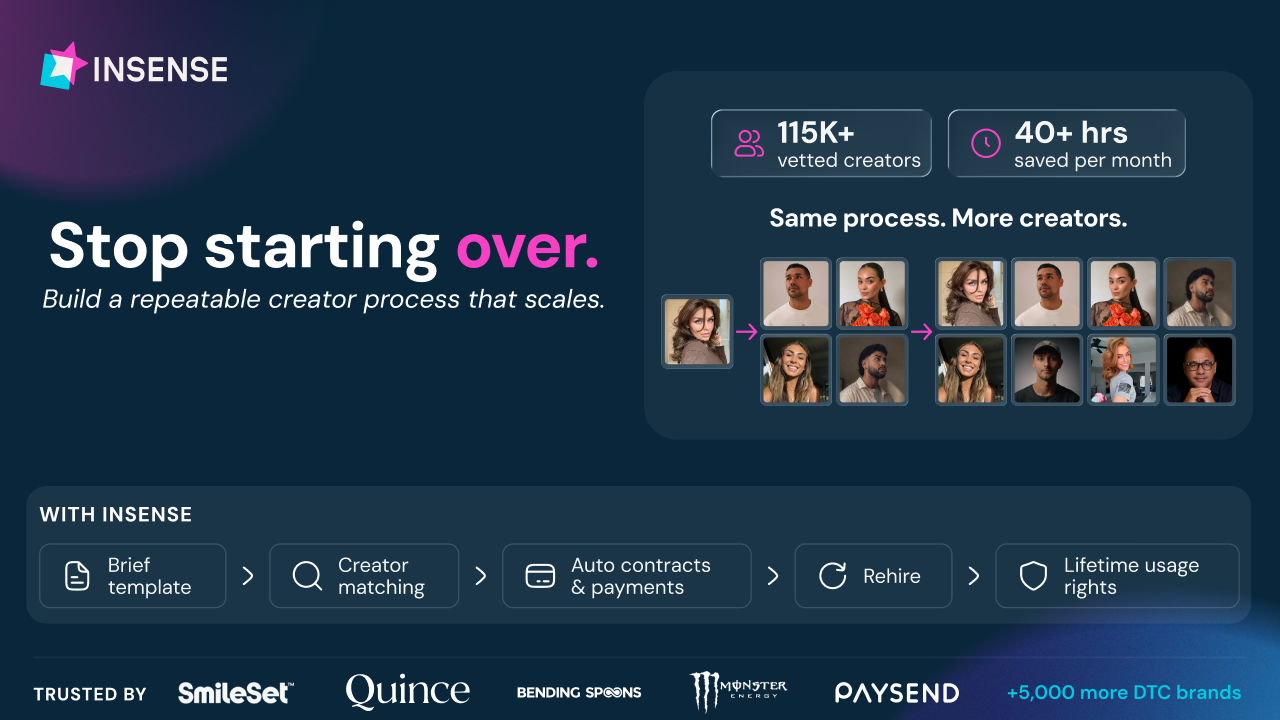
Most brands run creator content in bursts: one campaign, a pile of clips, then a gap while the ads wear out.
Insense helps you build an always-on, scalable process instead:
- Build a roster of creators who understand your brand: Rehire proven creators to feature another product or make another round of ads.
- One place for creator collaboration: Save 40+ hours a month on creator operations. Manage payments, agreements, and chat directly with creators on one platform.
- Modular content: Get fully licensed clips of raw and edited footage from one creator to test different angles, hooks, and CTAs.
- 115K+ niche creators in one marketplace: Get inbound applications from thousands of responsive creators. Only creators who meet your requirements can apply to your brief.
Book a free strategy call by December 4th and get $200 towards your first campaign.
⚡Amazon revenue stagnation may be a visibility problem
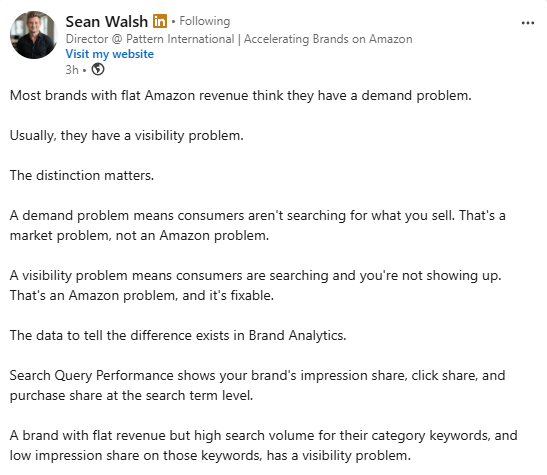
This framework uses Amazon's Search Query Performance (SQP) report to distinguish weak market demand from insufficient brand visibility. High search volume combined with low impression share can reveal untapped growth opportunities.
Why it works: Analyzing keyword-level impression, click, and purchase shares helps brands identify where they're losing potential customers. Prioritizing relevant keywords with strong demand and limited visibility creates a more focused advertising and organic ranking strategy.
Where it needs balance: Low impression share doesn't automatically indicate a profitable growth opportunity. Keyword relevance, competition, conversion potential, and acquisition costs also matter. Brands should prioritize keywords based on expected profitability rather than search volume and visibility gaps alone.
🎥 Reel of the Day
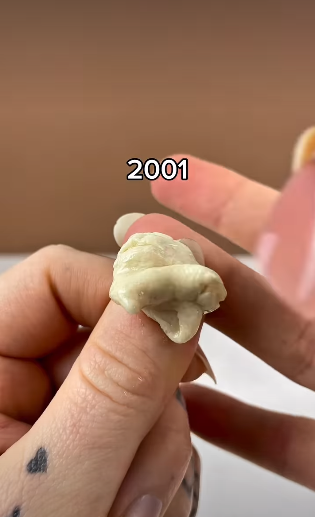
What Works:
1. Evolution-Based Storytelling - The brand uses a timeline from 2001 to 2026, transforming a simple product demonstration into an evolution story that positions its solid gel as the modern alternative.
2. Curiosity Through Progression - The changing years create an open loop, encouraging viewers to discover how nail application methods have evolved and what makes the latest technique different from previous versions.
3. Competitor-Free Comparison - Instead of criticizing competing brands, the reel highlights limitations of older application methods, making its product appear superior through visual comparison rather than aggressive competitive messaging.
Turn your product’s competitive advantage into a historical evolution reel. Demonstrate outdated methods first, then introduce your solution as the natural next step in the category.
Advertise with Us
Wanna put out your message in front of over 40,000 best marketers and decision makers?
Thanks for reading this edition! Keep pushing boundaries, testing ideas, and staying inspired. See you in the next edition with more ways to ignite your marketing success. 🥰