Stop chasing dead clicks
💀 The clicks that were never meant to convert, Creative strategy should match buying motivation, not just category, and more!
Welcome to a space where every edition delivers insights, strategies, and inspiration to fuel your advertising brilliance. 🤯
Together with Tatari
The Brands Winning Right Now Didn’t Crack Meta. They Moved Past It.
You've seen the case studies. You know TV works for the big guys. What nobody told you is the barrier to entry dropped, the measurement got real, and the brands hitting their CAC targets right now aren't enterprise, they're DTC brands your size.
Tatari is a TV buying platform that lets you run across linear TV, streaming, and direct publisher buys, all from one place.
You see exactly where every ad aired, so nothing is hidden, and nothing is wasted. And every dollar ties back to actual site visits, signups, and revenue not impressions that look good and prove nothing.
- Aroma360 cut CPA by 80% and doubled ROAS from a $14K linear pilot
- Fiverr retargeted Super Bowl viewers on streaming and slashed CAC by 75%
- Saatva saw a 40% lift in branded search from their very first Tatari test
Over 400 brands already run TV this way. The ones who waited are still running the same Meta playbook, wondering why CAC keeps climbing.
Book a free demo and get a launch-ready TV plan built around your numbers.
💀 Stop Chasing Dead Clicks: The Clicks That Were Never Meant to Convert
Clicks feel like progress. They look like intent. They show up in dashboards and make things feel like they’re working. But a large chunk of those clicks were never capable of producing revenue in the first place.
1️⃣ What’s Actually Happening
A user taps into your site with interest, not commitment.
Then they land in a place that asks them to figure things out instead of guiding them forward. By the second interaction, the path to purchase is already broken.
This is the dead click. Not a bounce. Not a bad user. Just a path with no economic outcome.
2️⃣ Where the Breakdown Starts
It usually begins at the entry layer. Menus that dump options instead of creating direction.
Collection pages that demand decisions before building clarity. Landing experiences that don’t match the reason the user clicked.
Nothing is technically “wrong.”
But nothing is designed to move someone toward a decision either. So the session drifts. Then it dies.
3️⃣ The Diagnostic That Changes Everything
Instead of asking how many clicks a page gets, ask a harder question. If someone clicks here, can they reach a buying decision within the next two steps?
If the answer is no, that path isn’t underperforming. It’s structurally incapable of converting.
Now layer this with volume. The highest traffic paths with the lowest decision probability are where the real leakage sits.
4️⃣ The Fix Isn’t Optimization, It’s Elimination
The instinct is to improve pages. That’s not enough. Some clicks shouldn’t exist.
“Shop All” sounds harmless until you realize it creates hesitation instead of momentum. Replacing it with “Best Sellers” or “60% Off Today” immediately compresses decision time.
Every click should either increase desire, reduce uncertainty, or trigger action. If it doesn’t, it’s slowing the system down.
Why This Hits Harder Than It Looks
There’s a quiet shift that happens here.
Growth stops being about adding more traffic and starts becoming about increasing the value of every click that already exists.
Same users. Same spend. Completely different outcome. Because once you see how many clicks were never built to convert, you stop trying to optimize them. You start removing them.
⚡Creative strategy should match buying motivation, not just category
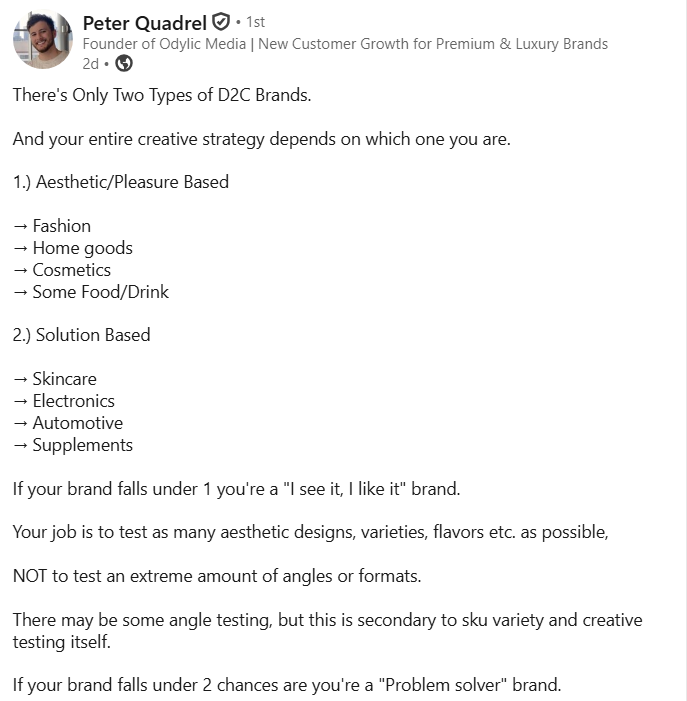
This framework splits D2C brands into two core buying behaviors: aesthetic-driven and problem-solving. Instead of treating all brands the same, it argues that creative strategy should align with why people buy. The focus shifts from formats to underlying motivation, guiding whether to prioritize visual variety or messaging angles.
Why it works: Buying decisions are driven by different triggers. Aesthetic products rely on desire and visual appeal, while solution products rely on problem resolution and proof. Aligning creative with motivation increases relevance and conversion efficiency.
Where it needs balance: Many brands operate across both motivations depending on audience or context. Over-simplifying into two categories can limit testing depth. Hybrid strategies are often needed to capture full market potential.
Together with Wellput
Your Customers Are One Text Away

You already know email gets buried and calls go unanswered. But texts? They get read 98% of the time, within minutes.
That's why 230,000+ businesses use EZ Texting to reach their customers on the channel they engage with most
Whether you're sending promos, appointment reminders, or urgent alerts, EZ Texting makes it easy to send to 10 or 10,000 contacts in just a few clicks. No tech skills required.
Growth Pulse readers can try it free* - no credit card needed.
Start Your Free Trial with EZTexting
🚀 Reel of the Day
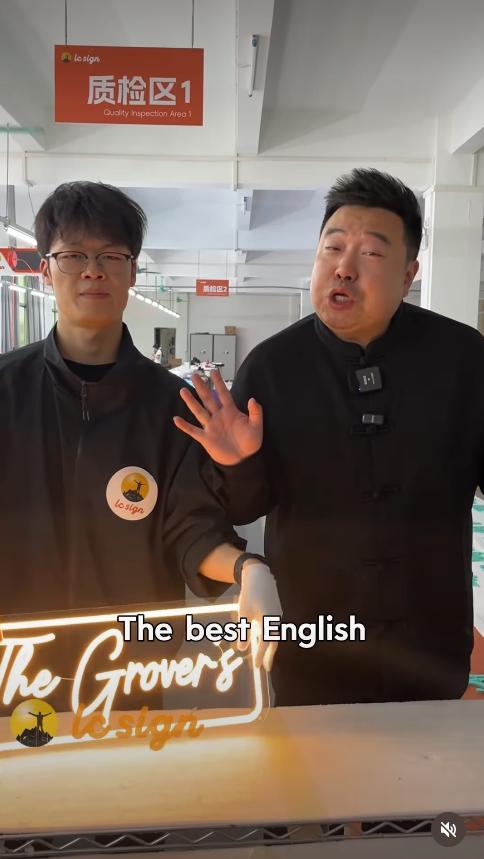
What Works:
1. Tension Play - You’re pulled in instantly because it feels like a real threat, not an ad. That emotional spike buys full attention before the brain even processes selling.
2. Real Setting - The factory vibe quietly says, “we make this ourselves.” That reduces price doubt and makes the offer feel more direct and believable.
3. Timing Peak - They drop the offer right after the humor hits. That’s when you’re most relaxed, making you way more open to buying.
4. Soft Selling - Notice how you’re laughing before the pitch even starts. By the time the offer comes, it feels like part of the story, not a pushy ad.
Delay Pitch - Entertain first, sell right after the emotional payoff, not during the peak attention moment.
Thanks for reading this edition! Keep pushing boundaries, testing ideas, and staying inspired. See you in the next edition with more ways to ignite your marketing success. 🥰