Stop copy-pasting strategies
📊 You're running two channels. One is quietly wrecking the other. Ads fail more from impatience than poor performance, and more!
Welcome to a space where every edition delivers insights, strategies, and inspiration to fuel your advertising brilliance. 🤯
📊Stop copy-pasting strategies
Six months ago, your Meta ROAS made sense.
Now it doesn't. You've refreshed creative, tested new audiences, and nudged budgets around. Nothing's moved. And the frustrating part is your TikTok numbers look completely fine.
That's not a coincidence. That's the problem.
Here's what's actually happening.
Every time something pops on TikTok, your creative team learns a lesson. Fast hook. Entertainment-forward. Native feel. The feedback is immediate, and the signal is loud, so the next brief looks a little like the last winner.
And the one after that. And slowly, without anyone deciding to do it, your entire creative language shifts toward a viewer who's scrolling for fun, not shopping.
Then that asset gets repurposed to Meta because why wouldn't it? The production budget's already spent.
And Meta's algorithm, which is trying to find someone 20 minutes from a purchase decision, gets handed a video optimized for watch time and comment velocity. Two signals that mean almost nothing to a platform trying to close buyers.
Your CPAs don't crash. They drift. 3% one month. 5% the next. Enough that it looks like a targeting issue or a seasonality issue or a creative fatigue issue, anything except the actual issue.
The brief is broken. Not the channel.
The fix people reach for is separate teams. Rarely realistic at $50k–$200k a month, and it still doesn't solve the root problem.
The real fix is building briefs around purchase intent, not platform format. TikTok briefs should be engineered for awareness. Meta briefs need decision-stage language, specific outcomes, friction removal, and proof that lands on someone already halfway convinced.
This is also where creative source starts to matter a lot. A clinician reviewing your product. A category expert saying something your branded handle could never say without sounding like marketing.
That kind of content doesn't fatigue on Meta the way UGC does because it's not built for entertainment, it's built for the moment someone's deciding. Grapevine runs exactly this as a fully managed service, creator whitelisting and publisher advertorial under one roof.
Madison Reed hit 20% efficiencies over Target CPA running it. Just Food for Dogs scaled these assets from 15% to 45% of their paid mix in six months. You can book a free strategy call for your first campaign strategy session - no commitment required.
That's what happens when the creative matches what the platform is actually trying to do with it.
Quick diagnostic.
Pull your last 90 days of active Meta creative. Count how many assets originated from a TikTok brief. If it's more than half, you already have your answer.
Together with Delve
Migrate to Delve and get a $2,000 VISA card in your inbox
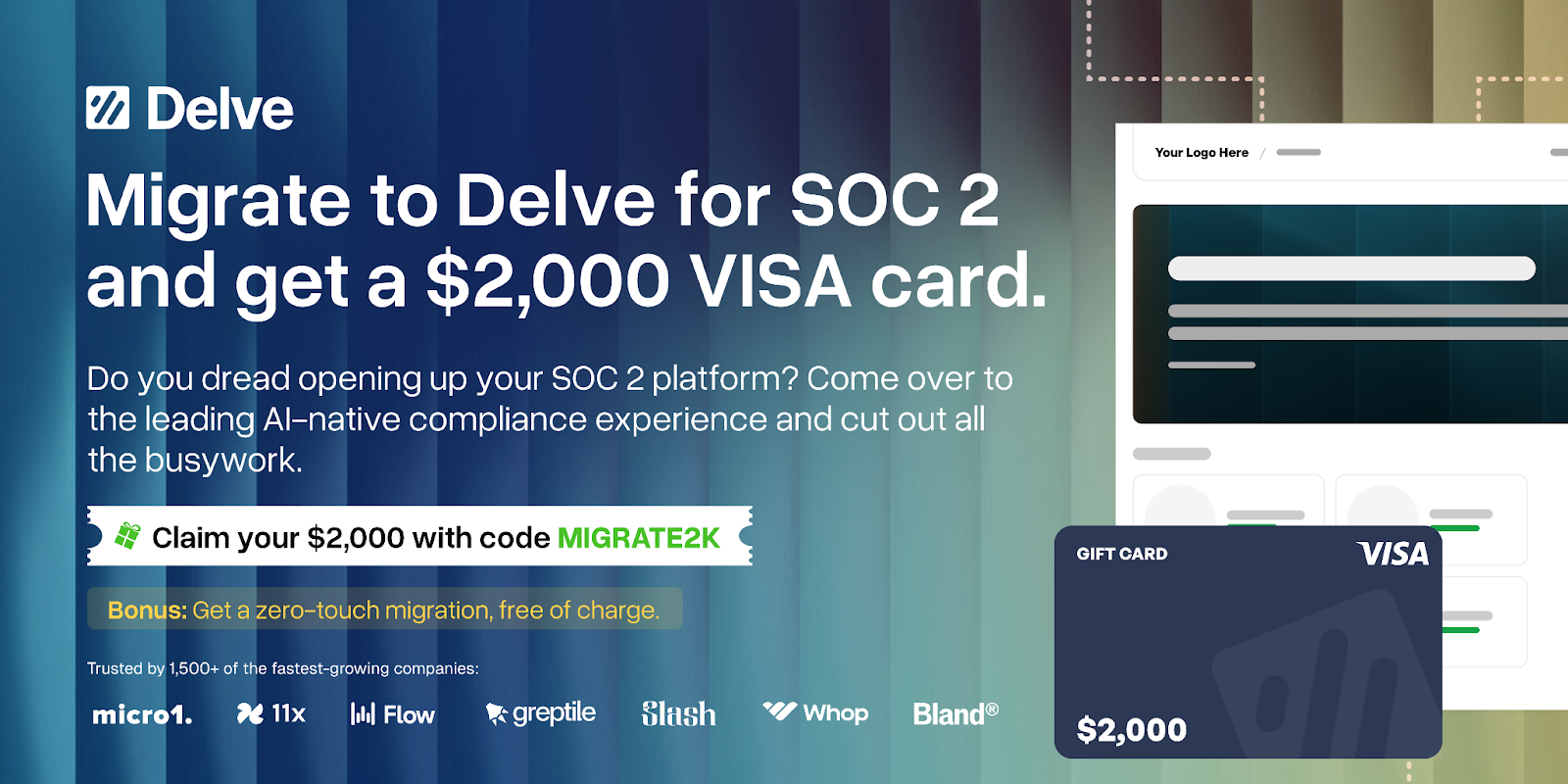
Delve is the AI-native compliance platform that actually does the work for you, auto-collecting evidence from AWS, GitHub, and your stack so you don't have to chase screenshots or babysit integrations.
Use AI security questionnaire tooling, AI Copilot, and everywhere else to make compliance feel less dreadful. Welcome to the new age.
The proof is in the pudding:
Bland → Switched, got compliant, and unlocked $500k ARR in 7 days
11x → Streamlined audits and moved faster on enterprise deals
micro1 → Scaled compliance without adding headcount.
Bonus: Delve will handle your migration for free. Zero-touch. No disruption. No starting over.
If you're dreading opening your current SOC 2 tool, that's your sign.
⚡Ads fail more from impatience than poor performance
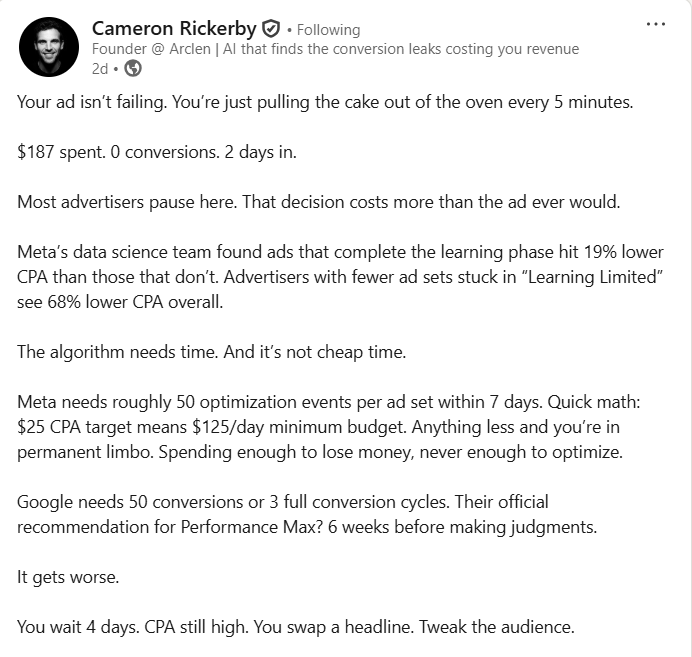
This post highlights how early-stage ad performance is often misjudged. Platforms like Meta and Google require sufficient conversion data to exit learning and stabilize performance. Constant edits or early pauses reset this process, preventing campaigns from ever reaching efficient delivery.
Why it works: Algorithms optimize only after enough conversion signals are collected. Consistent spending and stability allow pattern recognition. Completing the learning phase improves CPA and delivery efficiency significantly across both Meta and Google campaigns.
Where it needs balance: Not all campaigns deserve patience. Weak creatives, poor offers, or broken funnels won’t fix themselves with time. Early diagnostics still matter to avoid wasting budget on fundamentally flawed setups.
🚀 Reel of the Day
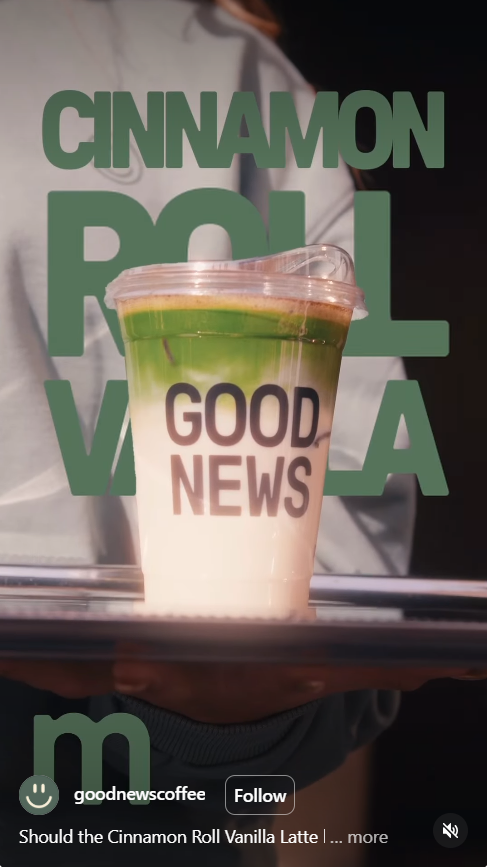
What Works:
1. Feels Actually Real - It doesn’t feel staged or overproduced, which is the biggest win here. The ratings build slowly, so when the final 10,10,10 happens, it feels honest and not forced.
2. People You Trust - Using regular customers instead of influencers makes it feel way more relatable. It feels like real opinions, not paid hype, which lowers resistance instantly.
3. No Pushy CTA - They never aggressively tell you to buy anything. By the time it ends, you already want to try the winner, which makes the conversion feel like your own decision.
Don’t show your product as good. Create a system that wins in front of people, because winning is remembered. Showing is forgotten
Thanks for reading this edition! Keep pushing boundaries, testing ideas, and staying inspired. See you in the next edition with more ways to ignite your marketing success. 🥰