Stop Waiting for ROAS to Crash
🧐 The collapse begins at Funnel Entry, not the purchase, Pretty landing pages don’t create conversions, and more!
Welcome to a space where every edition delivers insights, strategies, and inspiration to fuel your advertising brilliance. 🤯
Together with Lindy
The Simplest Way to Create and Launch AI Agents and Apps
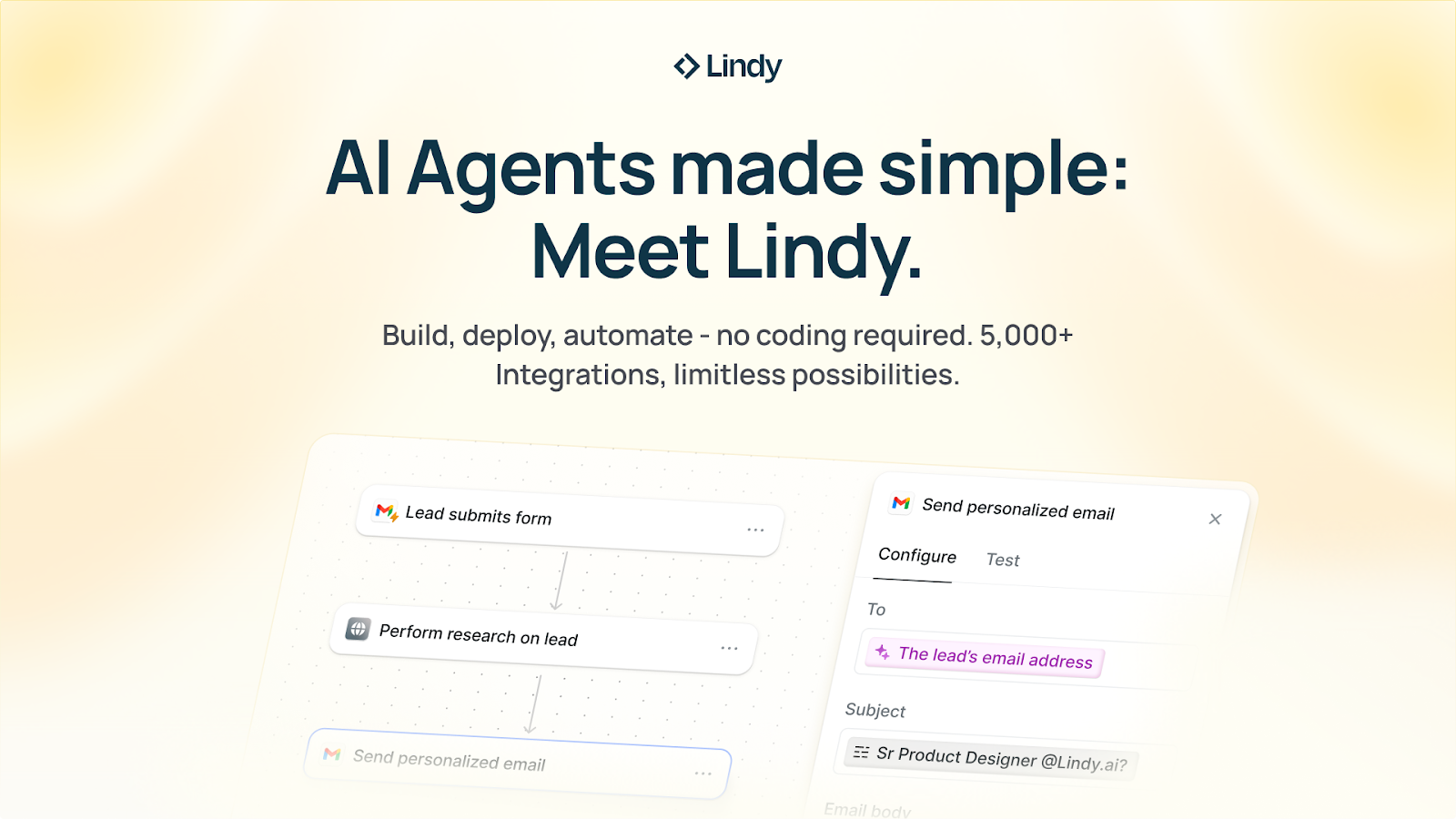
You know that AI can help you automate your work, but you just don't know how to get started.
With Lindy, you can build AI agents and apps in minutes simply by describing what you want in plain English.
From inbound lead qualification to AI-powered customer support and full-blown apps, Lindy has hundreds of agents that are ready to work for you 24/7/365.
Stop doing repetitive tasks manually. Let Lindy automate workflows, save time, and grow your business.
Get $20 free and build your first agent today
🧐 Stop Waiting for ROAS to Crash
Here’s something most marketers never notice:
When a winning ad starts to die, ROAS is the last metric to show it. The first metric?
Funnel Entry Rate, measured through Add-to-Cart Rate.
Not purchases. Not landing page views. Not CPMs. Not CPCs.
Add-to-Cart tells you when people stop entering the buying journey entirely, sometimes 24–72 hours before CPA spikes. Once you start looking for it, you’ll never be able to run an account the same way again.
1. Why ATC Rate Is the Earliest Warning Signal
ROAS collapses late because it’s influenced by too many downstream variables: delayed purchases, late-day buying windows, blended attribution, remarketing spillover, and platform holdouts. But Funnel Entry Rate is brutally simple:
Do people still want in?
Or have they stopped raising their hand? Add-to-Cart Rate answers that question before anything else. Because people may still view a product out of curiosity…
…but they only add it when genuine intent is present.
When a winning ad’s Add-to-Cart Rate drops, it means the emotional spark upstream has faded, even if purchases are still trickling in.
2. The Upstream Truth: Interest Dies Before Revenue Shows It
Every ad has a demand curve. Before the CPA rises, before the ROAS tanks, before the CTR dips, interest starts to thin out.
And the first part of the funnel that reflects that thinning? The decision to add to the cart.
Why?
Because it’s the moment the customer moves from “scrolling” to “considering.”
When they hesitate at that moment, you know your narrative no longer hits with the same force. Most brands only wake up once purchases fall. By then, the decay had already been happening for days. Smart Operators catch the decay at ATC.
3. The Early-Fatigue Pattern Every Winning Ad Follows
Watch this pattern once, and you’ll recognize it forever:
Day 1–2: ATC Rate dipsDay 2–3: View Content rate softensDay 3–4: CPA starts creeping upDay 4–5: ROAS looks “randomly bad”Day 6+: Teams panic and kill the ad
But if you’d acted when ATC Rate dipped, you’d have saved: spend, conversion data, learning stability, audience mapping, the entire scaling curve, Funnel Entry collapses first. Everything else collapses after.
ATC Rate Doesn’t Predict CPA, It Predicts Interest.
This is the breakthrough. CPA tells you about performance. ATC Rate tells you about desire. And desire always breaks before performance does.
If ATC Rate is healthy, but ROAS is down?
Ride it out, you’re just experiencing timing noise. If the ATC Rate drops sharply while everything else looks normal?
Your ad is dying, even if the dashboard looks fine. That’s how you operate like someone who actually understands the platform.
⚡ Pretty Landing Pages Don’t Create Conversions
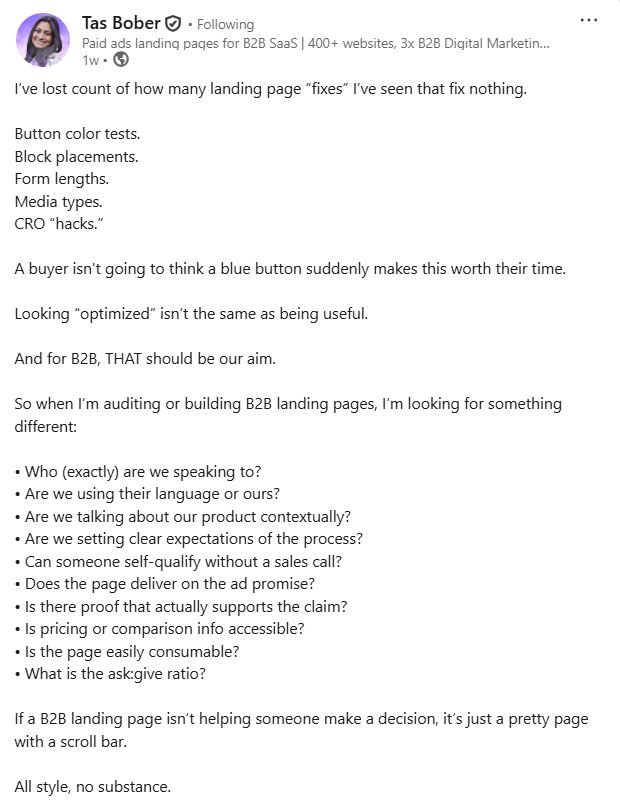
Many landing page “fixes” don’t fix anything, button colors, block swaps, shorter forms, new hero images. These cosmetic changes look optimized but rarely change how someone thinks or decides. In B2B this is obvious, but the same mistake happens constantly in DTC too.
Why this works: In both models, buyers convert when the page removes uncertainty, builds trust, and reinforces the promise made in the ad. That means answering the right questions, using the buyer’s language, clarifying the offer, and providing proof where it matters. In DTC specifically, shoppers decide in seconds, so alignment between ad, landing page, benefits, objections, and social proof has an even bigger impact than UI tweaks.
Where it needs balance: Cosmetics still matter for usability, slow pages, cluttered layouts, or hard-to-find CTAs can tank performance on their own. But design should support substance, not replace it. In DTC, teams sometimes overcorrect and stuff pages with endless reviews or badges, which creates noise instead of clarity.
Together with Insense
Stop Andromeda From Killing Your Ads

Meta’s new Andromeda update is silently killing look-alike ads before they even enter the auction. If your creatives share too many visual cues, your CPMs spike, and ROAS collapses overnight.
Smart operators are already rebuilding their creative pipelines with diverse, modular UGC through Insense, the system designed for the new Meta era:
- 70K+ vetted creators across 35k+ countries apply directly to your briefs, giving you endless diversity of faces, tones, and storylines, exactly what Andromeda rewards.
- Modular UGC system turns one creator collab into 20+ fresh variations across hooks, CTAs, and emotions, so fatigue never catches up.
- Partnership Ads integration lets you run creator-led ads directly from influencer accounts, instantly resetting fatigue signals and boosting CTR by up to 73%.
- Lifetime usage rights mean every asset becomes part of your reusable, Andromeda-proof creative library.
Over 2000+ brands are already scaling 3× faster with 40% lower fatigue rates using Insense’s modular system.
Book your free strategy call by November 28 to claim $200 toward your first creator collab!
🚀 Reel of the Day
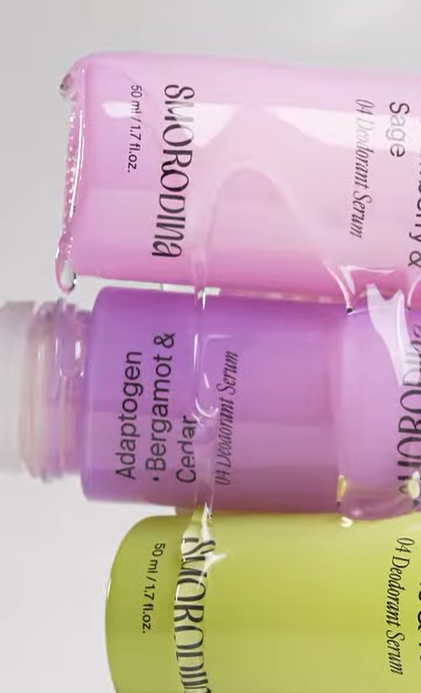
What Works:
1. The ASMR drip is the hook that stops scrolling - The sound of liquid slowly dripping creates an immediate sensory trigger that hijacks attention. It taps into the ASMR instinct where viewers feel micro-tingles and instant relaxation.
2. The extreme minimalism of the reel - Because the video is only 4 seconds, the brand doesn’t waste time explaining anything inside the reel. Instead, they use the caption as the educational layer that justifies the product scientifically.
3. The contrast of “sensory chaos in video” with “scientific calm in caption” - The reel is visually chaotic, with glossy drips, bright colors, and quick movement, producing sensory stimulation. The caption is calm, structured, clinical, and detailed, giving the brain something rational to latch onto.
This reel wins because it compresses sensation and science into a 4-second interaction. The ASMR visuals capture the body, while the caption captures the mind.
Thanks for reading this edition! Keep pushing boundaries, testing ideas, and staying inspired. See you in the next edition with more ways to ignite your marketing success. 🥰