Survey that makes your ads better
🔥 Your post-purchase survey is a media buying roadmap. Nobody is reading it that way, First purchase optimization can hurt lifetime value, and more!
Welcome to a space where every edition delivers insights, strategies, and inspiration to fuel your advertising brilliance. 🤯
🔥 Your Post-Purchase Survey Is a Media Buying Roadmap. Nobody Is Reading It That Way.
Every brand asks some version of "how did you hear about us?" The responses come in, someone screenshots the top answers, and the team goes back to optimizing Meta.
The survey gets treated as a sentiment check instead of what it actually is: unblended, unmodeled, platform-unbiased attribution data straight from the buyer.
That data is almost always more honest than the dashboard. And it's almost always pointing somewhere the budget isn't going.
What the responses are actually revealing.
When 15 to 30% of buyers independently cite the same newsletter, community, or publication, that isn't qualitative color. That's a statistically significant acquisition signal that a channel is closing deals without receiving credit for a single conversion.
The mechanics of why this happens:
- A buyer reads a newsletter mention on Tuesday. They don't click anything.
- They searched the brand name on Thursday. Google gets the attribution.
- They convert on Friday through a retargeting ad. Meta gets the credit.
The channel that built the conviction is invisible to every platform in the stack. Media mix decisions get made on that distorted picture every single week, which means budgets keep flowing toward channels that harvested demand rather than the ones that created it.
Why newsletter-driven awareness converts differently.
Newsletter audiences are opt-in, curated, and operating inside a trust relationship with the publisher before the brand ever appears. That context fundamentally changes the nature of the introduction.
Three things happen that paid impressions can't replicate:
- Borrowed credibility. The publisher's authority transfers to the brand at the moment of introduction, not through a claim, but through context.
- Lower resistance. The reader isn't being interrupted. They're encountering the brand inside an environment they actively chose to be in.
- Delayed but durable conversion. Newsletter-influenced buyers search the brand later, convert at higher rates, and generate stronger LTV than equivalent cold traffic. The survey data shows it consistently. The attribution model never will.
Turning the signal into a scalable acquisition channel.
Once survey responses confirm that trusted third-party environments are driving awareness, the strategic move is systematic expansion into those environments rather than waiting for organic mentions to accumulate passively.
Grapevine operationalizes exactly this, whitelisting campaigns through verified creators and established publisher accounts so the brand appears inside trusted editorial feeds at scale.
The borrowed credibility that was closing deals organically becomes a repeatable, measurable acquisition mechanism with a clear feedback loop back into the survey data. You can book a strategy for free, no commitments
The survey isn't feedback. It's the most accurate media plan your brand has ever produced. The only question is whether anyone is treating it that way.
Together with Planable
The agency playbook you're following is built on myths.
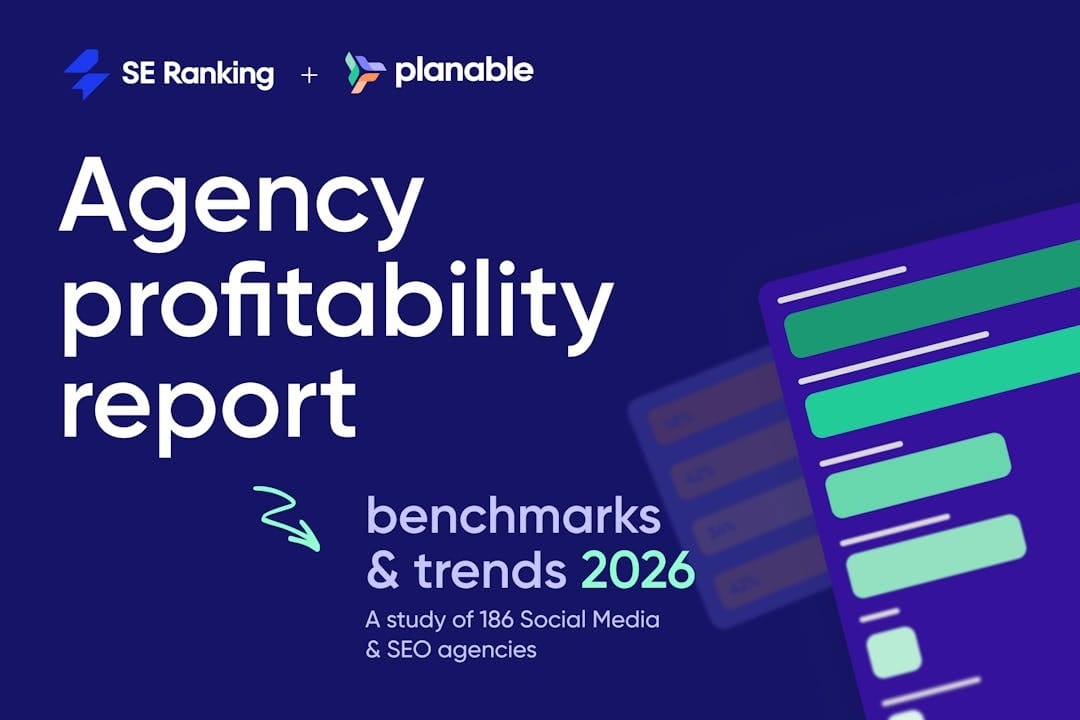
Most agency founders are making the same structural mistakes and have no idea because the mistakes look like strategy from the inside.
Planable surveyed 186 SEO and Social agencies to find exactly what separates the ones bleeding money from the ones clearing 41%+ margins.
The gap is smaller than you think, and it starts with knowing where you actually stand.
Download this report, and you'll walk away knowing:
- Which pricing models are quietly killing margins, and the exact configurations replacing them
- Why 36.6% of agencies calling themselves AI-first are actually losing money
- Why raising prices is the most common tactic among low-profit agencies and what high-profit ones do instead
One structural shift from this report could be worth more than any new client you close this quarter.
Download the report for free today!
⚡ First purchase optimization can hurt lifetime value
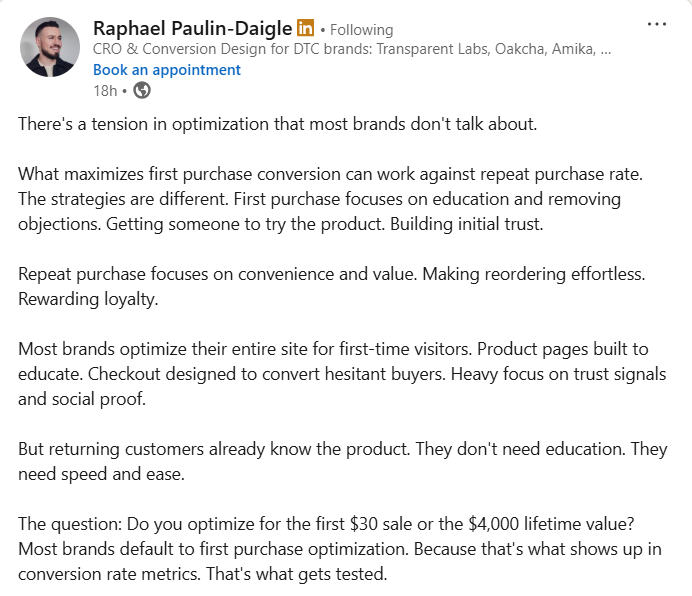
This idea highlights a core trade-off in e-commerce optimization. Tactics that maximize first purchase conversion often prioritize education and persuasion, while repeat purchase growth depends on speed, convenience, and loyalty. Treating all users the same can limit long-term profitability and retention.
Why it works: Different customer stages require different experiences. New buyers need trust and clarity, while returning buyers need frictionless reordering. Aligning UX and messaging to the lifecycle stage improves both conversion and lifetime value simultaneously.
Where it needs balance: Over-segmentation can complicate execution and dilute testing clarity. Smaller brands may lack enough returning users to justify separate experiences. Balancing short-term conversion gains with long-term retention requires strong data and prioritization discipline.
🚀 Reel of the Day
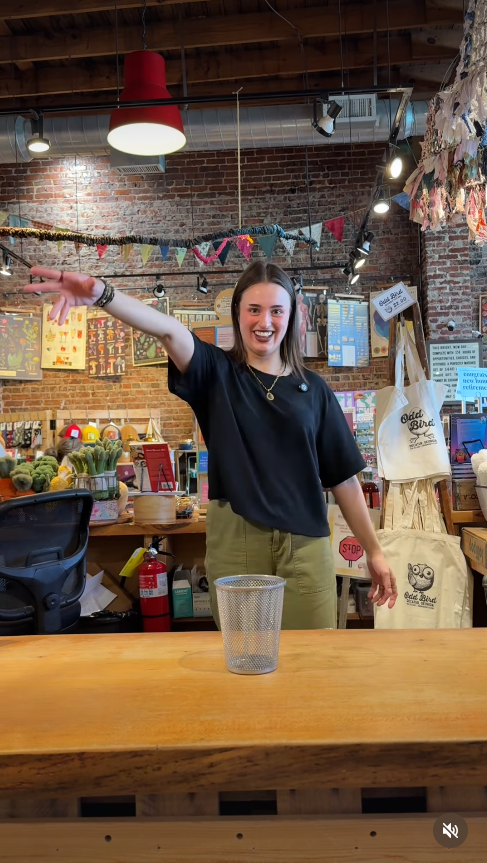
What Works:
1. Familiar Framing - The “if I make this shot” format is a proven engagement trigger that lowers cognitive load instantly. Viewers recognize the trend within seconds, which increases hook retention and reduces scroll behavior.
2. Organic Merchandising - The randomness of the pen hitting different sections subtly highlights product variety and store personality. It feels like an accidental discovery, but it is actually smart visual merchandising layered into entertainment.
3. Authenticity Signal - The imperfect ending and genuine reaction act as a strong trust-building moment. In a feed full of over-polished content, this kind of raw response increases relatability and brand likability.
Design your content so the audience explores your store through motion and curiosity, because guided discovery increases product recall and purchase intent far more than direct showcasing ever will.
Thanks for reading this edition! Keep pushing boundaries, testing ideas, and staying inspired. See you in the next edition with more ways to ignite your marketing success. 🥰