The Cost of Going Hands-Off
🤦♂️ Defaults quietly replace intent inside automated accounts, The 5 levers that actually move paid ads performance, and more!
Welcome to a space where every edition delivers insights, strategies, and inspiration to fuel your advertising brilliance. 🤯
🤦♂️ The Cost of Going Hands-Off
The promise of automation was never that it would make better decisions. It was that it would make faster ones. Somewhere along the way, those two ideas got blurred.
When campaigns auto-launch, budgets auto-shift, and audiences auto-expand, the system isn’t thinking about intent, brand posture, or downstream consequences. It’s responding to momentum. Whatever moves first gets amplified.
That’s fine when momentum aligns with outcomes. It’s dangerous when it doesn’t.
Automation doesn’t understand hesitation. It doesn’t know when friction is healthy. It can’t tell the difference between curiosity and conviction. All it sees is motion, and it rewards the easiest version of it.
This is why accounts that run “hands-off” often start to look the same.
Same audiences. Same creative patterns. Same distribution logic.
Not because everyone copied each other, but because the system removed the moments where someone used to stop and ask whether a decision actually made sense.
Human judgment used to live in friction. Manual setup forced choices. Choices forced clarity.
When those pauses disappear, the account still runs, but the strategy thins out. Decisions get inherited instead of made. Defaults quietly replace intent.
The role of the operator isn’t to fight the machine or micromanage every lever. It’s to decide where automation is allowed to move freely and where it needs constraints.
That might mean limiting how quickly the budget can reallocate.
It might mean keeping certain segments live even when early data looks weak.
It might mean refusing to merge campaigns that serve different jobs just because the interface suggests it.
These moments don’t show up as “wins” in the dashboard. They show up later, when performance holds under pressure instead of collapsing.
Accounts fail when automation is given authority without context. The system is excellent at executing within boundaries. It’s terrible at choosing which boundaries matter.
That responsibility doesn’t disappear just because the tools got smarter. It becomes more important. The strongest setups don’t remove humans from the loop. They reposition them upstream, where decisions shape what the algorithm is even allowed to learn.
Automation should accelerate intent, not replace it.
Someone still needs to decide what not to optimize, what not to scale, and where restraint protects the business better than speed.
That’s not interference. That’s stewardship. And without it, performance doesn’t just drift. It gets averaged into something that works, but never really wins.
Together with Shipfusion
Fulfillment Is Where Customer Loyalty Is Won or Lost
Think your fulfillment is fine? So did the 5 clear protein powder brands Shipfusion audited.
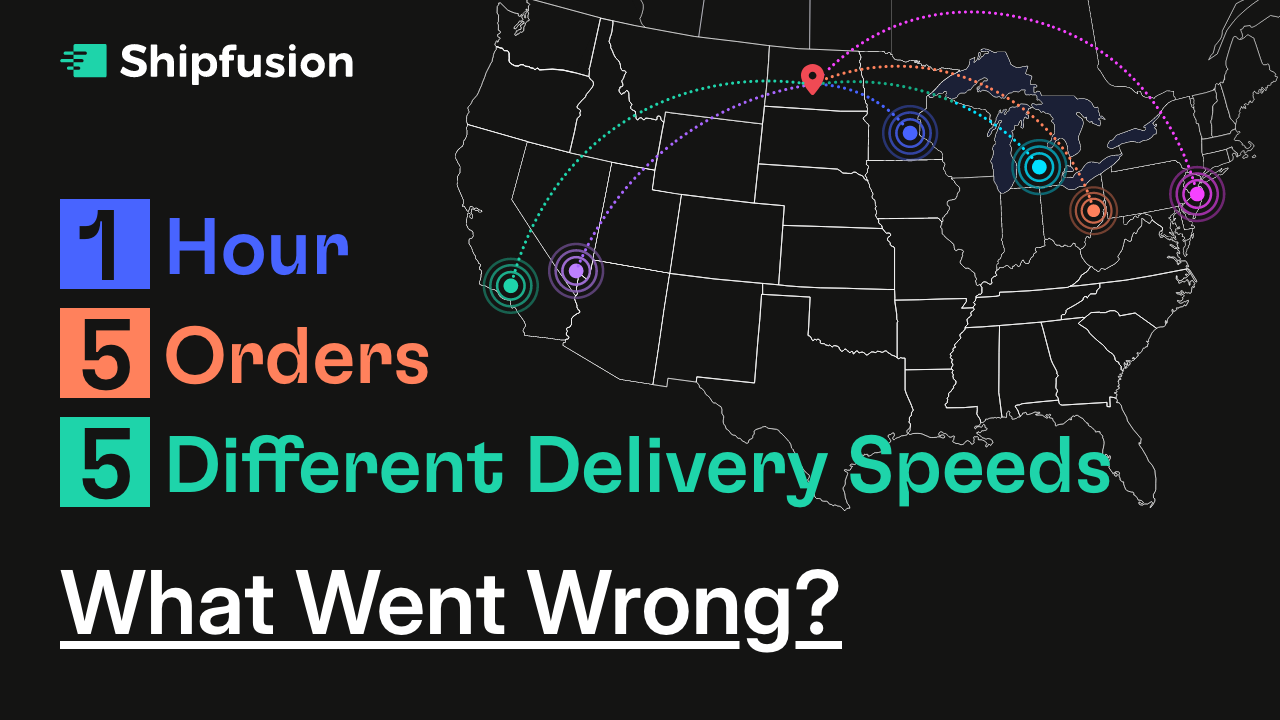
Most brands think churn shows up months later. It doesn’t. It starts right after checkout.
Shipfusion ordered from 5 leading clear protein brands within the same hour. Same cart moment. Completely different delivery outcomes. What broke trust wasn’t the product; it was fulfillment.
This report exposed where brands quietly lose customers:
- How post-checkout fulfillment gaps cause churn before marketing gets a second chance
- Why fulfillment accuracy matters more than speed
- How split shipments confuse customers and inflate support tickets
One order travelled over 2,000 miles, 57% farther than average, adding days and cost that never needed to exist. In habit-forming categories, those delays determine whether customers reorder or disappear.
Whether you’re confident in your customer experience or want a reality check, this report shows how your brand compares.
Download the DTC Delivery Files today!
While rooted in clear protein, these insights apply across supplements, wellness, CPG, and every DTC category.
⚡ The 5 Levers That Actually Move Paid Ads Performance
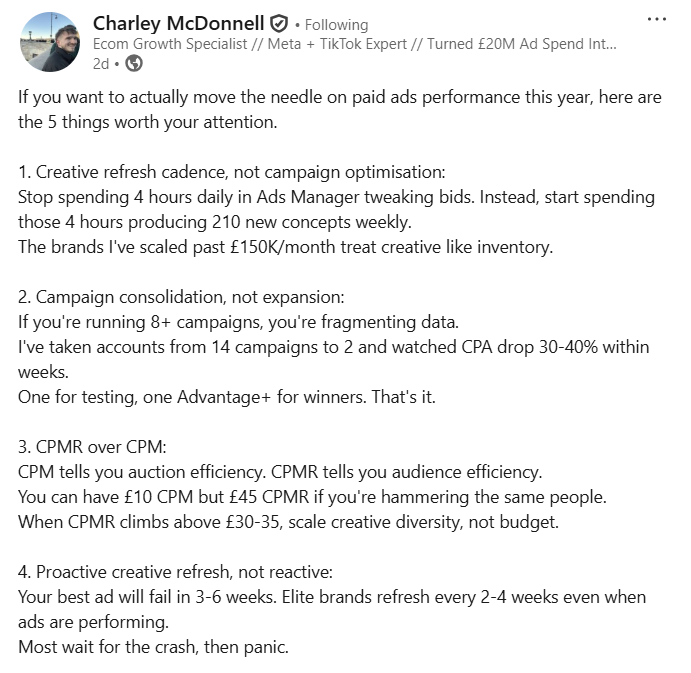
This isn’t about clever hacks or more dashboard tinkering. It’s about where attention actually compounds. The brands winning this year aren’t obsessing over bids or micro-optimizations. They’re building systems that keep the algorithm fed with fresh signal and enough room to learn.
Why this works: Creative is the real inventory. High refresh cadence keeps CPMs and frequency in check while unlocking new pockets of demand. Fewer campaigns concentrate data so Meta learns faster. CPMR exposes audience saturation before performance collapses.
The real takeaway: Performance doesn’t come from tighter control. It comes from better inputs, fresher creative, and systems that give the algorithm space to do its job. Brands that treat ads as living ecosystems consistently outperform those chasing perfection at the ad level.
Together with The Shift
The AI Newsletter That Solves Problems, Not Creates Them
AI can do a lot, but most newsletters leave you wondering what’s actually worth trying.
That’s where The Shift comes in. They don’t just tell you “what’s new” in AI.
Every edition answers one question: What can you do with AI today that saves you time, money, or effort?
You’ll see real-world examples, step-by-step mini-guides, and instantly usable prompts, plus free access to 3,000+ AI tools and top free AI courses so you can apply what you learn right away.
No hype, no wasted time, and no “just in case” news. If it’s in The Shift, it’s because it can make your work better today.
Subscribe to The Shift now - it’s free!
📽️ Reel of the Day

1. Suspense is created without a plot twist - Nothing dramatic happens, but the music manufactures tension. That uncertainty stretches watch time because the brain expects a payoff, and retention is what unlocks reach.
2. The creators place themselves inside the moment - The chefs aren’t presenting food, they’re emotionally invested observers, shifting the reel from brand content to human stakes, which makes viewers subconsciously root for an outcome.
3. The customer reaction becomes the conversion moment - Her first bite is the CTA. No captions, no selling. Real-time validation beats testimonials because it feels unfiltered, spontaneous, and therefore trustworthy.
This reel wins by turning food into a moment of emotional risk. Suspense drives retention, human reaction drives trust, and trust quietly drives sales without ever feeling like marketing.
Thanks for reading this edition! Keep pushing boundaries, testing ideas, and staying inspired. See you in the next edition with more ways to ignite your marketing success. 🥰