The Fastest Way to Steal Attention
🤓Every brand's best content opportunity might be sitting inside a competitor's worst moment, Catalog ads turn retargeting into behavior-based personalization, and more!
Welcome to a space where every edition delivers insights, strategies, and inspiration to fuel your advertising brilliance. 🤯
🤓The Competitor Hijack Playbook
Every brand's best content opportunity might be sitting inside a competitor's worst moment.
Burger King and Wendy's didn't schedule a CEO burger war. They spotted McDonald's fumble in real time, a stiff, awkward product launch video that the internet was already tearing apart, and moved within hours.
Burger King's president posted himself devouring a Whopper with sauce on his cheek. Wendy's president inhaled a Baconator on camera. Neither needed a brief, a campaign, or a budget meeting.
They just needed to be watching.
Why reactive content outperforms planned content
Planned campaigns carry risk. You're betting on an audience response before you have any signal. Reactive content is the opposite, the signal already exists. The conversation is live, the emotion is high, and your audience is already primed to engage.
The best reactive plays share three traits:
- They're fast, hours, not days
- They're specific, tied to one moment, not a general category
- They're confident, they don't explain the joke
Burger King didn't write a caption saying, "unlike some CEOs, our president knows how to eat a burger." They just posted the video. The audience connected the dots themselves, which made it land harder.
Building a system that catches these moments
The brands that win at reactive content aren't just lucky. They've removed the friction that kills speed.
Set up keyword alerts across every competitor brand, product name, and key executive. Layer in sentiment tracking so you're flagging spikes in negative conversation, not just mentions. The window on these moments is short, usually 12 to 24 hours before the internet moves on.
The bigger bottleneck is internal. Most brands lose reactive opportunities not because they missed the moment but because they couldn't get approval fast enough. The fix:
- Pre-approve a tone and content boundary for reactive social posts
- Designate one person with publish authority who doesn't need sign-off
- Keep a short swipe file of your brand's best reactive content so the team knows what "good" looks like
The recovery move is worth stealing
McDonald's eventually called their own burger "this product" in a follow-up post, deliberately. A single wink at the meme that showed they were in on the joke.
That's the underrated half of this playbook. When a competitor hijacks your moment, self-awareness recovers faster than silence or damage control. Lean into the meme before the meme defines you.
The brands paying attention to both sides of that equation, how to strike and how to recover, are the ones building the kind of social presence that no content calendar can manufacture.
Together with Omnisend
150,000 brands can't be wrong about email marketing
Your email tool should be making money. Right now, it's probably just making work.
Omnisend changes that. Campaigns that actually pay off, a platform so intuitive it feels like you built it, and a real support team on call around the clock - brands average $79 back for every $1 spent on Omnisend.
Here's what that looks like in practice:
- Dukier grew revenue 525%, with 55% of it coming from automations they set once
- Kate Backdrop hit a 1:300 ROI across omnichannel campaigns
- Vagari Bags pulled a 1:121 ROI from SMS alone
Over 150,000 brands already trust Omnisend - and 69% of their revenue runs on autopilot through automations they set once, with 17.3% higher CTRs to show for it.
You're up and running in 30 minutes. Fully migrated in 5 days.
⚡Catalog ads turn retargeting into behavior-based personalization
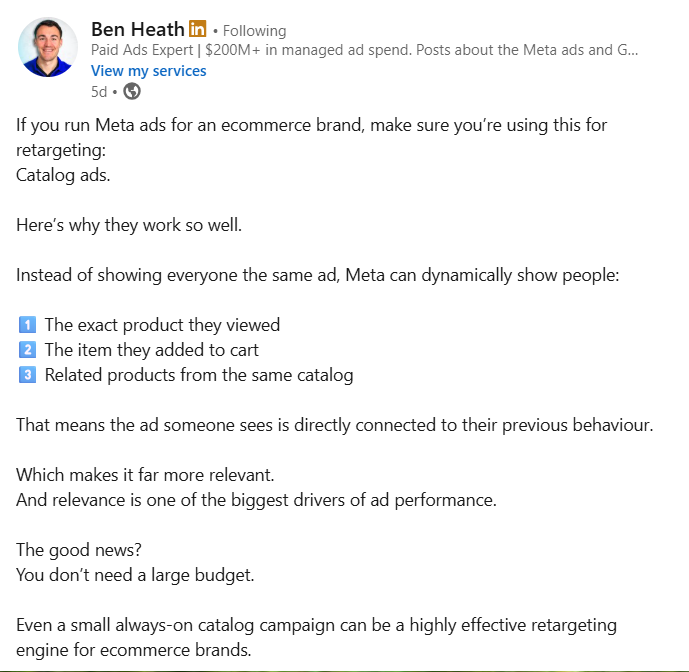
This approach uses catalog ads to dynamically match ad content with each user’s past behavior. Instead of one generic retargeting ad, users see the exact product they viewed, added to cart, or closely related items. It transforms retargeting from static reminders into highly personalized follow-ups.
Why it works: Personalized ads align directly with user intent signals. Showing the exact product or similar items increases relevance, which improves engagement and conversion rates. It reduces friction by continuing the exact shopping journey.
Where it needs balance: Catalog ads rely heavily on clean product feeds and accurate tracking. Poor data quality reduces effectiveness. Overexposure can also cause fatigue, so frequency control and creative variation are still important.
🚀 Reel of the Day
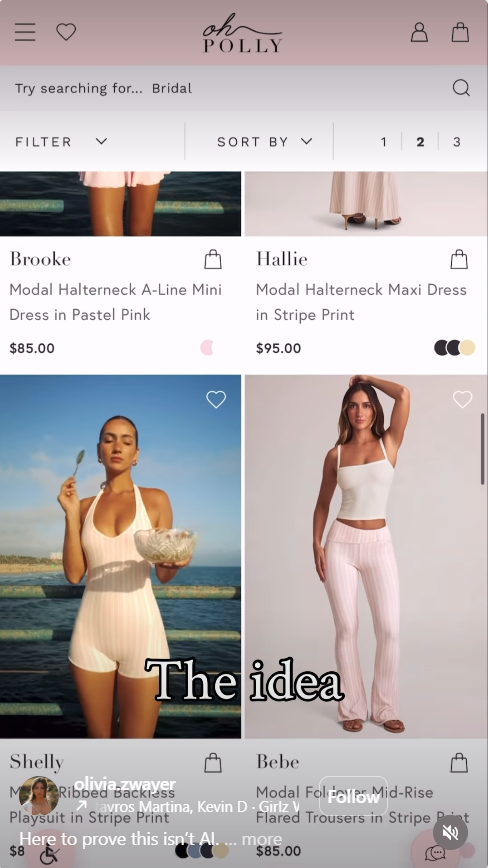
What Works:
1. Idea Bridges Platforms - What works here is the bridge. Reel doesn’t live alone; it flows into the website. Ice cream drop becomes navigation. That’s friction removal disguised as storytelling and interaction.
2. Physics Drives Curiosity - The falling elements, ice cream, lemons, objects, create a physical logic your brain follows. You’re not just watching, you’re tracking movement, which naturally increases retention and replay behavior.
3. Product Discovery Engineered - Instead of “click to shop,” they guide you visually. The drop lands exactly where products sit. It’s almost like gamified browsing, which reduces friction and increases exploratory behavior across SKUs.
Don’t treat content and website as separate. Design moments where content physically leads into product discovery. When storytelling becomes navigation, conversion feels like exploration, not effort.
Thanks for reading this edition! Keep pushing boundaries, testing ideas, and staying inspired. See you in the next edition with more ways to ignite your marketing success. 🥰