The Goal Gradient Effect
🎯 Why progress bars work better than discounts, and more!
Welcome to a space where every edition delivers insights, strategies, and inspiration to fuel your advertising brilliance. 🤯
🎯 The Goal Gradient Effect: Why Progress Bars Work Better Than Discounts
Every brand obsesses over discounts. But the real unlock isn’t price, it’s progress.
Humans are wired to chase visible completion, not invisible savings. When we see a bar moving, we want to finish it. That impulse, known as the Goal Gradient Effect, turns your cart into a motivation engine.
Because here’s the truth: shoppers don’t abandon carts because of cost. They abandon them because they feel incomplete.
⚙️ The Psychology of Visible Progress
Back in the 1930s, behavioral scientist Clark Hull discovered something fascinating:
The closer people got to completing a goal, the faster they worked to finish it. You see this every day.
- People run faster at the end of a race.
- They binge the final episodes of a show.
- And they’ll spend an extra $8 to unlock free shipping.
That’s not logic, that’s dopamine. When progress becomes visible, momentum becomes inevitable. This is where the cart progress bar quietly outperforms every discount banner.
💡 The Progress Psychology Pyramid
Let’s simplify the mechanism into three layers:
- Visibility – Make the reward tangible. (“Spend $6 more for free express shipping.”)
- Relevance – Align the reward with intrinsic value. (“Add your favorite coffee pods to unlock same-day delivery.”)
- Reward – Make the completion feel earned, not bought. (“You just unlocked free shipping!”)
This structure turns transactional spending into a mini-game of achievement. The customer isn’t chasing a deal; they’re finishing a story.
🧠 Why Discounts Decay and Progress Scales
Discounts trigger extrinsic motivation: they push people to act once. Progress triggers intrinsic motivation: it pulls people to act again. A shopper who completes a progress bar feels satisfaction, not depletion. That emotion sticks.
It’s why “Spend $50 to unlock free shipping” performs 2–3x better in repeat behavior than “Get 10% off your order.”
One creates a habit loop. The other creates price sensitivity.
⚡ The DTC Cart Optimization Loop
To operationalize this for your brand:
- Start small: Add a visual progress bar tied to a real reward (free shipping, early delivery, surprise item).
- Layer context: Dynamically update recommendations that help users reach the threshold.
- Add feedback: Show completion moments, confetti, icons, even subtle color changes.
- Track uplift: Measure not just conversion, but repeat rate and average order value post-interaction.
When executed well, you’ll notice the pattern, AOV climbs, discounts drop, and customers play to win.
💬 Why It Works
In a discount-saturated market, progress feels fresh because it appeals to identity, not greed.
It says: you’re close to finishing, not you’re late to save. That shift, from scarcity to satisfaction, is the future of DTC motivation design because the brands that gamify the journey don’t just sell more, they teach the brain to enjoy buying.
Together with Syncly
The social listening era you know is over.
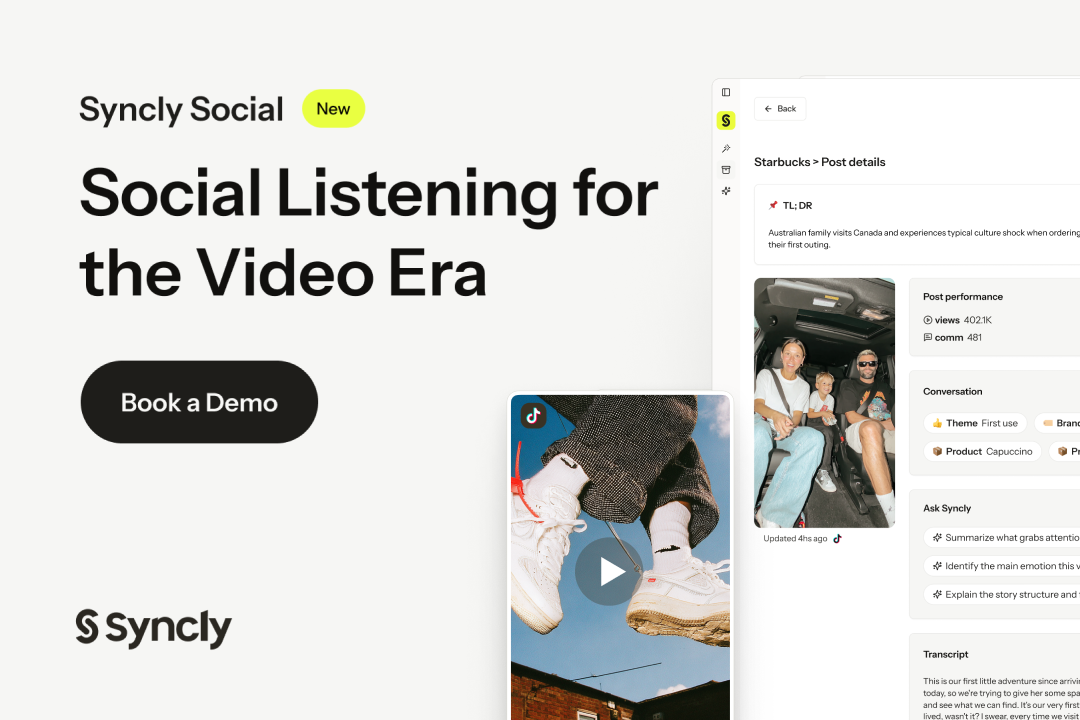
Every day, thousands of TikToks mention your brand, but your tools can’t hear them. They scrape captions while your customers speak in videos. That silence is costing you viral visibility, partnership opportunities, and real revenue.
Syncly Social changes everything. It’s the first AI tool that listens directly to TikTok videos, capturing every spoken brand or product mention, whether tagged or not, in real-time.
- Catch every mention before competitors even notice.
- Spot creators already promoting your brand and turn them into affiliates
- Track competitive sentiment, emerging trends, and viral patterns.
- Filter influencers by race, age, and location for high-precision outreach.
Top operators at Samsung, Tiffany & Co., and Adidas already use Syncly to predict what’s about to trend, not react after it does.
Your market’s voice isn’t written, it’s spoken. And every day you don’t listen, someone else does.
Book a demo call and get your free in-depth TikTok analysis today!
🎥 Reel of the Day
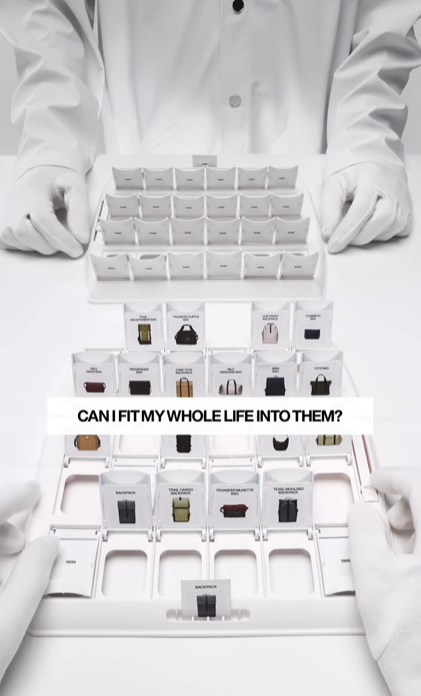
What works:
1. It’s “interactive without interaction” - The Guess-Who frame forces viewers to predict answers in their head, which spikes cognitive engagement, dwell time, and completion rate. Build more reels that trigger prediction loops with a binary reveal, because watch-to-end is the quiet growth lever here.
2. The board is a comparison engine disguised as play - Showing multiple SKUs in one frame reduces choice anxiety, positions the hero against a family, and quietly increases cross-category consideration and Saves. Treat frames like a shoppable matrix so viewers self-segment before they ever hit your PDP.
3. It engineers low-effort participation - Questions double as comment prompts and DM bait (“Which one are you guessing?”), while the clean aesthetic makes it highly shareable in Stories. Bake in identity questions that invite quick tags and replies; comments-per-impression is your reach multiplier.
This reel wins by turning merchandising into a playable puzzle: low-entropy visuals for instant recognition, prediction loops for retention, a repeatable cadence for distribution, and a collection view that nudges multi-SKU intent, build formats that are learnable by the viewer and the algorithm, not just watchable.
Thanks for reading this edition! Keep pushing boundaries, testing ideas, and staying inspired. See you in the next edition with more ways to ignite your marketing success. 🥰