This is why AI Forgets You
😬It visited your site. There was nothing to remember, LinkedIn ads work when you sequence trust before conversion, and more!
Welcome to a space where every edition delivers insights, strategies, and inspiration to fuel your advertising brilliance. 🤯
😬AI visited your site. There was nothing to remember.
Your customers see everything. The AI crawler that just left your site saw an empty shell.
Same URL. Same page. Completely different experience, and you had no idea the second version existed until your brand stopped appearing in AI answers you should be dominating.
That's not an algorithm decision. That's a mechanical reality nobody explained to your dev team.
What actually happens during an AI crawl
AI crawlers don't wait. They don't execute scripts or interact with your page the way humans do. They arrive at raw HTML, read whatever is immediately present, and leave.
For a static site, that's everything. For a JS-heavy site, that's often a navigation bar, a footer, and a blank content area where your product descriptions and key claims were supposed to appear.
The crawler didn't miss your content. Your content didn't exist yet at the moment it mattered.
What's living in the execution gap
Around 30% of sites have critical content that only appears after JavaScript executes. The most commonly invisible content:
- Product descriptions and pricing. Loaded dynamically after render. The crawler sees the container. The information inside never arrives.
- Key value propositions. Hero sections built in JS frameworks look identical to humans on every device. To a crawler, they're blank.
- Reviews and social proof. Third-party widgets and dynamically loaded testimonials are among the most missed content types. The crawler finds the placeholder. Never the content.
AI systems aren't choosing competitors over you. They're citing whoever's content was actually present at crawl time.
How to close the gap
Find out which pages are affected. Semrush One's Site Audit JS Impact Report shows the exact difference between your raw HTML and fully rendered pages, revealing precisely what AI crawlers see when they visit. You can try it for free for 7 days.
Move critical content to static HTML. Product descriptions, pricing, and core value propositions don't need dynamic loading. Moving them to raw HTML immediately closes the visibility gap for every crawler that visits afterward.
Prioritize by page value not effort. Fix product pages, category pages, and landing pages first. These are what AI pulls from when answering buying-intent queries.
AI didn't forget your brand. It visited, found nothing worth remembering, and cited someone else. The fix isn't a rebuild. It's making sure next time there's actually something there.
Together with Grapevine
Consumers trust experts. They tolerate brands.
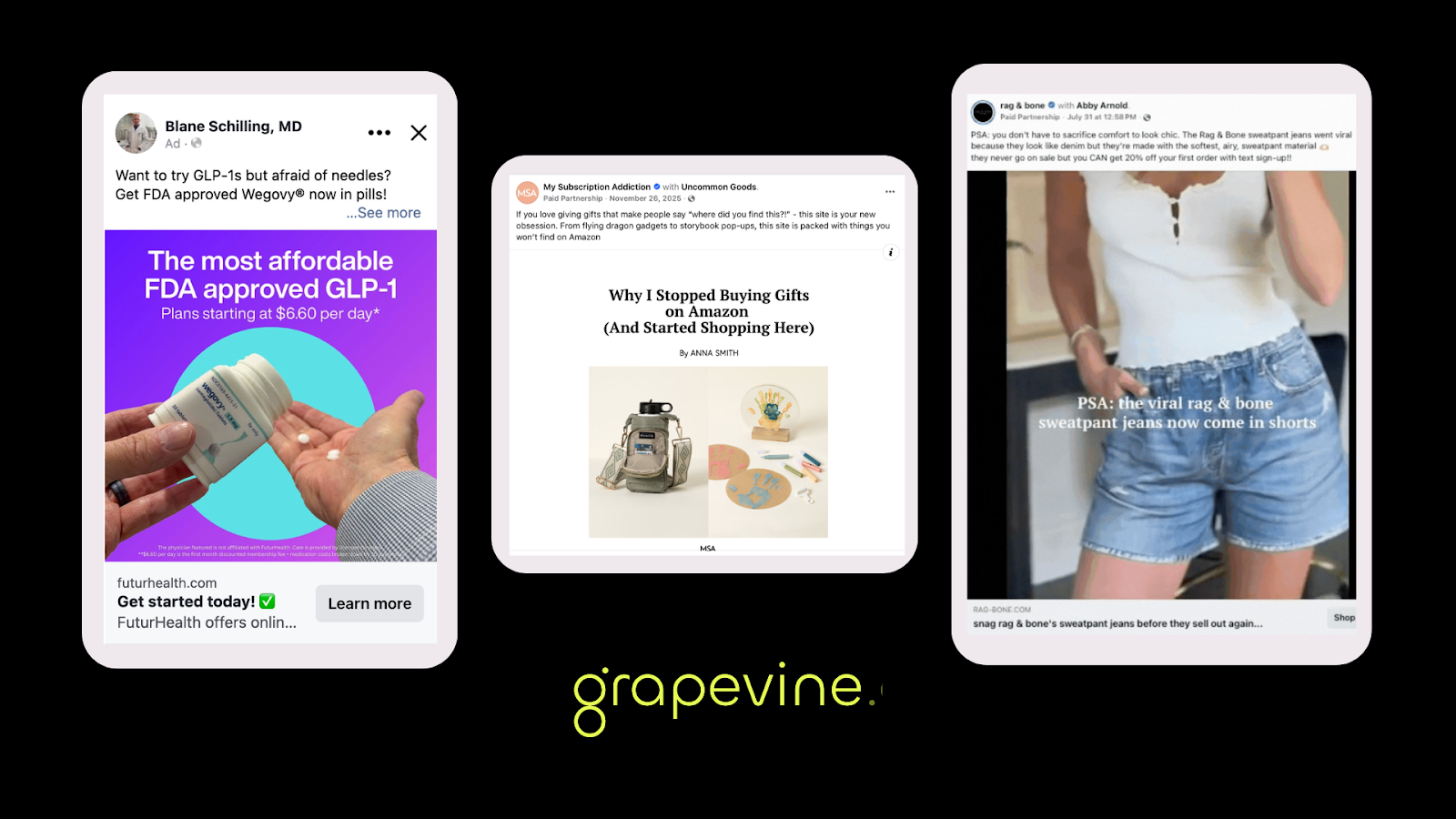
Consumers can smell a brand talking about itself. They scroll past it automatically, it doesn't matter how good the creative is.
What they don't scroll past: a registered dietitian recommending a protein bar. A dermatologist breaking down a skincare routine on camera. A running coach reviewing a shoe mid-run.
Your branded handle is working against you. Not because the creative is bad, but because the source is discounted before anyone reads the first line.
Grapevine runs creator whitelisting and publisher advertorial as one fully managed service. Brief to launch, no platform juggling, no separate agency relationships.
- Nood hit 4× ROAS while scaling spend using whitelisted creator ads
- Honeylove cut CPAs by over 20%, combining creator and publisher handles
- Mathnasium cut Meta CPL by 33% in under 30 days
Grapevine ads outperform branded creative by 25%+ across platforms. Consistently, not occasionally.
👉 Book a free strategy call for your first campaign strategy session - no commitment required.
⚡ LinkedIn ads work when you sequence trust before conversion
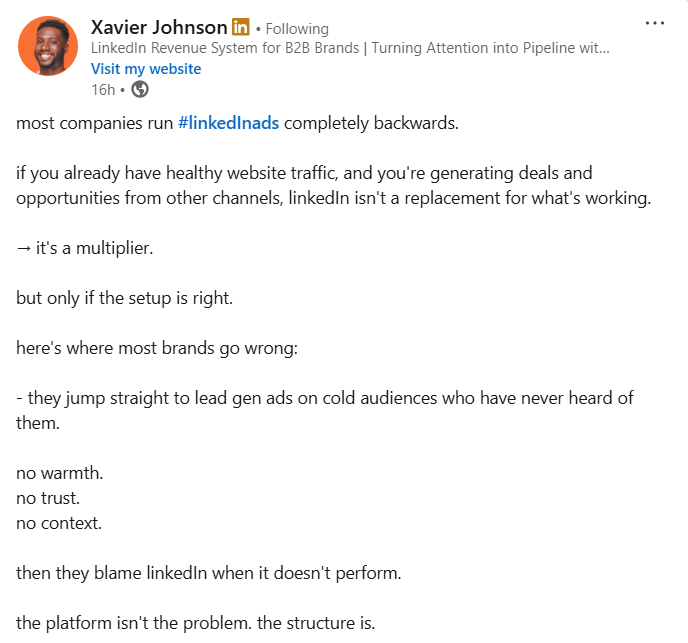
This approach reframes LinkedIn ads as a structured funnel, not a direct response channel. Instead of pushing cold audiences into lead forms, it builds familiarity first, then nurtures with deeper content, and finally converts. Each stage earns the right to move the user closer to action.
Why it works: B2B buyers require trust before taking action. Sequential exposure builds recognition and credibility over time. By the time conversion ads appear, the audience is already familiar, improving lead quality and lowering resistance.
Where it needs balance: Longer funnels require more budget and patience. Some niches with strong intent may convert faster without full nurturing. Over-sequencing can slow down pipeline velocity if not aligned with deal urgency and sales cycles.
🚀 Reel of the Day
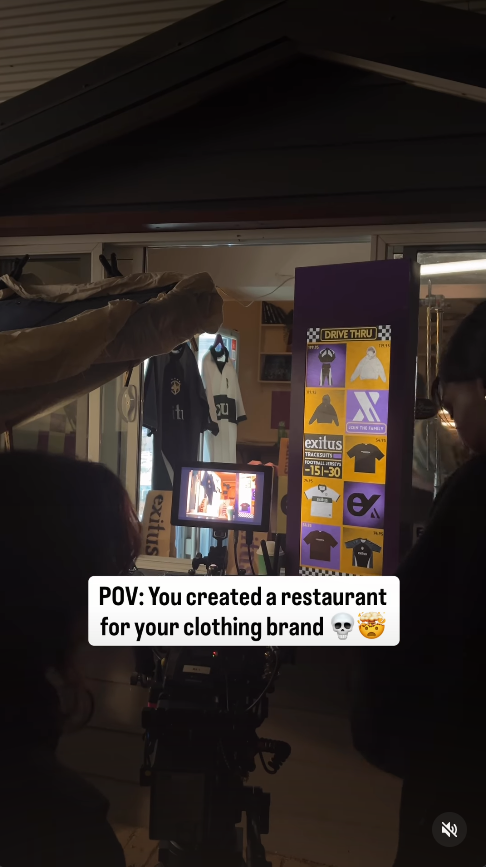
What Works:
1. POV pulls you in - The POV framing is actually doing a lot here. It doesn’t feel like content; it feels like you’re inside the situation. That small shift is what makes you stay.
2. Familiar but flipped - Drive-thru is such a known behavior, you instantly get it. But selling clothes there? That twist is what makes your brain go, “Okay, wait, I need to see this.”
7. Set builds belief - Everything looks legit. The window, the menu board, the lighting, and even the mic. It doesn’t feel like a skit; it feels like a real place, and that matters.
Take something people already understand, flip it with your product, and don’t over-explain it. Let people sit in the confusion a bit; that’s where the attention actually builds.
Thanks for reading this edition! Keep pushing boundaries, testing ideas, and staying inspired. See you in the next edition with more ways to ignite your marketing success. 🥰