Traffic isn’t the goal
😪 Why rankings without revenue signal broken SEO architecture, and more!
Welcome to a space where every edition delivers insights, strategies, and inspiration to fuel your advertising brilliance. 🤯
🔍 The SEO That Actually Moves Revenue
Views are vanity. Checkout is the metric that matters.
Most SEO strategies are built around one thing: getting traffic. And they succeed at exactly that, delivering visitors who read, bounce, and never come back. The content ranks. The revenue doesn’t follow.
The problem isn’t the channel. It’s the architecture.
Informational content gets read. Transactional content gets customers.
There’s a version of SEO that treats every search as an opportunity to educate. And there’s a version that treats every search as a signal of where someone is in a buying decision.
The second version builds pages around what people are actually about to do, not just what they want to know.
For a compression socks brand, that’s the difference between writing “benefits of compression socks” and building dedicated pages for “compression socks for nurses,” “compression socks for shin splints,” “compression socks for long haul flights.”
Same product. Completely different buyer. Completely different conversion rate.
Comparison and alternative searches are the highest-leverage entry points nobody builds for
When someone searches “Bombas vs Wellow” or “Sockwell alternative,” they’ve already decided to buy. They’re just deciding who from. That’s not a research moment, that’s an open door.
A well-structured comparison page that lays out real differences clearly, without pretending competitors don’t exist, and positions your brand as the sharper choice for a specific buyer, that page does more conversion work than ten informational blogs.
Link equity should follow revenue intent, not content volume
Where authority flows determines what ranks. Pumping backlinks into blog content while your category and comparison pages sit unamplified is backwards. The pages closest to purchase deserve the most authority behind them.
A smarter split looks like: half your link equity reinforcing the homepage, the rest flowing toward transactional category pages and comparison content, the assets that actually sit between a buyer and a decision.
The search just got more complex
SEO now means showing up in Google, AI overviews, ChatGPT, and Perplexity. If comparison queries are surfacing your competitors in AI answers but not your brand, that’s not a content gap, it’s a revenue gap.
SEMrush One maps visibility across all of it, surfaces the intent clusters worth owning, and connects keyword positions to actual commercial outcomes. You can try it free for 7 days.
The goal was never to have more traffic. It was always a shorter distance between the problem and the purchase.
Build the architecture around that, and the traffic takes care of itself.
Together wth Norton Neo
AI That Lives In Your Browser. Not In The Cloud.
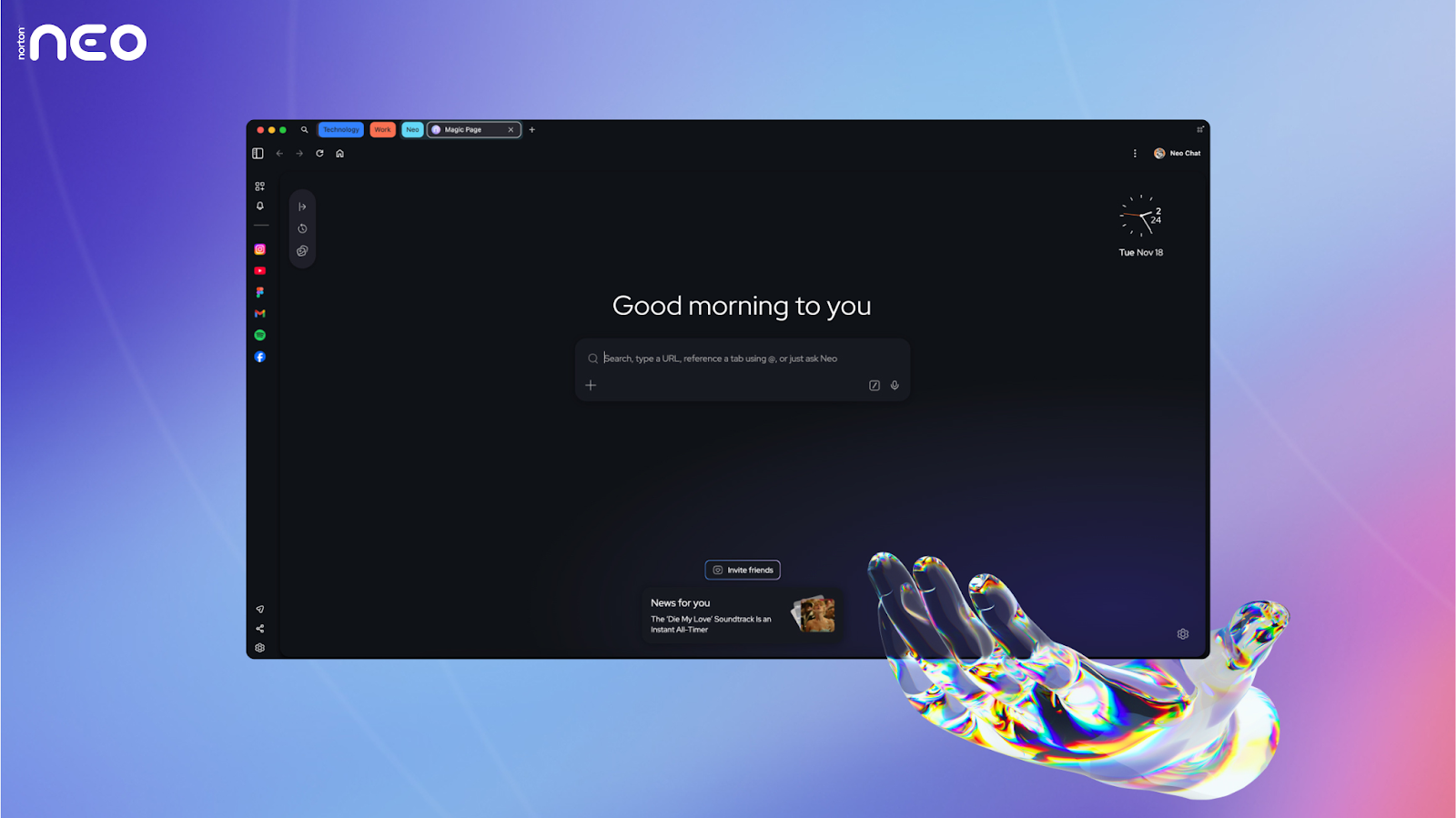
You had exactly what you needed open. Then your browser crashed and took all 23 tabs with it. The research, the doc, the three reference pages, gone.
Now you're spending 20 minutes rebuilding a session that took two hours to build.
Norton Neo is the world's first AI-native browser, meaning the AI isn't an extension you installed; it lives inside the browser itself.
It tracks your open tabs, understands how you're working, and keeps your context safe so when something goes wrong, you're not starting from zero.
- Recover full sessions across any device instead of rebuilding from scratch
- Tabs are organized by context, not the order you opened them
- Keep browsing history local so sensitive research never leaves your machine
- Block phishing and malicious sites before they compromise payments or logins
No extra extensions stacking up. No AI tools floating in separate tabs. Just a browser built for how people actually use the web today.
If you want early access to what’s coming next, join the Norton Neo Discord and connect directly with the team building it.
⚡Creative-First funnels that extend belief
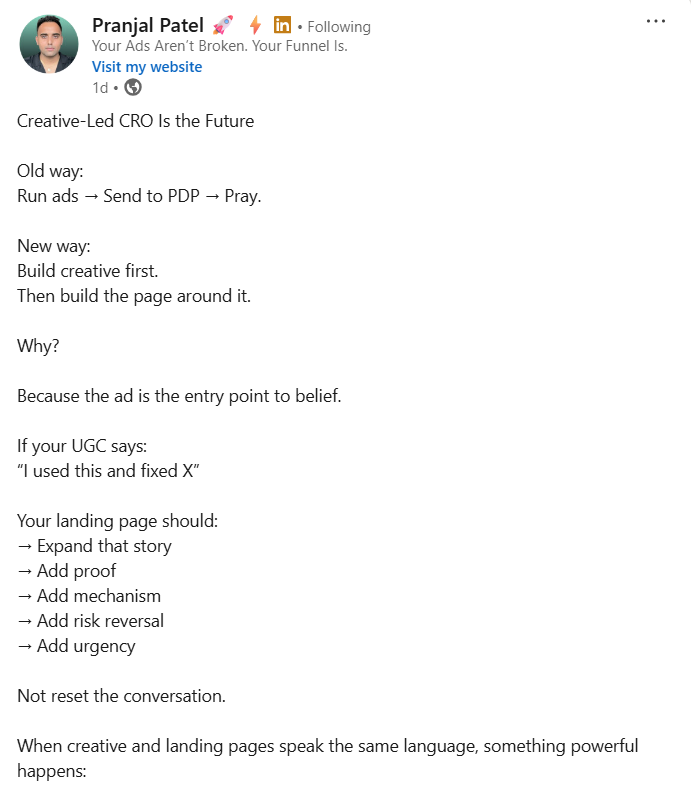
This strategy flips traditional CRO by making ad creative the foundation of the funnel. Instead of sending traffic to a generic PDP, the landing page is built to extend the exact belief formed in the ad.
The page amplifies the original promise through proof, mechanism, and risk reversal rather than restarting the conversation.
Why it works: Belief forms in the ad. When the landing page continues that narrative, cognitive friction drops. Message continuity increases engagement depth, lowers bounce, and compounds trust, lifting conversion rate and revenue per visitor.
Where it needs balance: Angle-specific pages can fragment brand cohesion and strain resources. Overfitting to creative may reduce scalability. Without strong product-market fit and real proof, message matching alone will not fix weak economics.
🎊 Events
📊 AI That Proves Itself
March 5 | 11 AM - 6 PM ET | Virtual Event
Most AI initiatives die in budget reviews. At the AI:ROI Conference, Brice Challamel, Head of AI Strategy and Adoption at OpenAI, and Diane Igoche, Director of Agentforce Governance at Salesforce, break down how enterprise teams turn AI from experimentation into measurable revenue and operational impact.
⚡ When Good Enough Gets Expensive
March 10–11 | Virtual Event
If your site feels “fine” but conversions lag, speed might be quietly taxing your growth. At Cloudways Bootcamp, experts tear down real production websites live, exposing performance leaks from heavy scripts to Core Web Vitals failures and server gaps. Eight sessions, 20+ speakers, and 1,500+ operators focused on fixes you can implement immediately.
Can’t attend every session live? Register anyway, you will get the recordings within 24 hours.
🚀 Reel of the Day
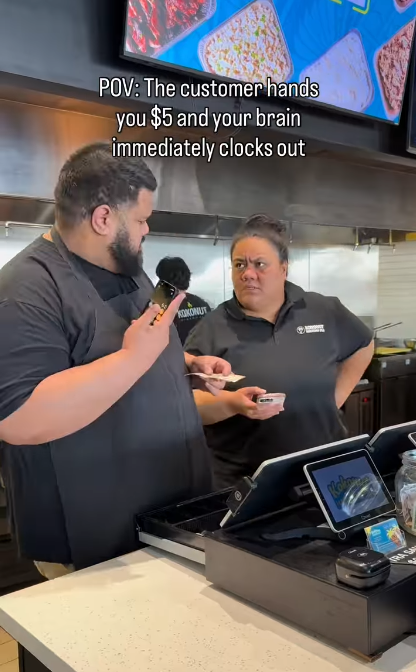
What Works:
1. They leveraged a trending audio as built-in distribution, but layered brand-specific context over it, which protects originality while riding algorithmic lift and improving retention curve through familiar auditory pattern recognition.
2. Notice how the product shelves and POS machine remain in frame, not centered but visible, anchoring the humor in a real clinic environment, reinforcing credibility and friction removal for new prospects.
3. What most brands miss is this restraint; they would have added offers or before-and-afters, but here native storytelling carries the message, protecting long-term brand equity over short-term lead grabs.
Use trending audio as a narrative container, then dramatize one operational truth visually, exhaustion, chaos, celebration, while keeping subtle environmental proof in frame to convert humor into demand signaling.
Thanks for reading this edition! Keep pushing boundaries, testing ideas, and staying inspired. See you in the next edition with more ways to ignite your marketing success. 🥰