Wtf is GEM in Meta?
💡GEM Changed What “Scaling Creative” Actually Means so let’s know what it really is, how to actually define a strong POV, and more!
Welcome to a space where every edition delivers insights, strategies, and inspiration to fuel your advertising brilliance. 🤯
💡 GEM Changed What “Scaling Creative” Actually Means
Meta’s Generative Ads Recommendation Model (GEM) is now the system scoring every impression across Facebook and Instagram.
It doesn’t think in audiences. It doesn’t think in ads.
It evaluates matches between creative representations and individual behavioral timelines.
That changes what actually scales. Here are the questions that matter now.
1️⃣ Does this creative give GEM enough surface area to match against behavior?
GEM evaluates ads by comparing creative features to thousands of recent, timestamped user actions. If multiple ads collapse into the same feature cluster, GEM has fewer ways to confidently match them to different behavioral states.
This is why visually similar ads behave like one input, even when copy changes.
👉 Do This: Audit whether your ads produce genuinely different creative representations, not just variations that look distinct to humans.
2️⃣ Can GEM learn from this idea across placements?
GEM learns across surfaces. Interaction data from Reels informs Feed predictions and vice versa. When creative is only effective in one placement context, GEM’s ability to generalize learning is limited.
That limits calibration, which directly affects CPA stability and bid accuracy.
👉 Do This: Ensure each core idea produces usable signal in more than one placement, not just one high-performing slot.
3️⃣ Does this idea remain legible across different behavioral sequences?
Two people in the same interest bucket can receive completely different scores on the same ad because GEM weighs recent actions heavily. An idea that only aligns with one type of behavioral sequence will exhaust its matching opportunities quickly.
This is where scale quietly caps.
👉 Do This: Test whether the idea earns engagement from users with different recent behaviors, not just the same conversion path.
The takeaway
GEM doesn’t reward “better ads.”
It rewards ideas that can be confidently matched to many behavioral journeys.
Campaign structure is downstream. Creative legibility to GEM is upstream. If you want lower CAC under this model, your creative strategy has to answer one question clearly:
How many distinct behavioral contexts can this idea meaningfully align with?
That’s the unit of scale now.
Together with Grapevine
📲 Whitelisting That Actually Scales (Creators + Publishers)
Most brands know whitelisting works to lower CPAs and find new audiences. Few can make it repeatable at scale.
Grapevine gives you both creator and publisher networks in one managed service:
Creator Whitelisting - They source, vet, and negotiate with verified creators (doctors, coaches, finance experts, beauty insiders), managing and handling access and production. Authentic social proof without operational chaos.
Publisher Whitelisting - Their network of 14+ niche publishers (including My Subscription Addiction) provides advertorial landing pages and established handles. You get third-party trust plus storytelling space that bridges discovery to conversion.
Whitelisted content outperforms branded ads by 20-30%. Creator + publisher handles deliver signal diversity and testing volume that's hard to replicate independently.
Mapping Q1 creative strategy? Now's the time to test.
👉 Book a strategy call by February 27th for $500 off your first campaign.
⚡ How to actually define a strong POV
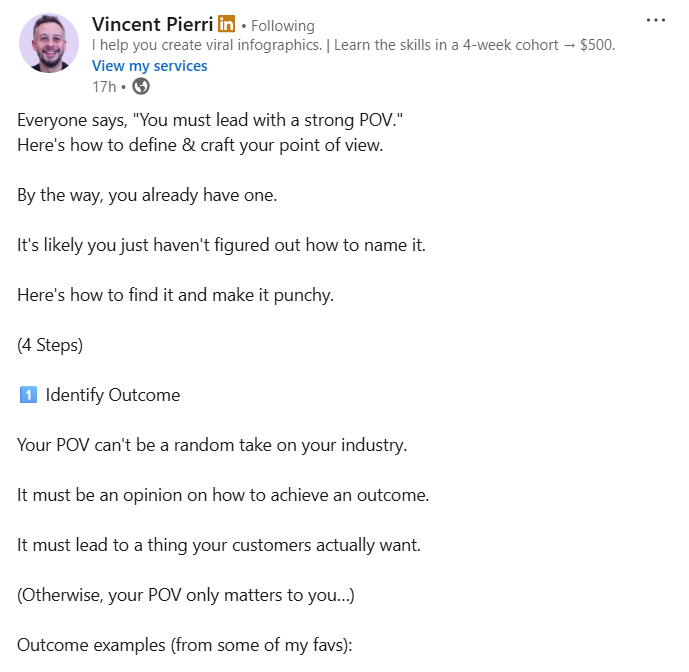
A strong POV isn’t about being loud or contrarian for fun. It’s about having a clear opinion on how to get your customer to a result they care about. Most people already have one, they just haven’t named it or sharpened it yet.
How it works: Start with the outcome your customer wants. Then call out the common approach that isn’t working, something people genuinely believe in. From there, offer a better path that feels obvious to you but uncomfortable to others. Finally, compress that belief into one sharp sentence by contrasting the old way with the new way.
The real takeaway: A real POV creates friction. If nobody disagrees with you, it’s probably too safe. Name what’s broken, fight for a better way, and repeat it until people associate that idea with you. Argument is a signal that your POV actually landed.
Together with The Shift
The AI Newsletter Built For People Who Actually Use AI
Many AI newsletters are interesting. Very few are useful.
The Shift is built for execution, not curiosity.
Every issue shows you exactly how people are using AI right now to save hours, reduce costs, or replace entire workflows. No theory, no tool dumps, no trend watching.
You get practical breakdowns, daily copy-paste prompts, simple systems, and access to over 3,000+ vetted AI tools and a tried and tested Prompts Library (500+ Prompts)
So you can apply everything immediately. If AI is part of your work, but still feels underutilized, this newsletter fixes that.
Subscribe to The Shift. It’s free!
🎥 Reel of the Day
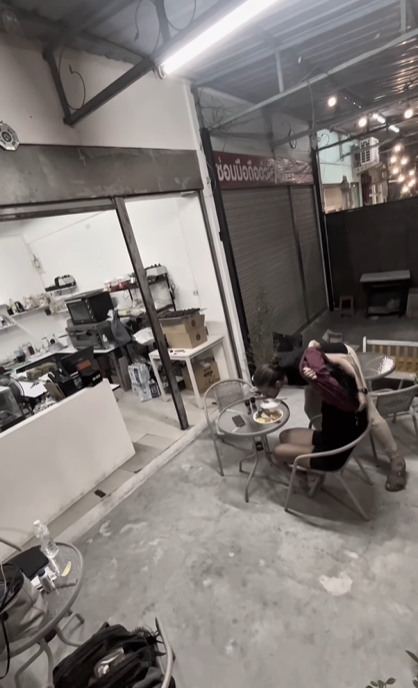
What Works:
1. Comedy scales when the brand stays invisible - The salad is never explained, labeled, or praised. It exists as part of a social situation, which makes it feel real, everyday, and worth caring about. Brands that embed products inside human tension outperform brands that showcase features.
2. The real growth lever is moral tension, not humor alone - People are not just laughing, they are reacting to unfairness. That emotional friction creates comments like “I would be so mad,” “That’s not okay,” and “I didn’t see that coming,” which fuels algorithmic reach far beyond laughs.
The Reel works because it weaponizes kindness to sneak in betrayal, uses food as an emotional trigger, and makes the viewer complicit in the joke. It proves that the fastest way to scale brand content is not to sell value, but to interrupt social norms in a playful, human way
Thanks for reading this edition! Keep pushing boundaries, testing ideas, and staying inspired. See you in the next edition with more ways to ignite your marketing success. 🥰