Your Dashboards Are Lying to You
❤️ Customers don’t move through channels, they move through belief, Why great content flops and “average” content goes viral, and more!
Welcome to a space where every edition delivers insights, strategies, and inspiration to fuel your advertising brilliance. 🤯
📊Your Dashboards Are Lying to You
Growth discussion still starts with channel discussions,
TikTok performance. Meta performance. Shop performance.
Those dashboards feel clean. They are also misleading. Because customers do not move through channels. They move through states of understanding.
Discovery, consideration, and conversion are not platforms. They are phases of belief.
A customer might first see a product on TikTok, understand it through a creator's explanation days later, and finally convert after a retargeted ad removes one last objection. No single channel “won” that sale, but every channel contributed.
Channel-based reporting collapses that journey into isolated wins and losses.
The upper funnel looks inefficient. Retargeting looks heroic. Education looks optional.
So budgets get pulled from learning and pushed toward capture. Not because it works better, but because it is easier to measure.
This is how brands optimize themselves into a corner.
They overfund the last visible step and starve the earlier ones. They mistake unfinished demand for weak demand. They call it discipline while slowly narrowing who the brand can convert.
When growth stalls later, teams blame creative, algorithms, or competition. The real issue was interpretation.
This problem compounds because financial reporting follows the same structure.
Revenue is attributed to channels, not behavior shifts. Costs are evaluated per platform, not per stage of belief. Leadership sees “inefficiency” where customers are simply not ready yet.
As the business grows, this gap widens. Manual reporting lags behind reality. By the time finance catches up, decisions have already been made.
This is often where teams benefit from external financial infrastructure. Belay’s Guide to Outsourced Accounting explains how growing companies regain clarity by aligning reporting with how customers actually move, not how platforms label them.
The solution is not abandoning channel metrics. It is demoting them.
The primary question is not “Which channel converted?”
It is “What belief changed?”
Did the customer understand the product better? Did risk get reduced? Did friction disappear?
When reporting follows belief progression instead of platform boundaries, spend decisions change. Education stops looking wasteful. Retargeting stops getting overfed. Growth becomes more predictable without becoming fragile.
The brands that scale cleanly stop asking where the sale happened. They ask why the sale finally made sense. Channels are the distribution. Behavior is the system.
When you measure the system instead of the surface, growth stops oscillating and starts compounding. That is the difference between efficient-looking dashboards and durable businesses.
Together with Insense
Stop Guessing. Start Working With Creators Who Actually Convert
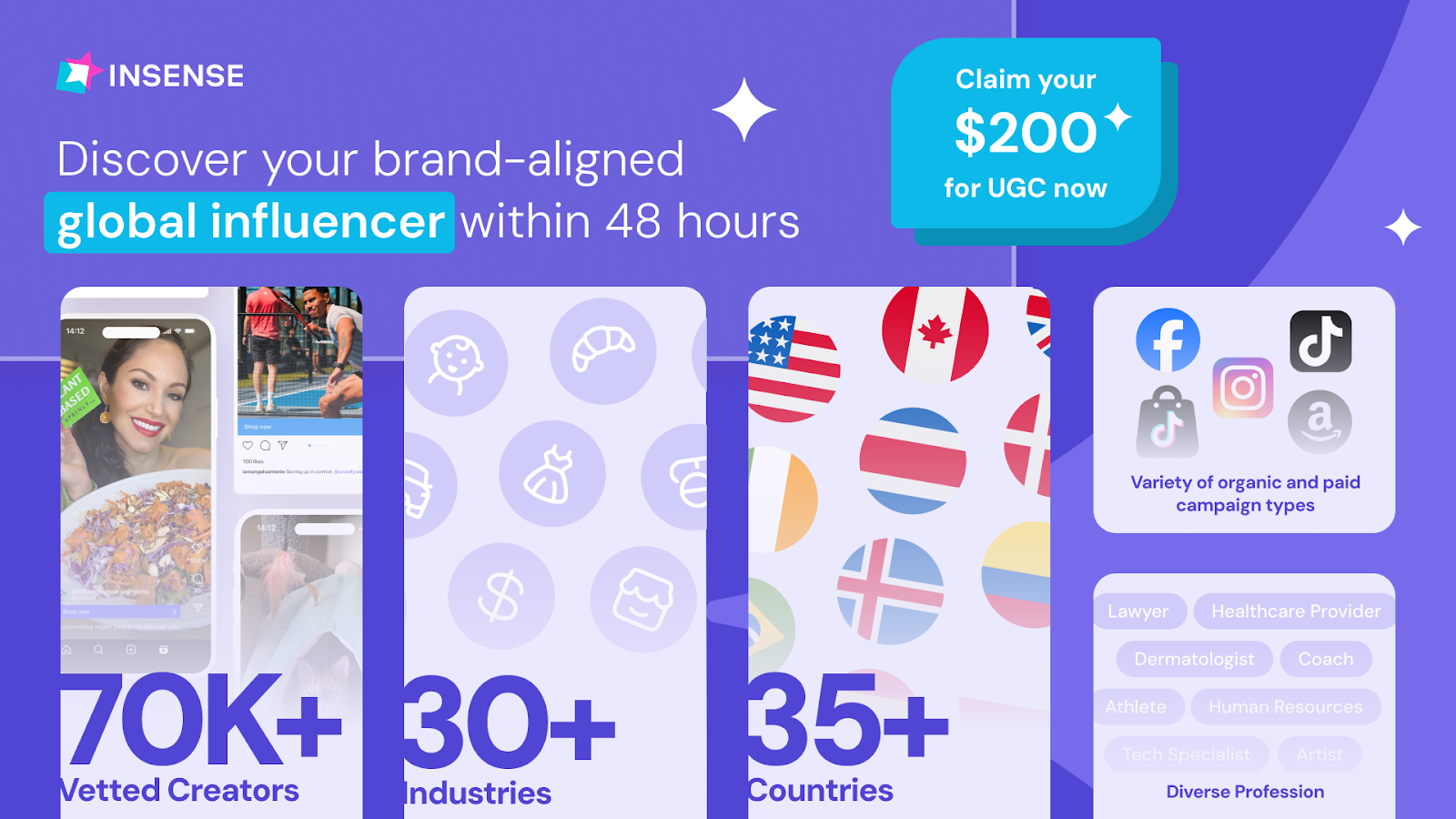
You don’t need more creators. You need the right creators, the ones who look like your buyer, speak their language, and move your metrics from the first piece of content.
But manually sourcing them? Total momentum killer and the fastest way to fall behind in Q1.
That’s why 2,000+ brands and agencies now rely on Insense.
In under 48 hours, you get high-fit creators hand-matched to your exact niche so you can run everything end-to-end: product seeding, UGC, TikTok Shop, Meta Partnership Ads, and TikTok Spark Ads without the sourcing chaos.
Here’s what brands are actually seeing:
- Revolut: 350+ UGC assets from 140+ creators across 10+ countries.
- goPure: 150+ UGC videos generated at zero cost through product seeding.
- Maty’s: 12x higher reach using TikTok Spark Ads at roughly $0.60 CPC.
Now imagine your Q1 pipeline built on creators who actually convert, not creators you hope will convert.
Book a free strategy call by Jan 16th and get a $200 bonus for your first campaign!
⚡Why Great Content Flops and “Average” Content Goes Viral
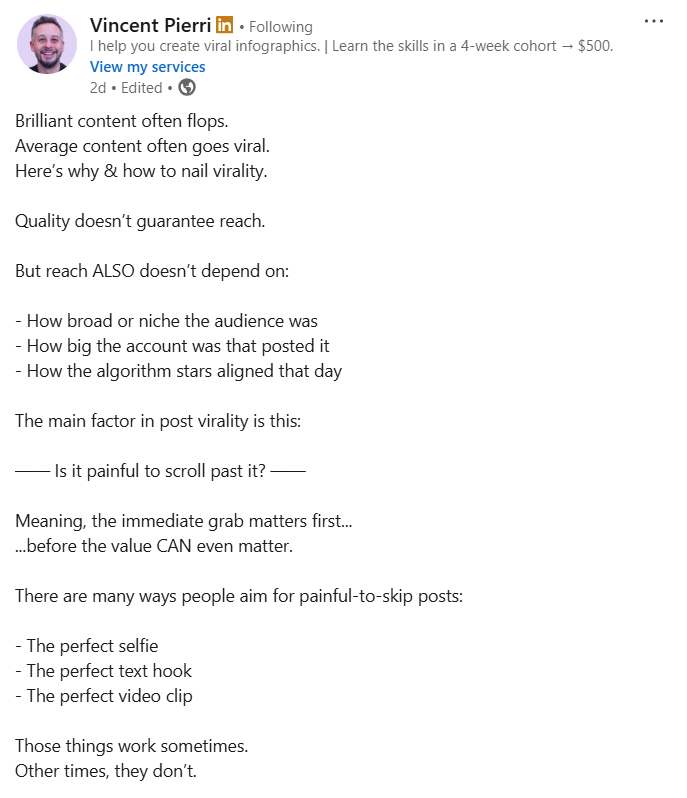
This isn’t about quality vs effort. It’s about scroll physics. Posts fail because they’re easy to ignore. Virality starts before value even has a chance, with one simple question: is it painful to scroll past?
Why this works: Animated infographics reliably interrupt scrolling because they create motion, tension, and visual curiosity at once. They don’t rely on the perfect selfie or clever hook that works one day and dies the next. When shapes move, colors pulse, and information unfolds gradually, people pause.
The real takeaway: Virality isn’t luck or algorithm worship. It’s attention engineering. If your content can’t physically stop the scroll, the idea won’t matter. Animated visuals are one of the few formats that consistently buy you that first second. Nail that, then layer the insight on top.
🚀 Reel of the Day

What Works:
1 - The hook isn’t the tee, it’s the identity switch - The reel doesn’t open in fashion. It opens with a person who feels incomplete. “This is Noah” sets a character anchor, not a product intro. Viewers stay because humans follow people, not SKUs.
2 - The brand positions the product as fate, not choice - “Noah didn’t choose the Sailor Tee. The Sailor Tee chose him.” That’s powerful positioning. It reframes the product from utility to identity.
3 - The BTS reveal earns credibility, not vanity - Showing the camera at the end reframes the brand as creative, not try-hard. It invites comments like “this was worth it” and boosts shares because viewers feel in on the process.
This reel sells belonging, not cotton. It uses character, humor, and cinematic escalation to turn a basic tee into an identity badge. That’s why it gets watched, shared, and remembered without ever pushing a hard CTA.
Thanks for reading this edition! Keep pushing boundaries, testing ideas, and staying inspired. See you in the next edition with more ways to ignite your marketing success. 🥰