Your Flop Videos Aren’t Fails
🎯Rebuild Losing TikToks into High-Retention Wins, Choosing the right funnel for scale, and more!
Welcome to a space where every edition delivers insights, strategies, and inspiration to fuel your advertising brilliance. 🤯
🎯 Your Flop Videos Aren’t Fails
Everyone knows when a video flops. Not enough views. Drop-off in the first 3 seconds. Most teams scrap it, blame the hook, and move on.
But great marketers don’t waste flops. They run a story arc feedback loop, where failed videos become blueprints for better ones. Because most of the time, it’s not the product, it’s the arc.
What drop-off data is actually telling you
When retention falls off a cliff after 4 seconds, it’s rarely because the idea was wrong. It’s because the viewer didn’t know why they should stay.
The issue isn’t just the first line; it’s the whole structure:
- Did you open with tension?
- Did the viewer know what payoff was coming?
- Was there too much setup and not enough escalation?
The average underperforming TikTok isn’t a bad idea; it’s an unfinished narrative. And most creators abandon it instead of rebuilding the arc.
Here’s how smart teams flip that into a win:
- Pull retention and watch-time data from your content system
- Mark where drop-offs happen, often between hook and escalation
- Layer in voice-of-customer signals using Syncly Social
Syncly surfaces the spoken phrases from winning creator videos so you can compare tone, structure, and payoff.
If your video dropped at the 6s mark, but Syncly finds 7 creators who opened with “This changed my morning in 30 seconds” that’s your new intro.
You can book a call with Syncly Social’s founders and claim your free, in-depth TikTok analysis.
The story arc salvage framework
Take any flop and reframe it using this 3-beat structure:
1. Tension upfront: Don’t just open with the product. Open with the problem.
→ Instead of “I’ve been using this hair oil,” say “I couldn’t fix my greasy roots without killing my ends.”
2. Escalate with contrast: The hook isn’t enough—you need to show movement.
→ Before/after visuals, side-by-side swipes, surprise comparisons.
3. Pay off with insight: Don’t just show results. Show what changed for the creator.
→ “I thought I needed 5 products. Turns out I needed one that didn’t strip.”
Now retest the same core idea. Same creator, same product. Different arc.
Final thought:
Watch-time is a window into the structure, not the content. Most brands rebuild from scratch when they should be rebuilding the curve. One dropped video could become your best ad, if you know how to spot the story that never got finished.
Together with Semrush
The Data’s Clear. Here’s How E-commerce Actually Changed.
The Semrush × Statista 2025 Ecommerce Report analyzed billions of visits and sales signals across 190 markets, and the data points to a full reset in how people buy, click, and convert.
Here’s what’s reshaping marketing playbooks right now:
• Video-led landing pages convert 42% higher than static ones; attention now drives trust.
• 46% of shoppers buy from the first brand they click, making recall a revenue lever.
• AI-generated shopping queries are growing 8× faster than organic.
These shifts are reshaping the fundamentals: tariffs redirecting traffic, U.S. retailers gaining share, and paid search reclaiming top performance.
Download the full playbook to see what these shifts mean for your marketing strategy.
Threads
⚡Choosing the Right Funnel for Scale
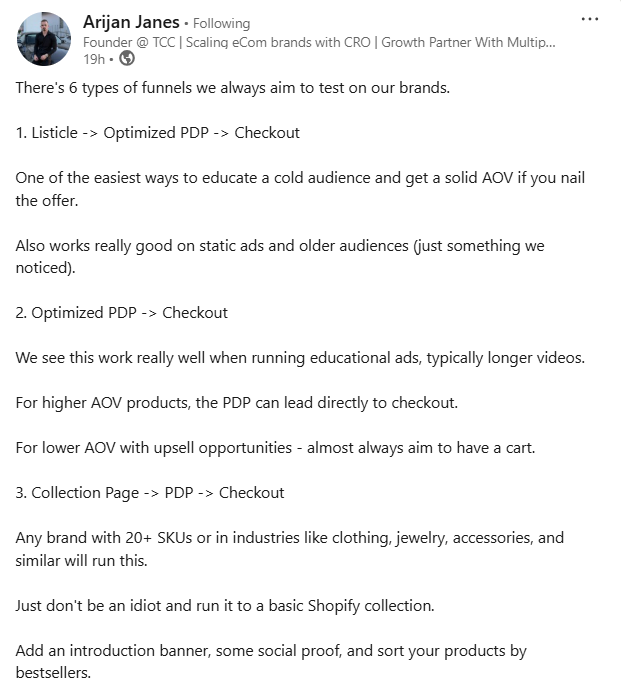
Arijan James outlines core funnel types, from listicles and advertorials to quizzes and direct sales pages, and they’re all valid, but each serves a very different purpose depending on your AOV, product complexity, and audience awareness.
Why it works:
This framework helps brands stop treating funnels as one-size-fits-all. A quiz funnel builds engagement for personal products, while a DR page or optimized PDP wins when intent is high. Matching funnel type to buying mindset is where real efficiency lives.
Where it needs balance:
Testing all six without a strategy spreads spend thin. Many funnels overlap in purpose; for instance, listicles and advertorials both educate cold traffic, but require distinct creative styles. The smarter move is to pick one top-of-funnel and one conversion-focused path, test thoroughly, then layer complexity once proven.
🚀 Reel of the Day
What works:
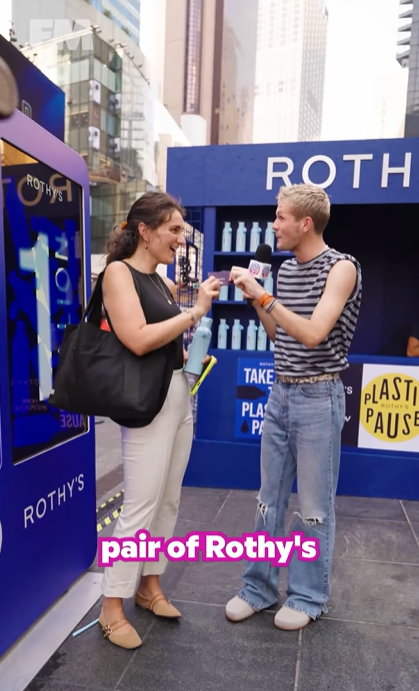
1. Social empathy meets brand purpose - It begins with an unscripted, human exchange about something everyone feels: modern disconnection. That emotional entry makes the shift to sustainability feel like an extension of the same conversation, not a brand intrusion. Hook viewers with a truth they already believe before connecting it to what your brand stands for.
2. Mission-to-utility transition - When the woman throws plastic into the bin and the camera reveals shoes made from that same plastic, belief turns into proof. The moral story gets its physical anchor. The most persuasive sustainability stories show the loop closing, “problem transformed,” not just “problem mentioned.”
3. Emotional closure through generosity - Ending with the gift card gesture gives emotional reciprocity; she gave her opinion, he gave a gift, completing the psychological “exchange loop.” When content ends with a gesture, not a CTA, viewers remember the feeling, not the transaction.
This reel wins because it disguises sustainability inside a shared social moment, a cultural conversation turned brand revelation. It feels civic, not commercial. The brand didn’t shout purpose; it demonstrated belonging, and that’s why it earned virality and trust simultaneously.
Thanks for reading this edition! Keep pushing boundaries, testing ideas, and staying inspired. See you in the next edition with more ways to ignite your marketing success. 🥰