ChatGPT Now Has a Try-On Button
👗 ChatGPT shoppers can now see your clothes on their own body, before they ever reach your product page, Amazon launches benefit from concentrated early momentum, and more!
Welcome to a space where every edition delivers insights, strategies, and inspiration to fuel your advertising brilliance. 🤯
👗 Your fitting room just moved inside ChatGPT
As of October 1, clothing and accessory listings in ChatGPT carry a "Try on" button. A shopper uploads a selfie and ChatGPT generates an image of them wearing the item, then saves the photo for next time.
For apparel brands, the fit decision now starts before the click. That changes what your product data has to do.
Run the try-on on your own catalog
Do this with three or four teammates of different heights and builds:
- Search ChatGPT for your top 10 products by name and by plain description, such as "black linen wide-leg trousers."
- Note whether your listing appears and whether it shows the Try on button.
- Run the try-on for each teammate and screenshot the result.
- Compare each image with how the garment really fits. Look at length, drape, rise and color.
Mark every product where the render looks worse or better than reality. The first loses the sale, and the second comes back as a return.
Write fit into the text
An image can't say "runs small in the shoulders." Your product data has to. For every apparel listing, add plain-language lines covering:
- the model's height and the size they're wearing
- whether it runs true, small or large, and where
- fabric weight and stretch, such as "midweight cotton, no stretch"
- the inseam, sleeve length or drop measurement that matters most for this item
Merchants have been able to send product catalogs to ChatGPT since last year. If you already do, push these fields into the feed descriptions as well as your site.
Watch what happens after the selfie
Shoppers who already tried an item on likely arrive further along, so judge them separately.
- Set up a segment in your analytics for visits referred from chatgpt.com, landing on product pages.
- Track three numbers monthly for that segment: conversion rate, size-exchange rate and full returns.
- Compare against the same products sold through other channels.
If ChatGPT-referred orders return more often on certain items, revisit the fit lines and images for those first.
If they return less, those products are your strongest candidates for prospecting ads in other channels too.
Keep saved items honest
ChatGPT lets shoppers save products to favorites and folders for later. A saved item showing an old price or a sold-out size is a broken promise.
Refresh your product feed at least daily during Q4, and remove discontinued colors as soon as they sell through.
Start with Step 1 today. Ten products and four selfies will tell you more than any spec sheet.
Together with Billo
Get Meta’s Take Before Your Next Ad Test
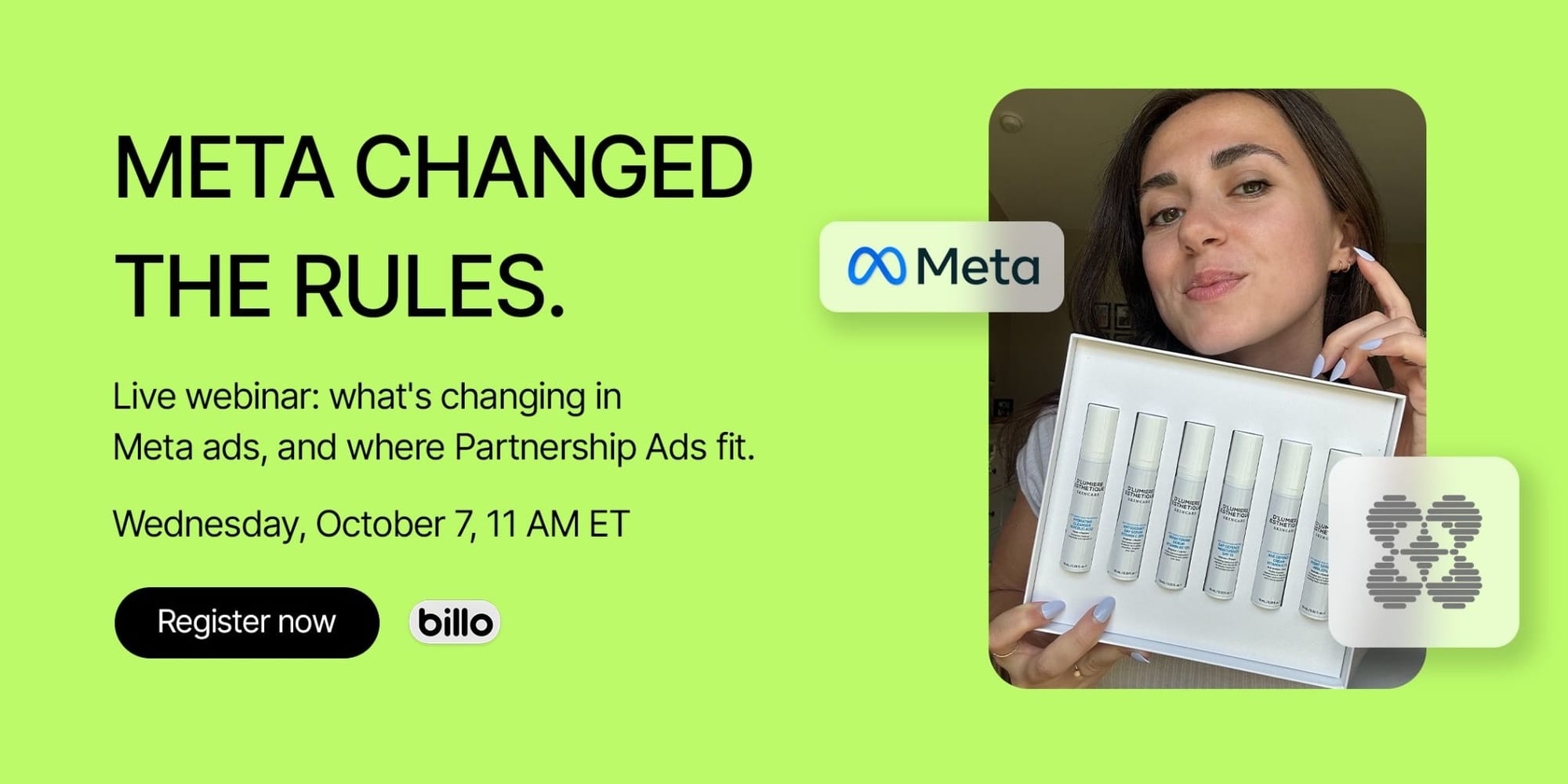
Everyone has advice on what works in Meta ads. You’re the one paying when it doesn’t.
Get closer to the source before another campaign turns someone else’s theory into your expense.
On October 7 at 11:00 AM ET, Billo CEO Donatas Smailys hosts a free, 60-minute live session featuring Reyna Baker, Partner Manager at Meta.
You’ll get direct access to:
- Meta’s own data explaining why creator-handle ads are outperforming brand creative, so you can assess what Partnership Ads could bring to your account.
- Creative testing lessons from Curtis Howland, VP of Marketing at Misfit Marketing, who has managed $100M+ in Meta spend.
- Examples of how a marketing lead and an agency founder are scaling creator ads, giving you approaches to adapt to your campaigns.
You’ll leave knowing what to test with creator ads next, backed by Meta’s data and lessons from teams already running them.
Can't attend the session live? Register anyway, and you’ll get the recordings in 24 hours.
⚡ Amazon launches benefit from concentrated early momentum
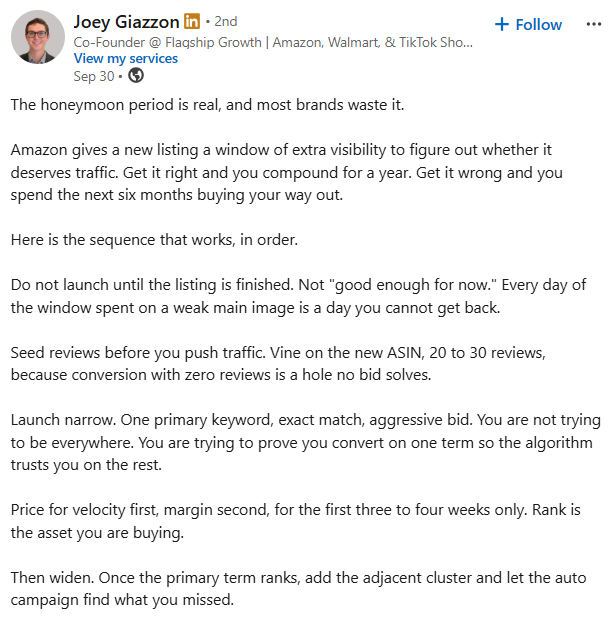
This framework argues that new listings should focus early traffic on a small number of high-priority keywords. Strong listings, reviews, competitive pricing, and concentrated advertising can help establish conversion and sales velocity before targeting expands.
Why it works: Narrow targeting concentrates budget and conversion data instead of spreading early sales across dozens of searches. Once priority keywords gain traction, brands can expand into adjacent terms with stronger performance signals behind the listing.
Where it needs balance: Amazon doesn't publicly guarantee a fixed “honeymoon period,” and there is no universal requirement for 20–30 reviews or one exact-match keyword. Launch strategy should depend on competition, search volume, budget, margins, and actual ranking performance.
🎥 Reel of the Day
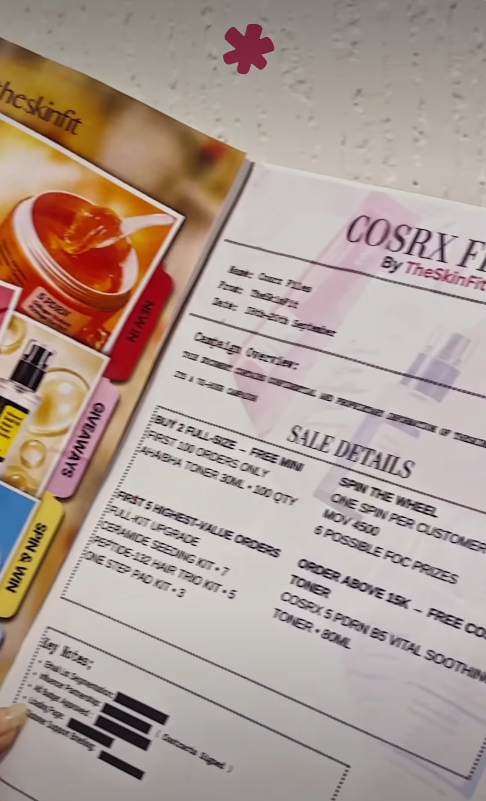
What Works:
1. Build Curiosity Before Selling - The “CONFIDENTIAL” file turns a promotion into a mystery. Instead of announcing the COSRX sale immediately, viewers have to keep watching to discover what the document contains.
2. Make Information Feel Exclusive - Presenting sale details, freebies and giveaways as leaked case files makes ordinary promotional information feel like insider access, increasing curiosity without needing exaggerated claims.
3. Turn The Offer Into Exploration - Color-coded NEW IN, GIVEAWAYS, SPIN & WIN and FREEBIES tabs encourage viewers to visually explore the file, making multiple promotional mechanics easier and more engaging to consume.
For a sale announcement, hide the offer inside a familiar storytelling device, reveal benefits progressively, use visual categories for multiple deals, and save enough information to reward viewers who keep watching.
Advertise with Us
Wanna put out your message in front of over 40,000 best marketers and decision makers?
Thanks for reading this edition! Keep pushing boundaries, testing ideas, and staying inspired. See you in the next edition with more ways to ignite your marketing success. 🥰