The Hidden Cost of Ad Repetition
📺 Ad repetition drops brand favorability by 14%. Past a threshold, overexposure isn't neutral; it's actively working against you, Revenue optimization can hide product-level profitability, and more!
Welcome to a space where every edition delivers insights, strategies, and inspiration to fuel your advertising brilliance. 🤯
📺 The same ad seven times doesn’t just stop working. It starts costing you.
Ad repetition reduces brand favorability by roughly 14%, according to recent advertising effectiveness research, and the effect isn’t a plateau where additional exposure simply stops adding value.
It’s a genuine decline, meaning the same creative shown too many times to the same viewer isn’t neutral once it crosses that threshold. It’s actively working against the brand, producing a worse outcome than showing the viewer nothing at all would have.
That distinction matters more than it might seem, since most frequency management gets framed around diminishing returns, the idea that repeated exposure gradually adds less and less value until it adds none essentially.
A genuine favorability decline is a different problem, since overexposure isn’t just wasted spend on a flat curve.
It’s spend actively producing a negative outcome, which changes the urgency around getting frequency right from an efficiency question into something closer to a brand-safety one.
Identify the frequency point where your own creative crosses from diminishing to negative
The general 14% favorability figure describes an average effect, and the actual threshold where a specific creative and audience combination tips from flat to negative varies by category and by how fatigued a particular execution is to begin with.
Track brand favorability or sentiment, not just reach and frequency, against your own campaign’s actual exposure levels, and look specifically for the point where the trend line stops flattening and starts declining.
That inflection point, not a generic industry frequency cap, is the real ceiling for that specific creative.
Treat creative refresh as a favorability-protection tool, not just a fatigue-prevention one
If overexposure actively damages favorability rather than just wasting impressions, refreshing creative before that threshold isn’t only about keeping performance from declining.
It’s about protecting the brand from actively producing a worse impression than it started with.
Build refresh timing around the favorability inflection point specifically, rather than a generic calendar-based refresh cadence that might replace creative too late for audience segments already past the threshold, or too early for segments that haven’t reached it yet.
Measure the downstream cost of overexposure, not just the immediate campaign metrics
A favorability decline doesn’t necessarily show up in the campaign’s own conversion numbers right away, since the damage shows up in how a viewer responds to the brand later, not necessarily in this specific ad’s click-through rate.
Catching it means reading each creative’s performance over weeks, not just the flight in front of you. Tatari breaks linear and streaming results out by individual creative and tracks the response they drive on your site and in revenue over time, so a spot that’s quietly wearing out shows its slide before the quarterly numbers do. Rotate on evidence instead of on a calendar. You can schedule a free demo with Tatari here.
A creative that used to work isn’t neutral once it’s run too many times. It’s actively making the case against itself, and the campaign metrics closest to it are the least likely place to notice.
Together with AirOps
The Growth Targets Changed. Did Your Plan?
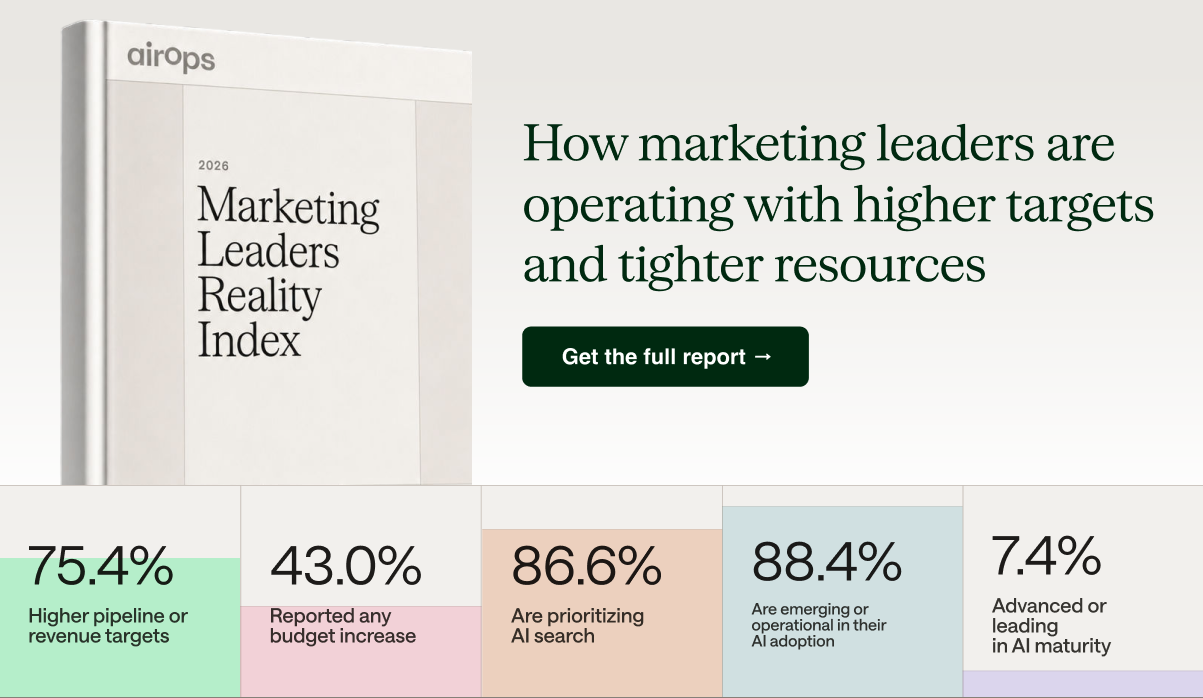
Growth targets are rising faster than the resources behind them, forcing marketing teams to make critical budget decisions without a credible view of how peers are responding.
AirOps surveyed 300+ CMOs and VPs to reveal how leaders are reallocating budgets and closing capability gaps as pressure grows to deliver more pipeline with limited support.
- Compare how peers are responding to higher targets, now affecting 75.4% of marketing leaders across the market.
- Build a stronger budget case using the reality that only 43.0% received more funding.
- See why 86.6% prioritize AI search while just 23% feel confident measuring its impact.
The report lets you compare your growth targets and available resources against responses gathered directly from 300+ marketing leaders.
You’ll immediately see whether your performance gap starts with execution or a plan that was under-resourced from day one.
Get the Marketing Leaders Reality Index.
⚡Revenue optimization can hide product-level profitability
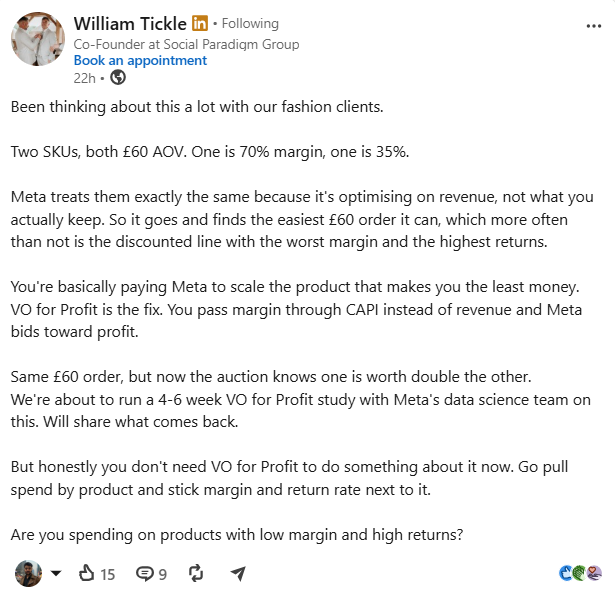
This framework argues that two products generating identical revenue can have very different economics. If Meta optimizes primarily toward purchase value, spend can concentrate on products that convert easily but leave less profit after margin and returns.
Why it works: Feeding profitability signals into optimization can better align ad delivery with what the business actually earns. Even without that setup, comparing product-level spend against margin and return rates can expose where revenue-focused scaling is hurting profit.
Where it needs balance: Margin alone doesn't determine a product’s true value. Repeat purchases, discounts, fulfillment costs, return behavior, and customer lifetime value also matter. Profit-based optimization should therefore use the most complete economic signal the business can reliably measure.
🎥 Reel of the Day
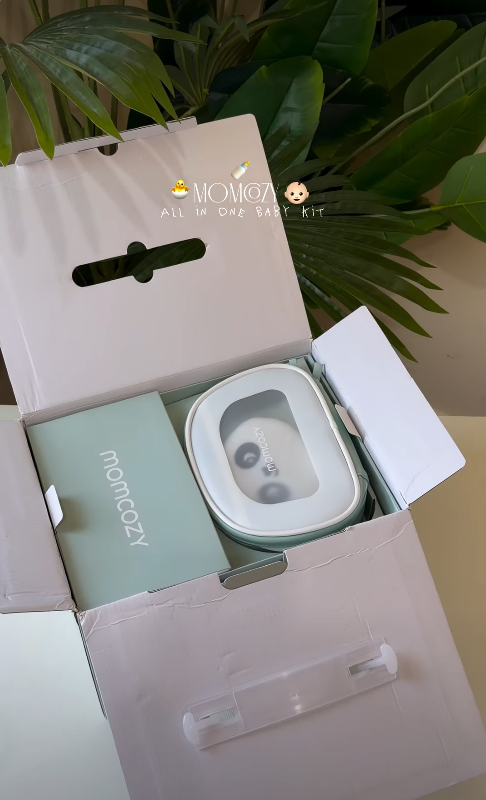
What Works:
1. Curiosity-Driven Unboxing - The unboxing format creates a strong curiosity loop, revealing one baby essential at a time and giving viewers a reason to keep watching until the complete kit is revealed.
2. Hands-On Demonstration - Holding, opening and rotating products adds tactile demonstration and visual proof, communicating each item’s size, design and usability more naturally than relying on feature-heavy text or narration.
3. Utility Meets Cuteness - Combining practical essentials with playful shapes and soft colors creates emotional design and giftability, positioning the kit as useful for parents while still feeling special enough to gift.
For multi-product bundles, use a sequential reveal: introduce each item individually, demonstrate it briefly, then move forward. Every new product becomes another reason to continue watching.
Advertise with Us
Wanna put out your message in front of over 40,000 best marketers and decision makers?
Thanks for reading this edition! Keep pushing boundaries, testing ideas, and staying inspired. See you in the next edition with more ways to ignite your marketing success. 🥰