You sound smart and sell nothing
😮The mechanism ad isn't a hook format. It's a belief demolition system,You’re losing before customers even start searching, and more!
Welcome to a space where every edition delivers insights, strategies, and inspiration to fuel your advertising brilliance. 🤯
Together with Insense
You know UGC works for you. Now build the machine.
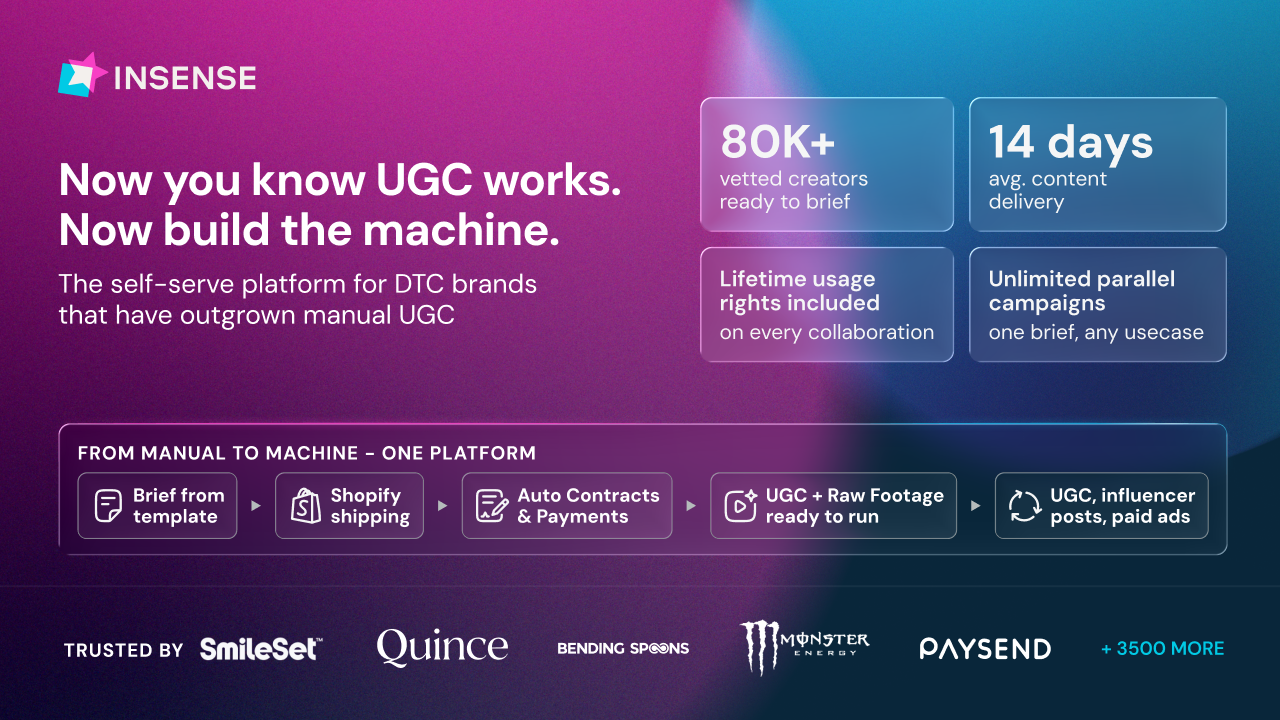
You know creator content works for your brand. The challenge now isn't whether to do it; it's how to do it at volume without the process falling apart.
Insense is the self-serve platform for DTC brands that have outgrown manual UGC.
Source from 80,000+ vetted creators, run multiple campaigns in parallel, automate contracts and payments via Shopify integration, and receive content in 14 days, with full lifetime usage rights included.
Trusted by SmileSet, Paysend, Bending Spoons, Quince, Monster Energy, and 3,500+ brands using Insense to turn what works into a repeatable production system.
Book a free strategy call by April 24 and get a $200 platform credit towards your first campaign.
😮The Mechanism Ad Isn't a Hook Format. It's a Belief Demolition System.
Most teams discover mechanism-led creative by accident. One ad outperforms everything. The hook names something biological, chemical, or invisible. It converts. They try to replicate it and spend the next three months writing ads that sound smart and sell nothing.
The mechanism wasn't the strategy. The psychological sequence underneath it was.
Why the Second Mechanism Ad Never Performs Like the First
Information gap creative works through a specific progression: familiarity, rupture, implication, inevitability. Most copywriters only write the rupture. They name the mechanism, drop the counterintuitive fact, then immediately introduce the product. The prospect is briefly interested. Interest doesn't buy. Disrupted self-understanding buys.
The gap has to make them feel implicated before the product enters the frame.
Build the Mechanism Brief First
Four questions. Answer them before a single line of copy exists:
- What does your prospect currently believe is causing their problem?
- What named mechanism directly contradicts that belief?
- At what measurable rate is it already working against them today?
- Which trusted daily behavior is accelerating it?
Can't answer all four? You don't have a mechanism. You have a fact. Facts inform. Mechanisms implicate. Only one converts.
Three Construction Rules Nobody Talks About
Open with the belief, not the gap. Validate exactly what they think is true before you rupture it. Hold it. Then flip it. The contrast between what they believed ten seconds ago and what they understand now is where discomfort lives. Skip the validation, you skip the contrast. The gap lands flat.
Quantify the timeline, never the severity. Severity reads as marketing. Timelines read as biology. "Takes 14 hours to rebuild" converts an invisible problem into a measurable daily loss. Every time they repeat that behavior, the ad plays back involuntarily. That's retention no retargeting budget can replicate.
Withhold the product until they've indicted themselves. Three to five seconds of copy after the implication lands before the solution appears. A hard paragraph break in static. Dead air in the video. The product should feel like relief, not a pitch that interrupts a lesson.
The Three-Stage Sequence That Compounds Everything
- Stage one: pure education. No product, no CTA. Run on video view objective into broad interest audiences.
- Stage two: retarget viewers with the product as the direct answer to the mechanism they just learned.
- Stage three: retarget non-converters with a customer testimonial, but brief the customer to describe their problem in mechanism language.
When the ad and the testimonial use identical vocabulary, the skeptic's last objection collapses on its own. The hook gets the click. The sequence gets the customer.
⚡When brands blend in, platforms capture the value
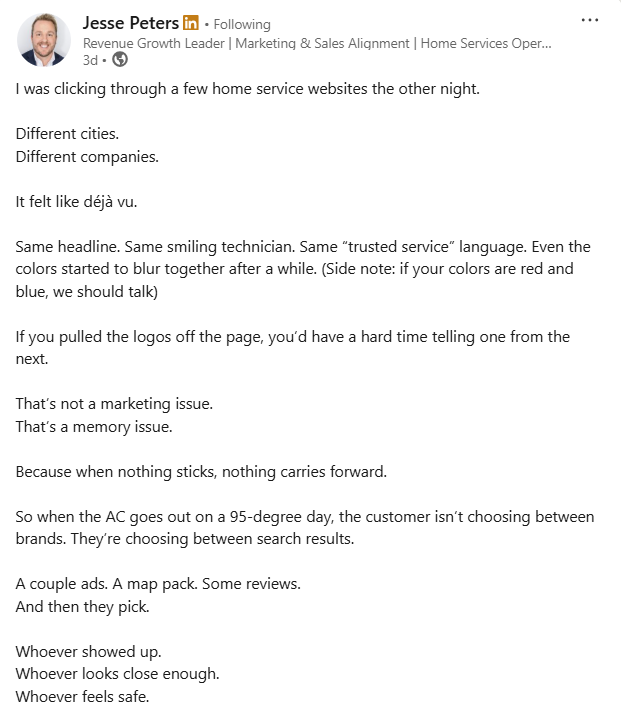
This post argues that the lack of differentiation turns brands into interchangeable options. When customers don’t remember you before they need you, the decision defaults to platforms like Google or Meta. At that point, you’re competing on proximity, price, and availability instead of brand preference.
Why it works: Memory drives preference before intent forms. Distinct brands get recalled earlier, reducing reliance on paid discovery. This lowers acquisition costs and increases direct demand over time.
Where it needs balance: Brand building takes time and lacks short-term attribution. Over-investing without clear positioning can waste resources. Differentiation must still connect to real customer needs, not just creative distinctiveness.
Together with The Shift
The Only AI Newsletter Built for Output
Most AI newsletters flood you with tools, headlines, and hype. The Shift does the opposite.
Every issue cuts through the noise to show you what actually works, with real-world breakdowns of workflows, systems, and strategies that use AI to get real results, not just automate busywork.
Plus, get instant access to 3,000+ top tools, vetted prompts, and free courses so you can apply, not just absorb.
If you want less noise and more wins, you belong here.
🚀 Reel of the Day
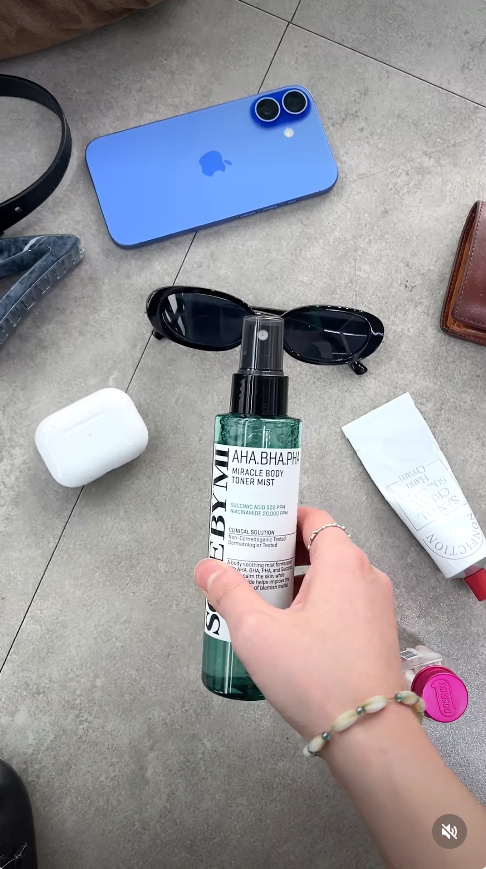
What Works:
Product Over Morality - The brand intentionally shows the product being chosen over helping a person. This exaggeration creates humor, but more importantly, signals extreme desirability, implying the product is too irresistible to ignore.
Perfect Placement Psychology - Notice how the toner is placed aesthetically among chaos. This contrast draws the eye instantly, making the product feel premium, intentional, and visually superior to everything around it.
Chaos to Focus Shift - The scene starts with urgency and concern, then abruptly shifts focus to the product. This sharp transition forces attention, making the product moment feel more dramatic and memorable.
Make your product so visually and emotionally compelling that it interrupts normal behavior. When viewers feel “I would’ve done the same,” you’ve moved from selling a product to creating obsession.
Thanks for reading this edition! Keep pushing boundaries, testing ideas, and staying inspired. See you in the next edition with more ways to ignite your marketing success. 🥰