Creative wasn’t the problem, was it?
🥲By the time everyone blames the creative, the creative was never the problem, High-Converting emails guide attention, not just communicate, and more!
Welcome to a space where every edition delivers insights, strategies, and inspiration to fuel your advertising brilliance. 🤯
🥲Creative wasn’t the problem was it?
Every struggling ad account eventually reaches the same conclusion.
Creative has stopped working.
New concepts are commissioned, fresh hooks are written and production speeds up, yet performance keeps slipping. The assumption is that the audience has simply become tired of the ads.
Sometimes that’s true.
Sometimes the creative is being blamed for damage that started several decisions earlier.
The spiral begins long before the diagnosis
It usually starts with a sensible optimization.
An upper-funnel ad looks expensive on a last-touch CPA report, so it gets paused. It happens again for every ad that looks similar
Each decision looks reasonable on its own, but together they reduce the flow of new people entering the account. First-time impression ratio falls. Frequency climbs on the remaining ads. Reach narrows. Performance gradually weakens.
By the time someone notices the decline, those original cuts are already history.
What’s left is the symptom.
Two different problems can look identical
The difficult part is that both produce almost the same dashboard.

One happens at the ad level. The other happens at the account level.
Treating them as the same often leads to producing more creative when the real problem is shrinking audience renewal.
Check the timeline before writing another brief
Instead of reviewing only the ads that are still live, go back further.
Pull a timeline showing:
- When major ads were paused.
- First-time impression ratio over the same period.
- Account frequency.
- Blended CPA.
Then compare the trends.
If performance begins deteriorating shortly after repeated top-of-funnel cuts, and not simply as individual ads age, you’ve found a very different problem from creative fatigue.
The account isn’t running out of ideas.
It’s running out of new people.
Fix the diagnosis before fixing the creative
Creative teams often become the final stop in a chain of decisions they never made.
By the time they’re asked to solve rising CPA, the account may already have spent months reducing the campaigns responsible for introducing new audiences in the first place.
When that happens, more creative rarely fixes the decline because the system feeding those creatives has already been weakened.
The fastest way to improve an account isn’t always producing another winning ad.
Sometimes it’s recognizing that the ads being blamed were only exposing a problem that started several optimization cycles earlier.
Together with Insense
Combining UGC with paid ads gave Maty's 12x more reach. Here's the mechanic.
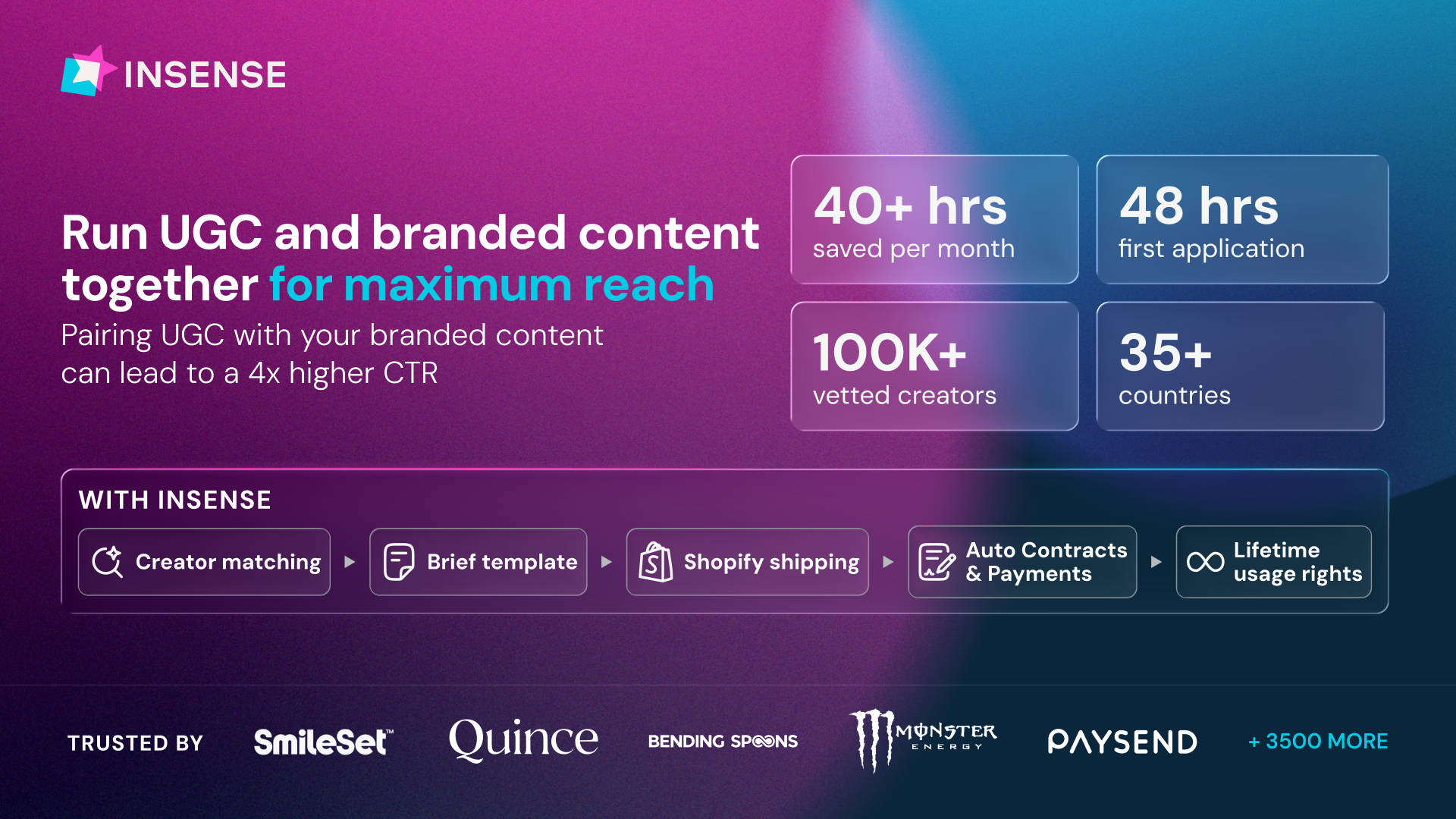
Most brands treat organic content and paid ad creative as two separate jobs, different briefs, different creators, twice the work for what's really one story.
Insense is built for both sides: source creators for organic content, and once a piece is already proving itself, repurpose it into paid ad creative through Partnership Ads or Spark Ads no new sourcing cycle, just activating what's already working.
Maty's used exactly this: creator content that ran organically and was repurposed into TikTok Spark Ads lifted reach 12x, with a 4x higher CTR than branded content alone.
Source from 100,000+ vetted creators, get content back with lifetime content usage rights, and go from brief to delivered assets in weeks.
Trusted by Strawberry.me, Bending Spoons, Wellhub, PetLabCo, and 3,500+ brands are using Insense to make organic and paid work together, not separately.
Book a strategy call by August 14th for $200 platform credits for your first campaign.
⚡ High-Converting emails guide attention, not just communicate
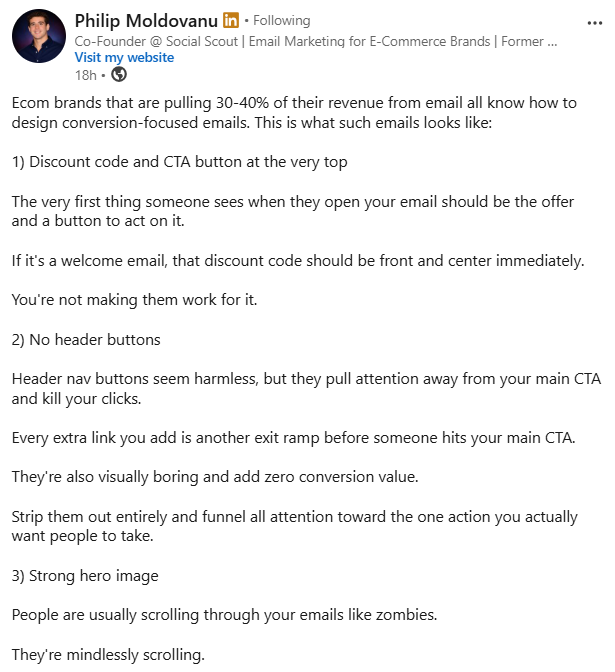
This framework argues that the best ecommerce emails are designed around a single conversion goal. Every element, from the offer placement to the imagery and social proof, is intended to reduce friction and guide readers toward one primary action.
Why it works: Clear offers, prominent CTAs, compelling visuals, concise copy, trust signals, and risk reducers make emails easier to scan and act on. Removing unnecessary distractions helps focus attention on the desired conversion path.
Where it needs balance: There is no universal email template that performs best. Welcome emails, product launches, educational sequences, and post-purchase flows all require different structures. The highest-performing brands continuously test layouts, copy, and design based on their audience and campaign objectives rather than relying on a single formula.
🎥 Reel of the Day
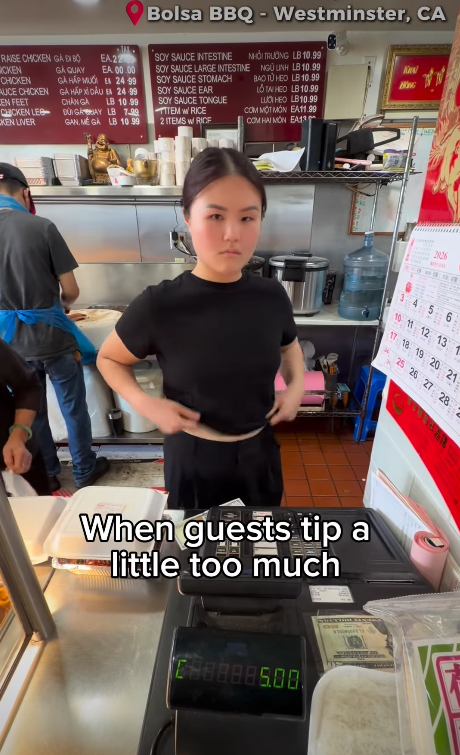
What Works:
Escalation drives retention - The joke starts with a generous tip, then spirals into increasingly ridiculous reactions. Every escalation creates a new payoff, keeping viewers watching to see how far the employee will take it.
Authenticity beats production - The handheld filming, real counter, and working kitchen make the skit feel spontaneous. That realism makes the exaggerated comedy more believable and far more shareable.
Entertainment disguises advertising - Viewers never feel they're watching a restaurant promotion. The brand earns attention through humor first, making every logo, menu board, and location shot feel effortless instead of promotional.
Anchor every joke in a real customer behavior. Exaggeration works best when it's built on something everyone has experienced at least once.
Advertise with Us
Wanna put out your message in front of over 40,000 best marketers and decision makers?
Thanks for reading this edition! Keep pushing boundaries, testing ideas, and staying inspired. See you in the next edition with more ways to ignite your marketing success. 🥰