Do you trust your numbers?
🕳️ Most marketers don’t even understand their numbers, let alone trust here’s how to actually trust them, Campaign segmentation can feed better post-purchase flows, and more!
Welcome to a space where every edition delivers insights, strategies, and inspiration to fuel your advertising brilliance. 🤯
🕳️ Do you trust your numbers?
Only 21% of marketers say they can confidently measure their marketing ROI.
30% to 50% of pipeline now originates from channels digital attribution simply cannot see.
A meaningful share of how buyers discover and evaluate a brand happens through Slack shares, forwarded emails, and AI-assisted research. No tracking pixel was built to capture any of it.
The instinct when attribution breaks down is to invest in better tracking, tighter tagging, and more sophisticated multi-touch models.
Those improvements help. But part of the buyer journey stays invisible no matter how good the tracking gets.
Add self-reported attribution as a standing data source, not a one-time survey
The fastest way to recover visibility into the dark funnel is asking the buyer directly. The person who made the purchase decision can tell you what influenced it, even when no analytics tool recorded the path.
Build a simple "how did you first hear about us" field into your standard conversion flow, whether that's a demo request, a checkout, or a signed contract. Leave room for an open-text answer so buyers can name a specific recommendation, community, or source.
Review those answers monthly and treat recurring patterns as a real data source.
Reconcile self-reported answers against what your tracking actually shows
Self-reported data isn't perfectly accurate either, since buyers misremember or simplify their own journey. But the gap between what people report and what tracking captures is itself informative.
Where buyers consistently cite a channel your tracking barely credits, investigate before cutting its budget. That's directional evidence the channel is doing more than the dashboard shows, even without full precision.
AI research is a good place to start. When buyers mention it as an influence, most teams have no way to trace which specific sources actually shaped that recommendation. Foundation CEO Ross Simmonds and AirOps' Josh Spilker are walking through exactly that on September 29, using research across nearly 380,000 AI answers and 3 million citations to show which prompts and sources actually drive AI-assisted buying decisions. You can reserve your free spot here.
Report the dark funnel gap explicitly rather than letting it hide inside "direct" traffic
Untracked conversions often land in buckets like "direct" or "unattributed." That can lead leadership to overlook the marketing that actually influenced them.
Show tracked attribution alongside self-reported sources. Flag recurring discrepancies, and state plainly what remains unknown. Keep the two views separate rather than adding them together and double-counting conversions.
That gives leadership a defensible basis for budget decisions rather than a confident number built on incomplete data.
The 79% who can't confidently measure ROI are working with a partly invisible buyer journey. Collecting the evidence tracking misses gives them more to work with before the next budget review.
Together with Modash
Influencer Marketing is getting its own festival. Powered by Modash.
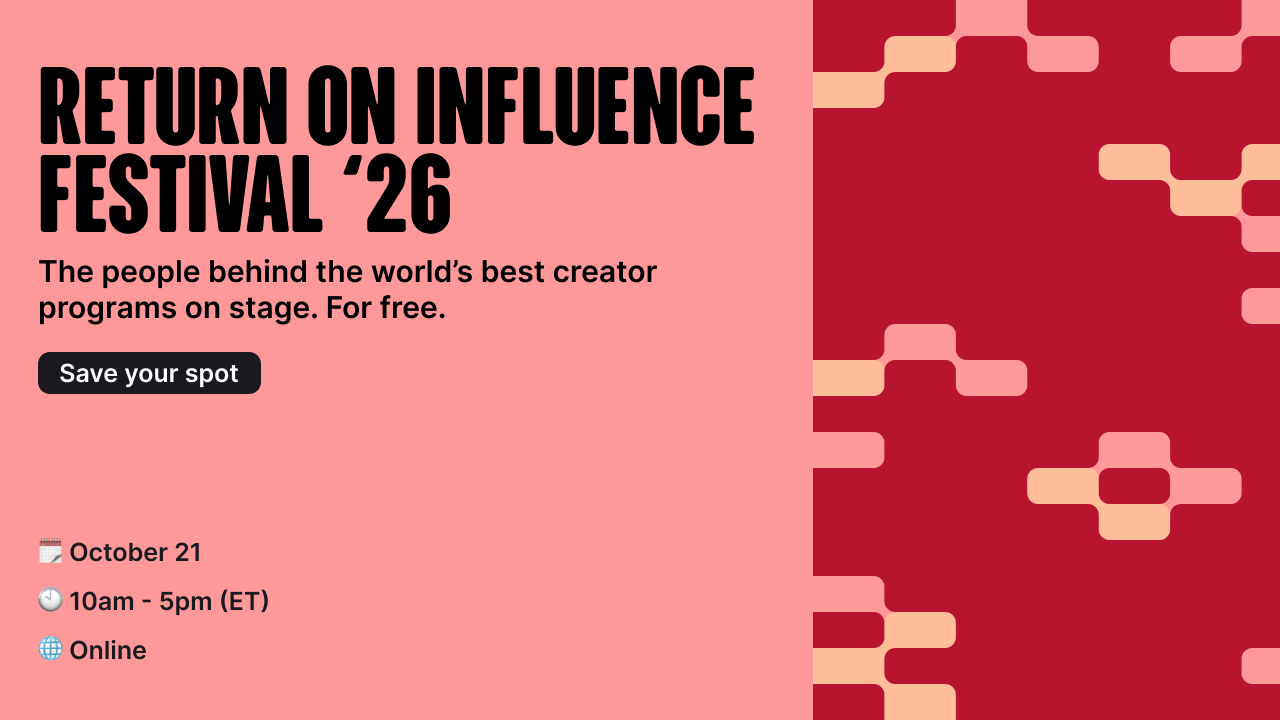
You’ve sat through enough influencer marketing webinars to know the routine. Forty-five minutes later, you still have no useful answer on ROI, budget, or scale.
Return on Influence Festival ’26, powered by Modash, brings you practical answers from teams running creator programs.
On Oct 21st, you’ll walk away with:
- Practical frameworks to measure influencer ROI and make a stronger case for budget.
- Real campaign examples to help you decide where influencer fits in your marketing mix.
- Strategies to scale from 5 to 5,000 creators without multiplying the chaos.
Leah Walker, Director of Creator & Influencer Partnerships at Adobe, and Tyler Vaught, Global Head of Creator Marketing at Edelman, along with other industry leaders. More to be announced.
Join free on Oct 21st and leave with actionable insights to build and scale a creator program that moves the needle.
Can't attend every session live? Register anyway, and you’ll get the recordings in 24 hours.
⚡Campaign segmentation can feed better post-purchase flows
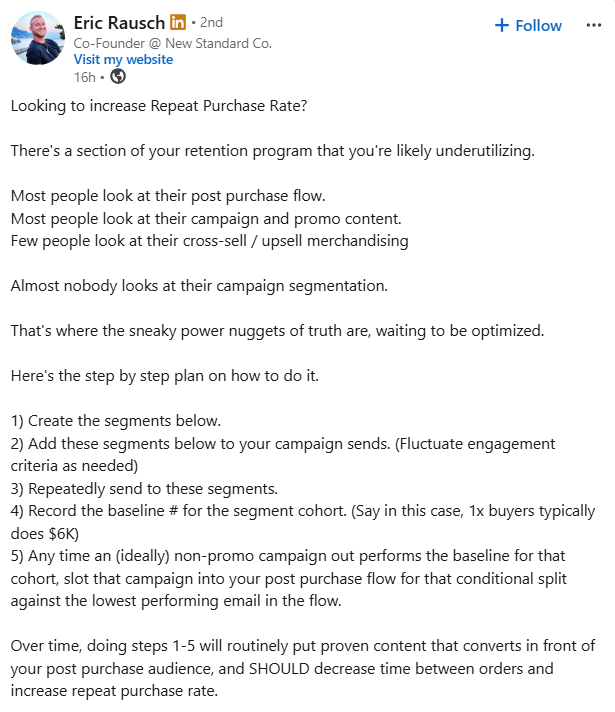
This framework uses campaign performance as a testing ground for retention content. Instead of guessing what belongs in post-purchase flows, brands can identify messages that outperform within buyer cohorts and move those proven campaigns into automation.
Why it works: Segment-level testing reveals which messages actually drive repeat purchases for specific customer groups. Feeding those winners into post-purchase flows can shorten time between orders and improve repeat purchase rate.
Where it needs balance: Campaign winners do not always translate perfectly into automated flows. Timing, context, and customer intent differ. The strongest approach validates the content again inside the flow before replacing existing emails permanently.
🎥 Reel of the Day
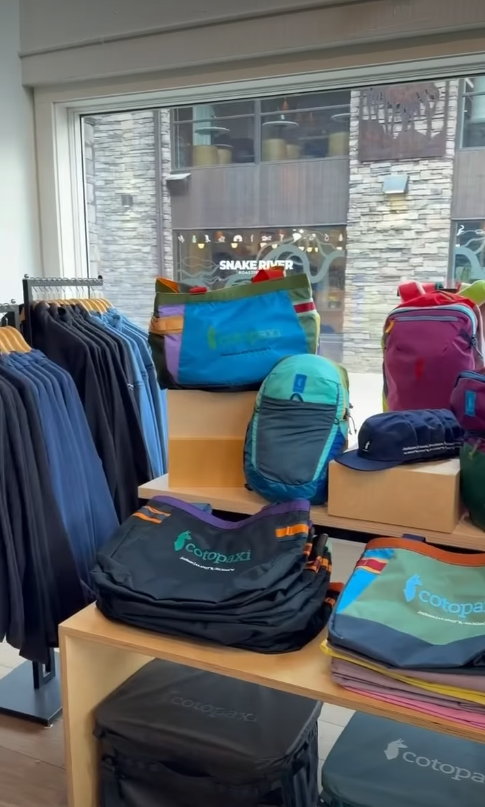
What Works:
1. Turn Launches Into Participation - The Opening Weekend Passport turns a store opening into gamified retail, giving visitors missions across the space instead of relying on passive browsing to drive engagement.
2. Design For Exploration - Tasks like finding stickers and identifying products create a store scavenger hunt, deliberately moving shoppers through multiple displays while increasing product discovery and time spent in-store.
3. Reward The Journey - A free gift for completing the passport gives every activity a payoff. This completion incentive encourages shoppers to finish the experience rather than abandoning it halfway through.
For retail launches, build a simple challenge → exploration → reward loop. Give shoppers reasons to visit different store areas, create shareable moments, and visually document turnout for post-event content.
🥳 Events
🔥 Where AI Actually Looks Before Recommending Your Brand
September 29 | 1 PM ET | Virtual Event
Using 3 million citation events across 81 enterprise software topics, Foundation CEO Ross Simmonds and AirOps’ Josh Spilker reveal which third-party sources influence AI shortlists. See where your category gets cited, which gaps cost consideration, and where your next content investment should go.
Can't attend the session live? Register anyway, and you’ll get the recordings in 24 hours.
🔥 How to Build a Growth Plan That Goes Beyond Meta
October 29 | The Glasshouse, NYC | Free In-Person Event
See how teams are using Reddit, TV, and broader channel mixes to reduce dependence on crowded digital acquisition. Forward puts you in the room with Reddit CEO Steve Huffman, Cody Plofker, and leaders from Liquid I.V., MANSCAPED, Thorne, and Avocado Green Brands.
Advertise with Us
Wanna put out your message in front of over 40,000 best marketers and decision makers?
Thanks for reading this edition! Keep pushing boundaries, testing ideas, and staying inspired. See you in the next edition with more ways to ignite your marketing success. 🥰