Your TV Ads are fragmented
🥲Three TV Buys, Three Vendors, Zero Idea What Actually Worked Together, and more!
Welcome to a space where every edition delivers insights, strategies, and inspiration to fuel your advertising brilliance. 🤯
🥲 Three TV Buys, Three Vendors, Zero Idea What Actually Worked Together
A brand testing TV usually ends up running it fragmented: a linear buy through one media company, a streaming campaign through a second platform, a direct publisher deal negotiated separately by a third relationship entirely.
Each vendor reports its own numbers. None of them talk to each other, and nobody at the brand can answer a simple question afterward: across all three, what actually drove the result?
The fragmentation problem, specifically.
Frequency capping breaks first, since three separate systems have no shared view of how often the same household saw an ad across linear, streaming, and publisher inventory combined, meaning a brand can be accidentally over-serving its most valuable audience segment while believing spend is well distributed.
Attribution breaks second, since three vendors each report success on their own terms, and a brand ends up comparing three incompatible scorecards instead of one consolidated view of what dollar produced what outcome.
Budget allocation breaks third, since without a shared view, next quarter's spend gets divided based on which vendor made the most compelling pitch deck, not which channel actually performed.
The fix isn't picking one channel over the others.
Linear, streaming, and direct publisher buys serve genuinely different jobs, reach at scale, targeted digital-native audiences, and specific high-value publisher placements, respectively.
The fix is buying and measuring all three from one place, so frequency, attribution, and budget allocation are decisions made against one shared, real dataset instead of three vendors each grading their own homework.
Aroma360 cut CPA by 80% and doubled ROAS from a $14K linear pilot run this way, one platform, one consolidated view of performance. That kind of result is available at that scale specifically because the measurement wasn't fragmented across three separate reporting systems from the start.
Tatari runs linear TV, streaming, and direct publisher buys from one place, with every dollar tied to actual site visits, signups, and revenue, not three separate impression counts that never reconcile against each other.
Before the next TV or streaming test, ask whether it's being bought and measured as one system or three disconnected ones reporting to three different people who never compare notes until the quarterly review meeting nobody looks forward to. You can book a free demo and get a launch-ready TV plan built around your numbers.
Together with Omnisend
How healthy is your email setup, really?

You probably know your open rate. But do you know how healthy your email marketing setup actually is?
Now that Omnisend works with Claude and ChatGPT, all it takes is a simple prompt.
Ask Omnisend AI to score your account out of 100 based on campaign cadence, automation coverage, and catalog completeness, then list the top three areas to improve.
In seconds, you'll get a clear picture of how your account is performing and where to focus next.
Not yet an Omnisend user? Brands using Omnisend generate an average of $79 for every $1 spent. Migration is free and takes up to five days, while pricing is up to 35% lower than Klaviyo's.
Get started with ready-made prompts.
⚡A Pause Option Can Reduce Subscription Churn
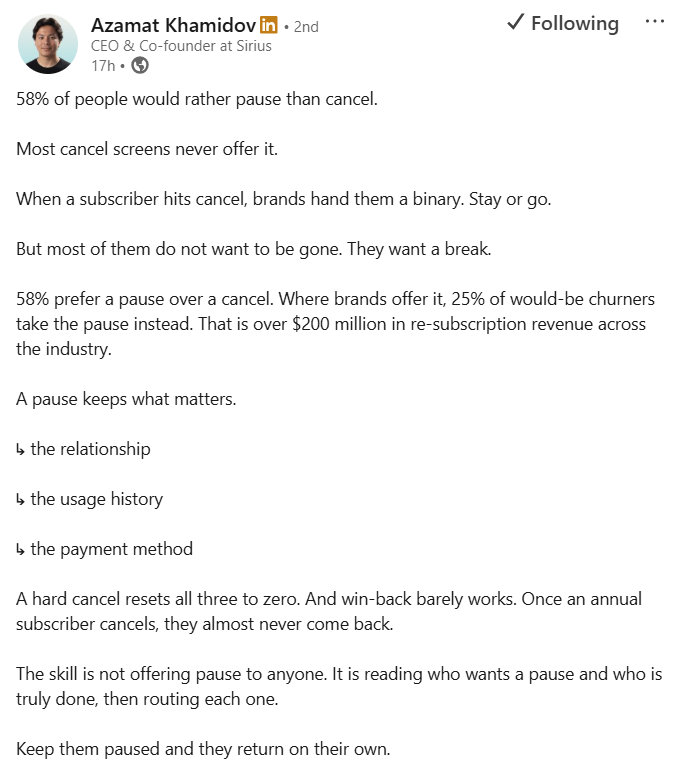
This framework argues that many subscribers don't actually want to leave—they just want a temporary break. By offering a pause instead of forcing an all-or-nothing cancellation, brands can retain customer relationships that might otherwise be lost.
Why it works: A pause preserves the customer's account, payment details, and subscription history, making it much easier for them to resume later. For subscribers experiencing temporary budget or usage changes, this creates a lower-friction alternative to cancellation.
Where it needs balance: Pause options aren't right for every customer or every business. Some subscribers genuinely intend to leave, and adding unnecessary friction can create frustration. The most effective retention strategies identify who is likely to return and present pause as one of several relevant options rather than the default.
🎥 Reel of the Day
What Works:
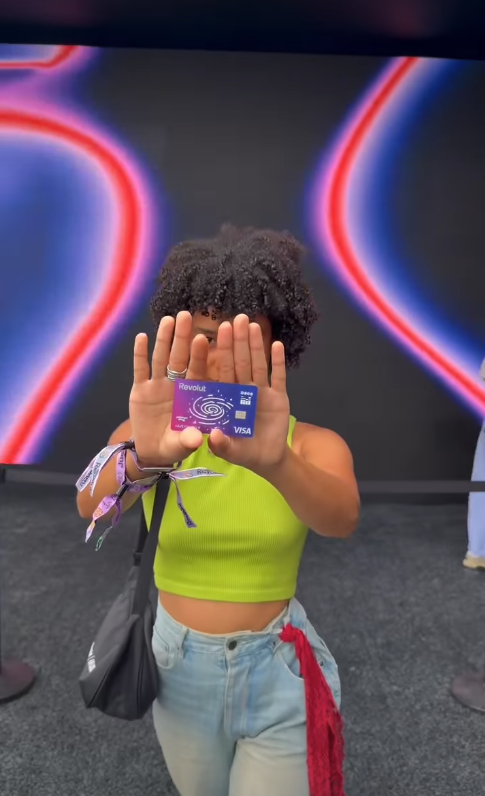
Trend Native Placement - The product reveal follows an already familiar hand-transition trend, so viewers stay for the transformation while Revolut slips naturally into the payoff instead of interrupting it.
Creator Energy Transfer - Multiple creators repeating the same transition creates rhythm and replay value. Each personality reveals a different Revolut product, keeping the retention curve high without changing the core format.
Lifestyle Before Features - The reel never explains the card or bag. Instead, it positions Revolut as part of creator culture, making the brand feel fashionable, social, and event-worthy rather than purely financial.
Instead of inventing new concepts, adapt trending transition formats and replace the final reveal with different products or features. You borrow existing audience intent while reinforcing brand recall through repetition.
💃Events
🔥 Why AI Is Ignoring Your Highest-Intent Pages
August 5 | 2 PM ET | Virtual Event
Josh Grant, founder of StackedGTM and former VP of Growth at Webflow, joins AirOps’ Josh Spilker to reveal why comparison and pricing pages miss AI citations, how third-party proof strengthens trust, and which changes can turn AEO visibility into pipeline.
Can't make it live? Register anyway, you'll get the recordings within 24hours.
Advertise with Us
Wanna put out your message in front of over 40,000 best marketers and decision makers?
Thanks for reading this edition! Keep pushing boundaries, testing ideas, and staying inspired. See you in the next edition with more ways to ignite your marketing success. 🥰