First Frame is the Fate of Your Ad
🫠It is a targeting signal, and you've been treating it as decoration, Micromarketing works best when messaging matches immediate customer motivations precisely, and more!
Welcome to a space where every edition delivers insights, strategies, and inspiration to fuel your advertising brilliance. 🤯
Together with Stack Influence
The Quiet Channel Behind 13X Amazon Revenue Growth at Big-Name Brands
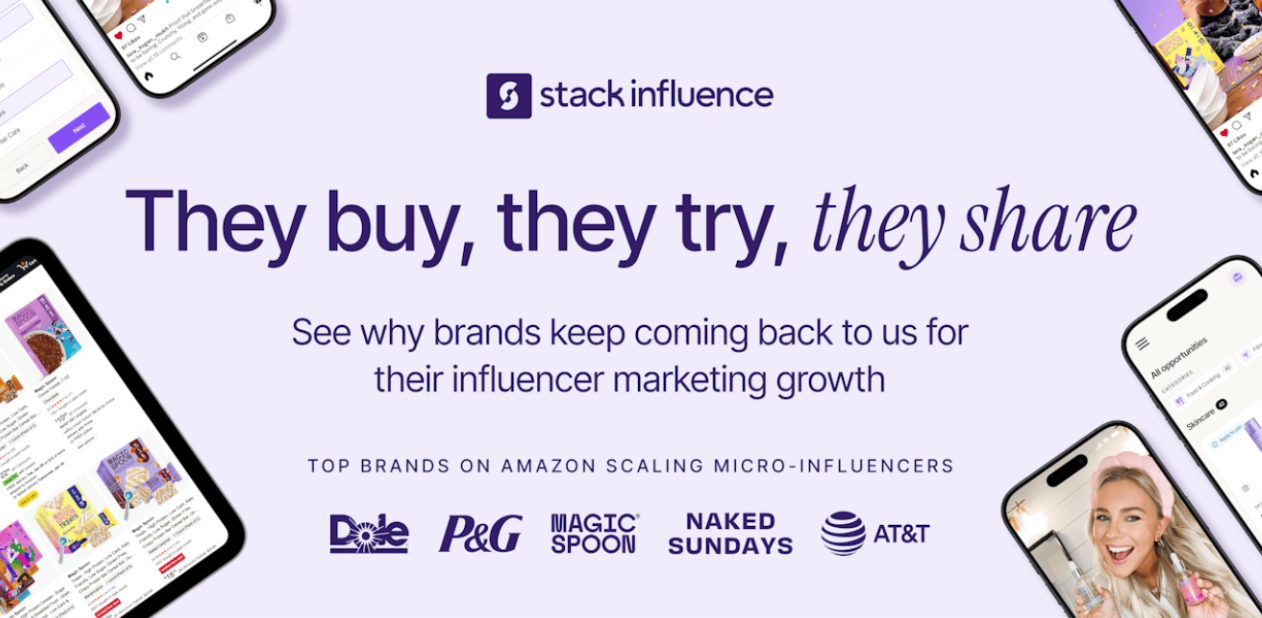
Most brands fight for visibility on Amazon by raising bids. The smarter ones build it from the outside in.
Here is the play: send free product to vetted micro-influencers, have them purchase on Amazon, and create authentic content for their own audiences. Sales velocity that the algorithm rewards, real social proof, and external traffic that lifts organic rank.
Stack Influence automates the motion. Their AI matches your brand with creators from a network of 11M+ micro-influencers. You pay per creator, not per impression, so every dollar maps to a real purchase and a real piece of content.
Brands like Martha Stewart and Unilever have reached the #1 page on Amazon, achieved positioning in 2 months, and grown monthly revenue by up to 13X using this channel. Average ROAS across the platform sits at 5X.
If you are scaling on Amazon, this belongs in your stack. Sign up this week and save 10% on your first campaign.
🫠 First Frame is the Fate of Your Ad
Meta's multimodal AI reads images the same way it reads text. The first frame of your video is not a hook. It is a data point the algorithm processes before a single human eye lands on it, and it is telling the algorithm who to show your ad to right now, whether you designed it to or not.
Most brands have spent years optimising copy for the algorithm. Zero hours on the first frame. Which means the targeting signal sitting in your visual layer is either accidental or wrong.
What Your First Frame Is Actually Saying
Pull the first frame of your top 20 active video ads. Look at each one the way the algorithm does.
Ask four questions:
- What product is visible?
- Who is in the frame and what does their context suggest?
- What setting signals about buyer intent?
- What does the overall image tell a multimodal model about who this ad is for?
Most accounts produce the same two patterns: generic frames (product on white background, algorithm gets no signal) or incidental frames (creator still setting up, algorithm gets misleading signal). Both cost you audience quality before the hook even lands.
The Four-Element First-Frame Spec
The fix is not a prettier first frame. It is a specific one.
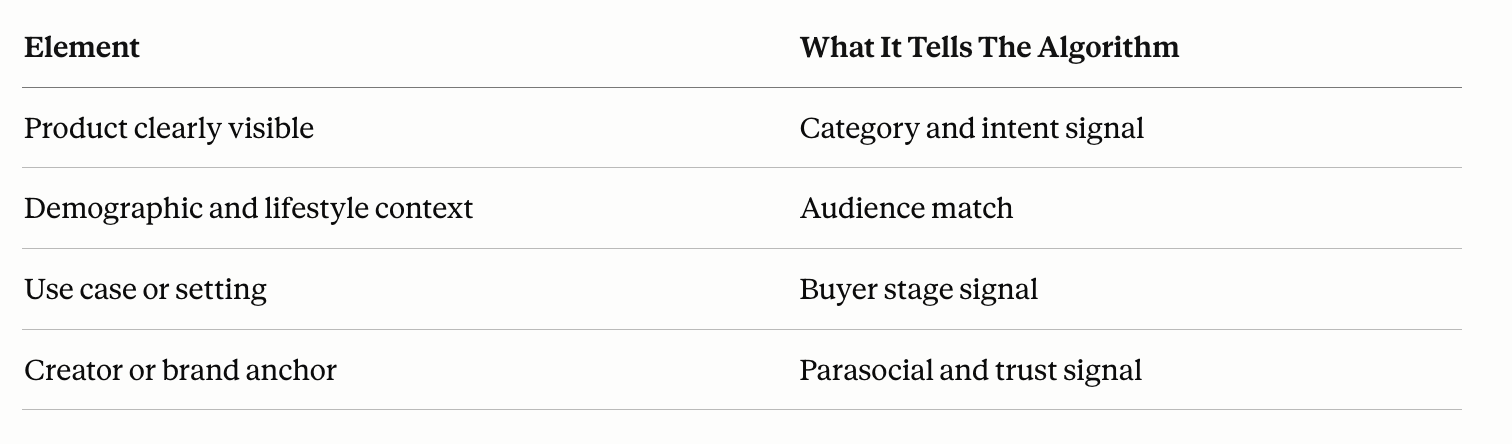
Each element is a data point. Together they tell the algorithm who this ad is for before any human has processed the hook.
Run This As A Targeting Test, Not A Creative One
Hold everything constant. Vary only the first frame.
A creator-led close-up will pull a different audience pool than a product-led wide shot on the identical ad. The multimodal layer reads them as different signals and routes them to different people. The test does not reveal which frame looks better. It reveals which audience your unit economics actually want.
The first frame was always a creative decision. It is now also a targeting decision. Most brands have not made it yet.
⚡Micromarketing Wins by Matching Messaging to Immediate Customer Motivation
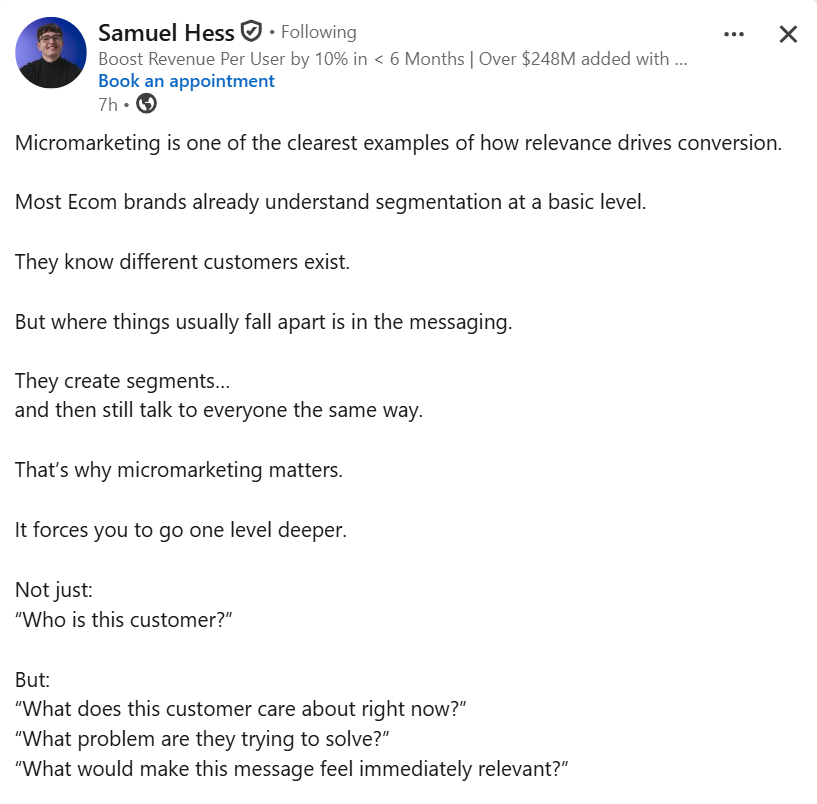
This strategy pushes segmentation beyond demographics into situational relevance. Instead of speaking broadly to an audience category, micromarketing adapts messaging to what a specific customer segment cares about at a specific moment. The focus is reducing psychological distance between intent and communication.
Why it works: More relevant messaging increases resonance and lowers persuasion friction. When creative, proof, and offers align with a segment’s immediate motivations, conversion rates improve because the message feels personally applicable.
Where it needs balance: Over-segmentation can create operational complexity and fragmented branding. Smaller audiences may also limit scale. Micromarketing works best when relevance improves meaningfully without making execution unmanageable.
Together with The Shift
Stop googling AI tools at midnight.
There are over 3,000 of them in The Shift’s vault, already vetted, ready to explore.
Subscribe and get instant access to the tool vault, a 500+ prompt library, and free AI courses built for people with actual work to do.
Plus, the daily newsletter that keeps you sharp on everything moving in AI in under 5 minutes a day.
They’re also giving away a free 1-year Claude Pro subscription to 3 subscribers.
Subscribe for free to enter. All free. All in one place.
🎥 Reel of the Day
What Works:
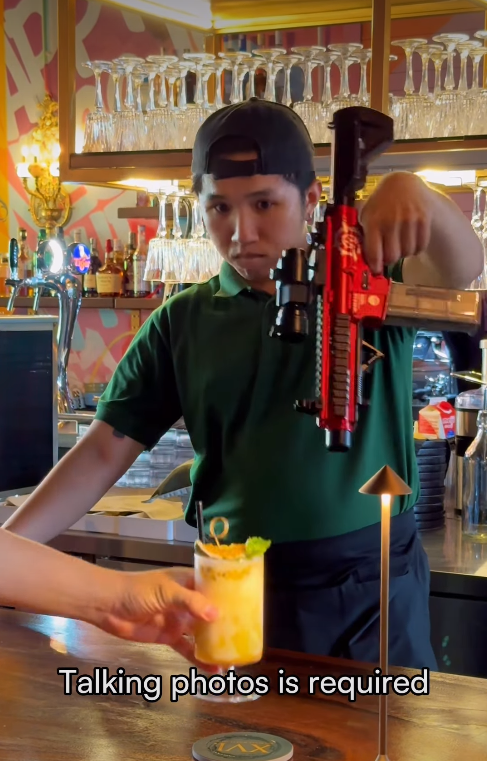
The Reel Turns “Aesthetic Obsession” Into Physical Comedy - Most cocktail reels romanticize drink photography, but this one exaggerates content culture so aggressively it becomes absurd, self-aware, and instantly shareable socially.
The Drink Becomes A Status Artifact, Not A Beverage - The cocktail is framed like luxury merchandise, making audiences subconsciously perceive it as culturally valuable before even considering taste or ingredients themselves.
Visual Contrast Drives Retention Hard - The elegant cinematic cocktail setup colliding with an aggressive toy-gun interruption creates absurd tonal whiplash, massively boosting scroll-stopping power and replay behavior online.
Take aspirational aesthetic behavior audiences already normalize, then exaggerate it until it becomes ridiculous enough to create instantly memorable branded comedy.
Advertise with Us
Wanna put out your message in front of over 40,000 best marketers and decision makers?
Thanks for reading this edition! Keep pushing boundaries, testing ideas, and staying inspired. See you in the next edition with more ways to ignite your marketing success. 🥰