They referred you but are they satisfied?
🤔 A satisfied customer and a referring customer are not the same person, Amazon performance starts with the right diagnosis, and more!
Welcome to a space where every edition delivers insights, strategies, and inspiration to fuel your advertising brilliance. 🤯
🤔 A satisfied customer and a referring customer are not the same person
Many referral strategies begin with the same assumption: build a great product, exceed expectations, and referrals will naturally follow. Customer satisfaction is treated as the cause, with referrals becoming the expected outcome.
In reality, those are two different milestones. A satisfied customer stays. A referring customer takes a social risk.
Satisfaction earns trust. Referrals spend it.
Every recommendation carries a small amount of personal reputation.
If the experience disappoints, part of that disappointment reflects on the person who made the introduction.
That’s why satisfaction alone rarely creates referrals.
People recommend products that also make them look informed, thoughtful, or ahead of everyone else.
Build something worth repeating
Overdelivering is still necessary. It just isn’t sufficient.
The experiences that get shared usually contain something specific the customer can repeat.

Specificity gives customers language. Language creates referrals.
Design for social currency
Every product or piece of content should answer one question:
What is the one thing someone will repeat tomorrow?
It could be:
- A surprising statistic.
- An unexpected result.
- A memorable analogy.
- A counterintuitive insight.
That single detail often becomes the reason the recommendation spreads.
Audit the experience differently
Instead of asking: “Did we deliver on our promise?”
Also ask: “What part of this experience makes the customer sound smart when they tell someone else about it?”
If that answer isn’t obvious, satisfaction may still be high. The referrals simply have nothing memorable to carry with them.
Together with Omnisend
How healthy is your email setup, really?

You probably know your open rate. What is harder to see is where your email setup is quietly losing revenue and what deserves attention first.
Connect Omnisend to ChatGPT or Claude and ask it to review your live account. In under 30 seconds, get a complete health score out of 100 with the highest-impact improvements ranked for you.
The audit shows what needs fixing first. Then ask ChatGPT or Claude to make the changes. It can build a segment or prepare a re-engagement campaign without leaving the chat.
Review the work and request changes naturally. Nothing goes live until you approve it.
You don't even need to write your own prompts. Omnisend built a full library, sorted from beginner to advanced.
Brands using Omnisend generate an average of $79 for every $1 spent. New customers can migrate for free within five days and pay up to 35% less than Klaviyo.
See what your account needs before your next campaign goes live.
⚡ Amazon performance starts with the right diagnosis
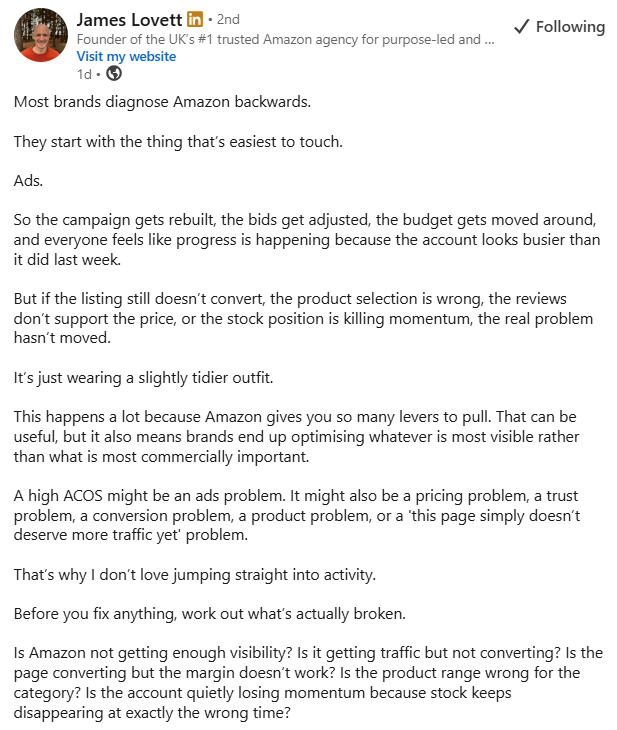
This framework argues that many brands treat Amazon as an advertising problem when it's often a broader commercial problem. Optimizing campaigns before identifying the real bottleneck can improve activity without improving business results.
Why it works: Evaluating visibility, conversion, pricing, reviews, margins, inventory, and product-market fit before changing campaigns helps identify the true constraint. Fixing the biggest bottleneck first produces more meaningful and sustainable improvements.
Where it needs balance: Not every Amazon issue is structural. Sometimes bidding, targeting, or campaign setup genuinely are the primary cause of underperformance. The strongest operators diagnose the entire funnel first, then optimize the area with the greatest impact instead of assuming ads are always, or never, the problem.
🎥 Reel of the Day
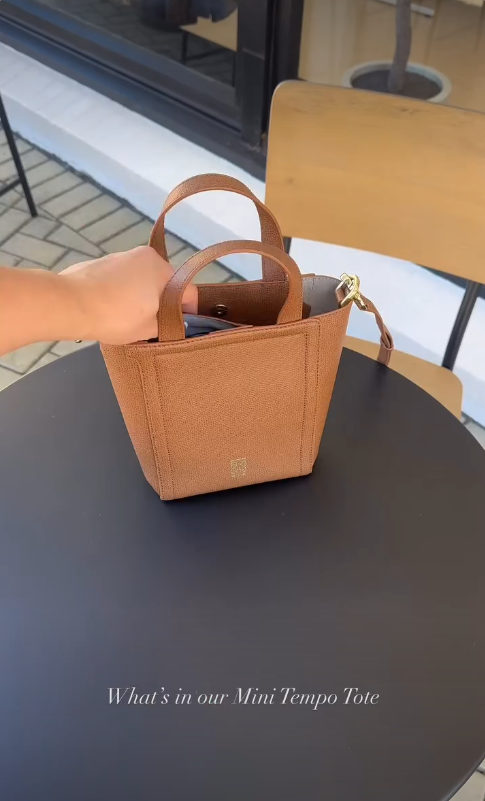
What Works:
Capacity Becomes the Content - Instead of claiming the bag is spacious, the reel proves it. Every item removed answers the viewer's silent question: "Will my essentials actually fit?" Each reveal builds curiosity for what's coming next, making the entire video watchable.
Lifestyle Sells The Product - The objects aren't random. Sunglasses, cardholder, AirPods, shell purse, hair clip, keys. Together they paint the identity of the customer. Viewers aren't buying storage; they're buying the effortless, polished lifestyle those everyday essentials represent.
Minimalism Creates Luxury - Nothing distracts from the product. A static camera, clean table, matching color palette, and consistent hand movements create a calming rhythm. That restraint makes the bag feel premium because luxury rarely competes for attention.
Instead of listing product features, structure the reel as sequential discoveries. Every new reveal becomes a micro-hook that keeps viewers watching until the very last item is pulled from the bag.
🥳 Events
🔥 Audit Your Highest-Intent Pages for AI Search in 60 Minutes
Today | 2 PM ET | Virtual Event
Josh Grant, founder of StackedGTM and former VP of Growth at Webflow, joins AirOps’ Josh Spilker to audit comparison, pricing, and feature pages live. Find what blocks AI citations, rank the fixes by revenue impact, and leave with a 30-day action plan your team can start immediately.
Can't make it live? Register anyway, you'll get the recordings within 24hours.
Advertise with Us
Wanna put out your message in front of over 40,000 best marketers and decision makers?
Thanks for reading this edition! Keep pushing boundaries, testing ideas, and staying inspired. See you in the next edition with more ways to ignite your marketing success. 🥰