AI lied to you, and you believed
😲And that lie is the reason your open rate got destroyed, Advertising can't fix a weak product, and more!
Welcome to a space where every edition delivers insights, strategies, and inspiration to fuel your advertising brilliance. 🤯
😲The AI gave you a confident, wrong reason your open rate dropped
Connect AI to your email platform and ask, “Why did our open rate fall last week?” You’ll almost always get an answer. It might point to the subject line, send time, audience fatigue, or another pattern in the account data.
The problem isn’t that the explanation is unreasonable. It’s that the AI can only explain what it can see.
Your email account is only one piece of the picture.
Inbox placement changes, spam filter updates, promotional tab adjustments and broader deliverability shifts all happen outside your account. If one of those caused the drop, the AI has no way of including it in its explanation because it was never given that context.
A good explanation isn’t always the right explanation
This is what makes AI especially convincing.
It can identify a real pattern in the data and still assign the wrong cause.
A team told the subject line underperformed rewrites subject lines.
Nothing changes.
The conclusion becomes, “That test didn’t work,” when the real problem was never inside the email itself.
Run one check before changing anything
Before acting on an AI-generated explanation, answer one question:
Is this pattern isolated or widespread?
A simple comparison usually reveals the difference.
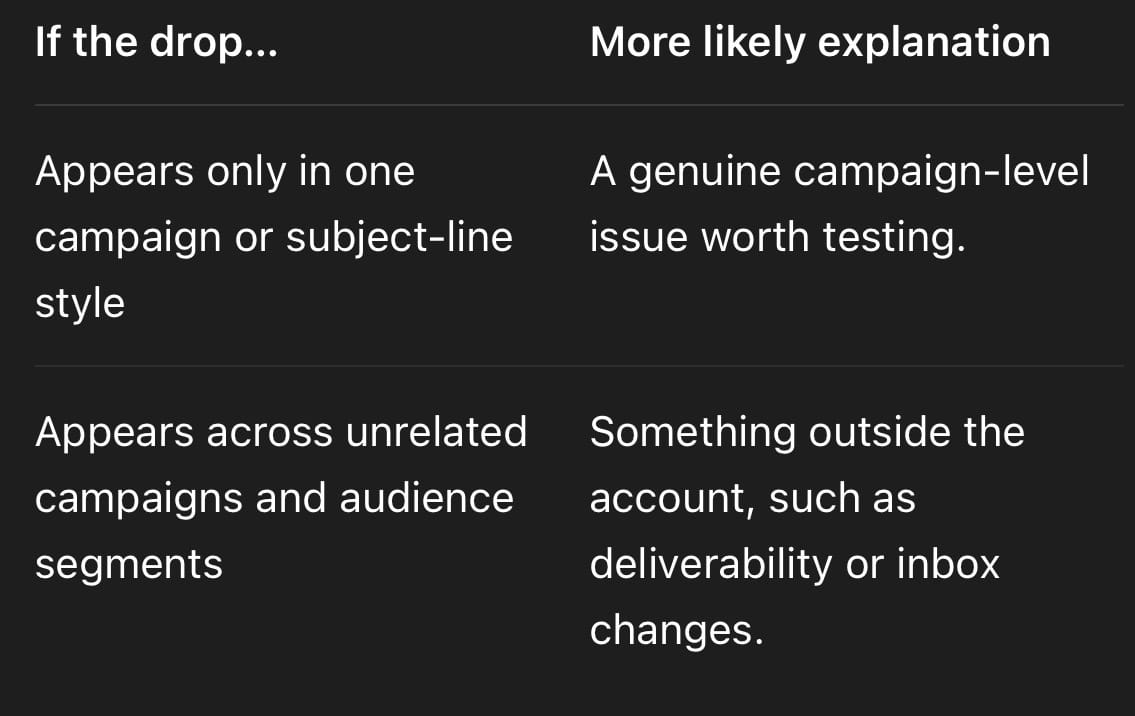
That single check often prevents weeks of testing the wrong variable.
Make verification part of the workflow
The value of AI isn’t getting an answer faster. It’s shortening the path to the right investigation.
Every AI explanation should trigger one follow-up question:
“What evidence would prove this explanation wrong?”
That habit separates using AI as an analyst from treating it as an authority.
That’s exactly what Jimmy Kim and Chase Dimond of eCom Email Marketer, together with Bernard Meyer of Omnisend, cover in a free 56-minute session.
They walk through the prompts and workflows they actually use, including where AI reaches its limits and where human judgment still makes the final call. You can watch the free session here - no signup required.
AI doesn’t become more useful by sounding more confident.
It becomes more useful when you know which answers deserve a second question before they become your next experiment.
Together with Insense
How Kulin Found a 2X ROAS Ad in Two Weeks
Finding creators becomes painfully slow when the brief requires a very specific profile. Manual searching can consume hours before production even starts.
Kulin Co faced exactly this problem. Its two-person creative team needed female beauty creators aged 40+ for an upcoming paid campaign.
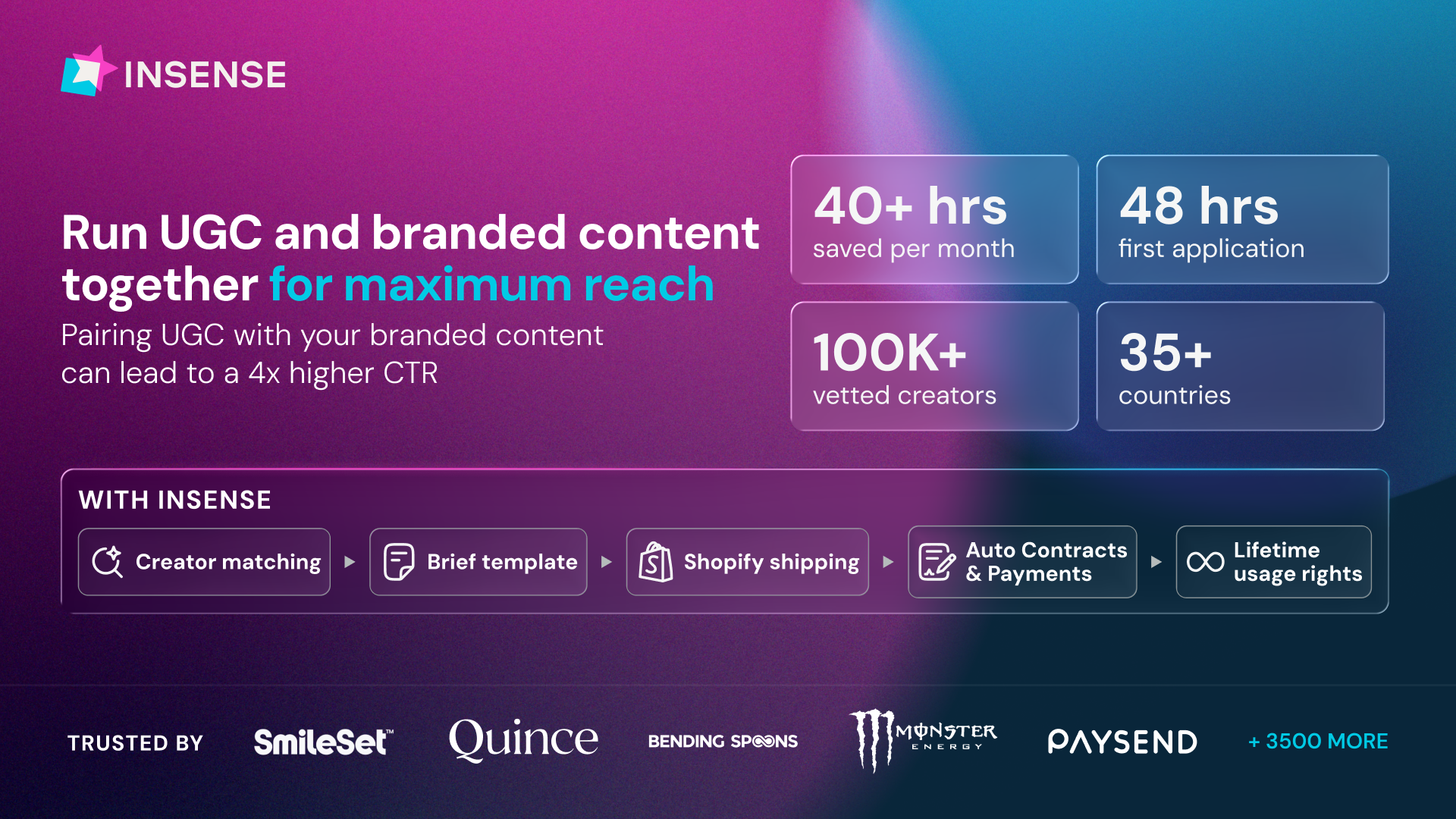
Insense gave the team a faster way to find them. Kulin filtered from 100,000+ vetted creators across 35+ countries by age, location, niche, and profile, then managed briefs and product shipping through the same platform.
Final UGC arrived within two weeks.
Kulin turned the raw footage into six paid ads, and the campaign achieved 2X ROAS.
No matter how specific the brief, Insense helps you find the right creator, and the first applications can arrive within 48 hours, and get content with lifetime usage rights.
Over 3500 brands like Strawberry.me, Bending Spoons, Wellhub, and PetLabCo trust Insense to make organic and paid work together, not separately.
Book a strategy call by August 14th for $200 platform credits for your first campaign!
⚡ Advertising can't fix a weak product
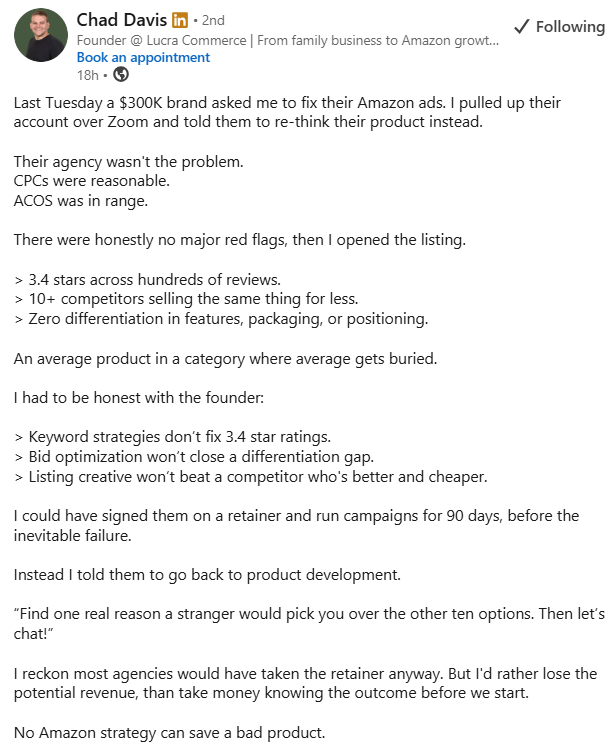
This framework argues that marketing has limits. When a product lacks strong reviews, clear differentiation, or a compelling reason to choose it over competitors, optimizing ads is unlikely to produce sustainable growth. In those cases, the bottleneck is the product—not the campaigns.
Why it works: Advertising amplifies existing demand and product appeal. Strong ratings, differentiated positioning, and a clear value proposition make every marketing dollar work harder because they improve conversion after the click.
Where it needs balance: A product doesn't have to be perfect to succeed. Some brands overcome average reviews through better positioning, pricing, customer experience, or niche targeting. Before concluding the product is the problem, evaluate the entire customer journey to identify where the biggest constraint actually exists.
🎥 Reel of the Day

What Works:
Capacity Becomes The Content - Instead of claiming the bag is spacious, the reel proves it. Every item removed answers the viewer's silent question: "Will my essentials actually fit?" Each reveal builds curiosity for what's coming next, making the entire video watchable.
Lifestyle Sells The Product - The objects aren't random. Sunglasses, cardholder, AirPods, shell purse, hair clip, keys. Together they paint the identity of the customer. Viewers aren't buying storage; they're buying the effortless, polished lifestyle those everyday essentials represent.
Minimalism Creates Luxury - Nothing distracts from the product. A static camera, clean table, matching color palette, and consistent hand movements create a calming rhythm. That restraint makes the bag feel premium because luxury rarely competes for attention.
Instead of listing product features, structure the reel as sequential discoveries. Every new reveal becomes a micro-hook that keeps viewers watching until the very last item is pulled from the bag.
Advertise with Us
Wanna put out your message in front of over 40,000 best marketers and decision makers?
Thanks for reading this edition! Keep pushing boundaries, testing ideas, and staying inspired. See you in the next edition with more ways to ignite your marketing success. 🥰