Gift orders confuse your data
🎁 Every December gift purchase teaches your email recommendations the wrong thing about the buyer, so tag and fix them before January, and more!
Welcome to a space where every edition delivers insights, strategies, and inspiration to fuel your advertising brilliance. 🤯
🎁 December gift orders are quietly breaking your product recommendations
A woman buys a men's watch for her husband in December. In January, your recommendation emails start showing her men's watches, watch straps, and cufflinks.
She ignores them, then unsubscribes. Your system learned the wrong thing from one gift.
Multiply that by every gift order, and your January flows run on bad data.
Tag gift orders as they arrive
Mark an order as a likely gift when it has any of:
- A gift note or gift wrap
- A shipping address different from the billing address
- A product outside the customer's usual category, such as men's items on an account that only bought women's
Tag the order and the products in it, so the buyer's profile can tell them apart.
Exclude gift items from recommendations
Set browse, cross-sell and "you might also like" logic to ignore products from gift-tagged orders. Base recommendations on the buyer's non-gift history.
Tagging only helps if your email platform can segment on it. If yours can't, it may be time to look at alternatives. Omnisend runs email and SMS for 150,000+ ecommerce brands and reports an average of $79 for every $1 spent. Migration is free and takes up to five business days, which fits neatly into quiet January. You can try the BFCM prompts.
Ask once in January
Send a one-question email to anyone with a likely gift order: "Was your December order a gift?" Offer two buttons.
- Yes: keep the gift tag and ask who it was for, such as a partner, a parent or a friend.
- No: remove the tag and treat the order as their own taste.
The answer also gives you a gifting calendar. Someone who bought for a partner in December is a candidate for a Valentine's Day reminder.
Clean your segments
Gift buyers distort category segments too. Keep anyone who only bought a category as a gift out of that category's campaigns, unless they answer "no" to the January question.
Measure the fix
Compare January click and unsubscribe rates on recommendation emails for gift-tagged buyers with last year's January. If clicks rise and unsubscribes fall, the tagging is working.
Set up the three gift signals now, so every December order gets tagged as it lands instead of being cleaned up in February.
Together with Insense
Your BFCM Creator Calendar is Already Mapped
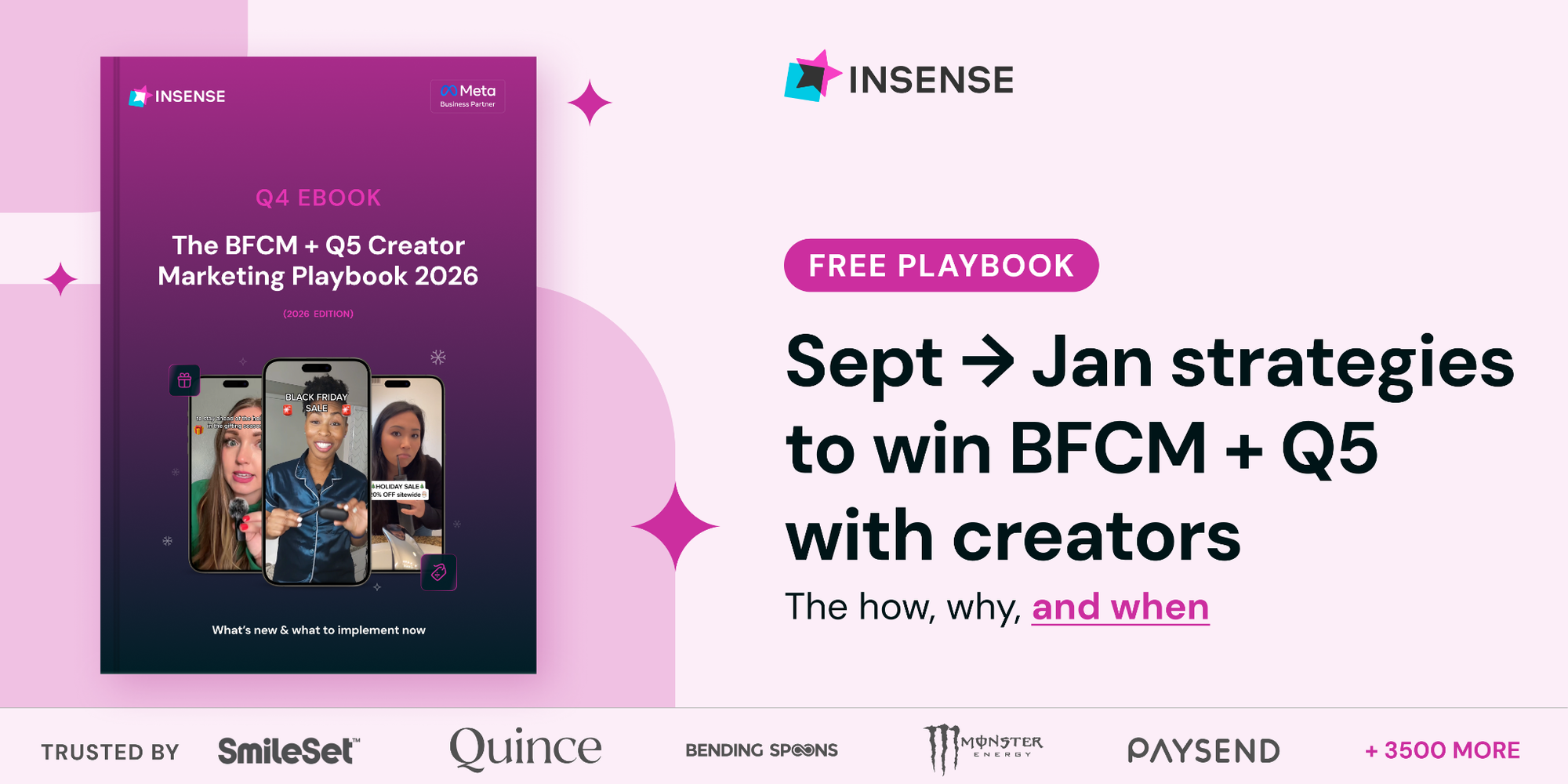
Still sourcing creators when your Black Friday ads should be running? Every delay leaves less time to test what actually sells before your biggest spending weeks.
Insense’s free BFCM + Q5 Creator Marketing Playbook gives marketers a week-by-week plan from September through January, so every creator campaign starts with a clear deadline and purpose.
Inside, you’ll find:
- A week-by-week August-to-January calendar showing when to secure permissions, test content, scale winning creators, and move into Q5.
- A practical creator scorecard using conversions, engagement quality, and reliability, so November budgets back proven performers over follower counts.
- Q5 action plan covering licence extensions, January creative, and the recommended 10–15% budget reserve for the lower-cost post-holiday window.
You’ll also get benchmarks for creator-handle ads, modular UGC testing, live shopping, hook rates, and creative volume, helping your team set measurable targets before spending rises.
⚡ Ad decisions need more than CPA alone
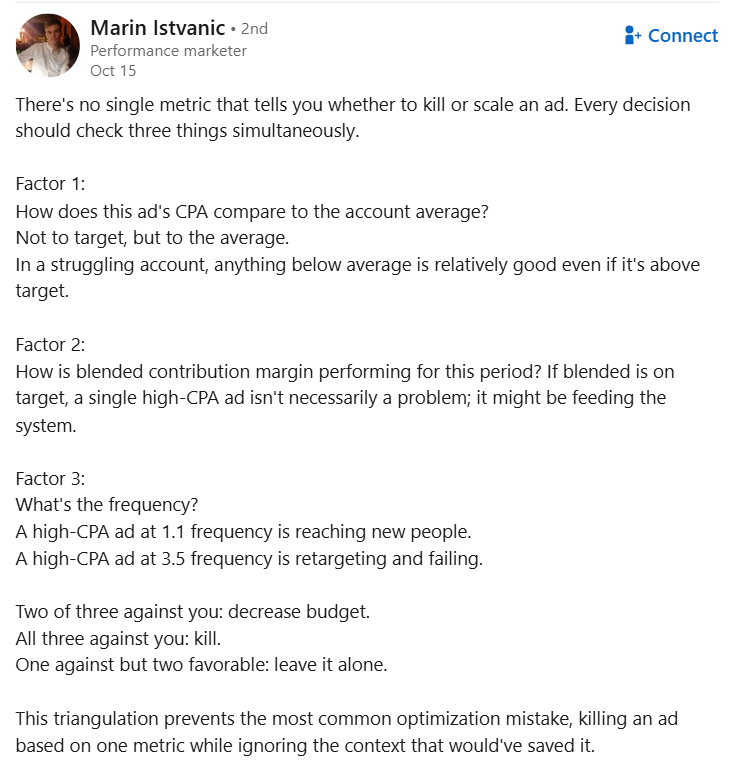
This framework combines relative CPA, blended contribution margin, and frequency to evaluate whether an ad deserves more budget. Instead of judging individual performance in isolation, it considers how each creative contributes to overall account economics.
Why it works: Comparing multiple signals helps prevent premature cuts to ads that may support broader acquisition or profitability. It also provides a more structured way to identify creatives that deserve further testing, reduced spend, or removal.
Where it needs balance: Frequency doesn't reliably distinguish prospecting from retargeting, and below-average CPA isn't necessarily profitable. The two-out-of-three rule is a useful starting point, but decisions should also consider conversion volume, incremental impact, audience overlap, and statistical confidence.
🎥 Reel of the Day
What Works:
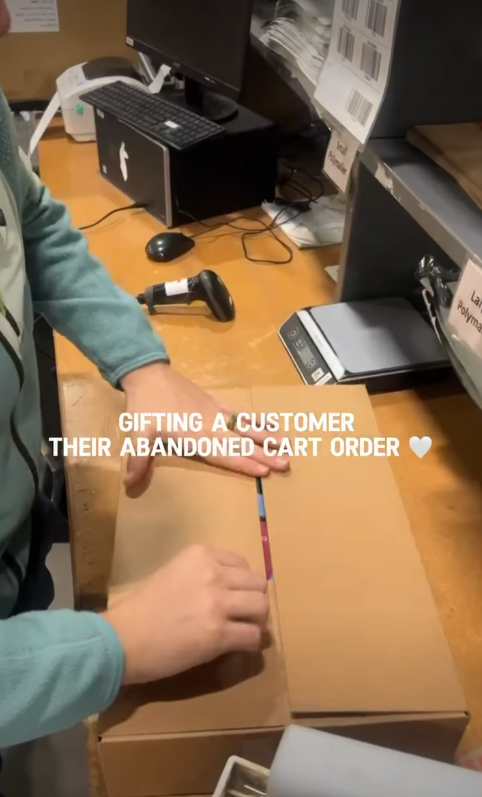
1. Abandoned Cart Becomes Opportunity - Cotopaxi turns an abandoned purchase into a surprise gift, transforming a missed sale into a personal customer experience. The unexpected gesture creates curiosity while demonstrating how brands can build relationships beyond transactions.
2. Personalization Makes It Meaningful - The reel identifies the customer by name and shows the exact Fuego jacket and Tozo beanie from their abandoned cart.
3. Fulfillment Becomes The Story - Instead of simply announcing the giveaway, Cotopaxi documents employees locating products, collecting items, and preparing the package.
Turn an overlooked customer interaction into a personalized surprise. Document the process from selection to fulfillment, reveal the thoughtful details, and let the gesture communicate the brand's values.
Advertise with Us
Wanna put out your message in front of over 40,000 best marketers and decision makers?
Thanks for reading this edition! Keep pushing boundaries, testing ideas, and staying inspired. See you in the next edition with more ways to ignite your marketing success. 🥰