November gift boxes get ignored
📬 Creators get flooded with gift boxes in Q4 and posting rates drop, so seed smarter and price every usable asset, Q4 growth depends on more than ad spend, and more!
Welcome to a space where every edition delivers insights, strategies, and inspiration to fuel your advertising brilliance. 🤯
📬 Seeding in Q4: How to get posts when every creator's mailbox is full
By November, creators receive gift boxes from dozens of brands a week. Many never make it on camera, and your seeding budget turns into free samples.
The fix starts with measuring the right thing.
Price a usable asset
Ship 100 units at $25 each, including shipping. That's $2,500.
- If 35% post, you get 35 posts.
- If 60% of those are good enough for ads, you get 21 usable assets.
- Cost per usable asset: about $119.
Now halve the posting rate, which is what a crowded November mailbox can do. You get about 10 usable assets at $238 each. These rates are illustrative, so plug in last year's.
Compare that figure with what you pay for commissioned UGC. Seeding only wins when its cost per usable asset is lower.
Getting creators who want the product is what moves the posting rate. On [Insense], you can run seeding campaigns where vetted creators from a marketplace of 115K+ apply to you within 48 hours, so every box goes to someone who asked for it. [Book a free strategy call]
Move 1: Ask before you ship
Send a short opt-in first: the product, one content idea and a yes or no. Ship only to the yeses. A creator who chose the product is far likelier to post, in my judgment.
Move 2: Ship before October 20
Land boxes before the holiday flood peaks. Early boxes get opened while there's still space in the creator's content calendar. The date is my judgment.
Move 3: Send one specific idea
Skip the generic card. Look at each creator's recent posts and suggest one idea that fits, such as "Your morning routine series, with this as step two."
Move 4: Agree ad usage upfront
Offer a small fee, paid only if you use their post in ads. Organic posts become ad assets without a second negotiation, which raises your usable rate.
Move 5: Follow up once
One friendly message seven days after delivery. More than that pushes creators away from your brand for next year.
What to track
- Opt-in rate per outreach message
- Posting rate per shipped box
- Usable rate per post
- Cost per usable asset, compared with paid UGC
Draft the opt-in message today and send it to your shortlist. Boxes that ship by October 20 beat the November pile.
Together with Omnisend
Get Your BFCM Emails Built Before the Rush
Every BFCM email built at the last minute leaves less time to catch a broken link or test whether the offer is clear on mobile.
Omnisend’s free BFCM AI playbook includes 12 detailed prompts for core BFCM tasks: last year's performance, deliverability, segmentation, campaign planning, and more.
Connect Omnisend with Claude or ChatGPT, then follow the playbook to:
- Give valuable customers first access. Identify a VIP audience from purchase history, then approve the criteria before creating your segment.
- Know what each email should achieve. Build a send calendar and campaign briefs informed by last year’s results.
- Have emails ready to refine. Generate templates using your brand assets directly in Omnisend, then edit them in the Email Builder.
Omnisend’s email and SMS platform serves 150,000+ ecommerce brands. Migration is free and takes up to five business days.
Bring your store data into the conversation now, and use the playbook to get campaigns ready while there’s still time to test.
⚡Q4 growth depends on more than ad spend
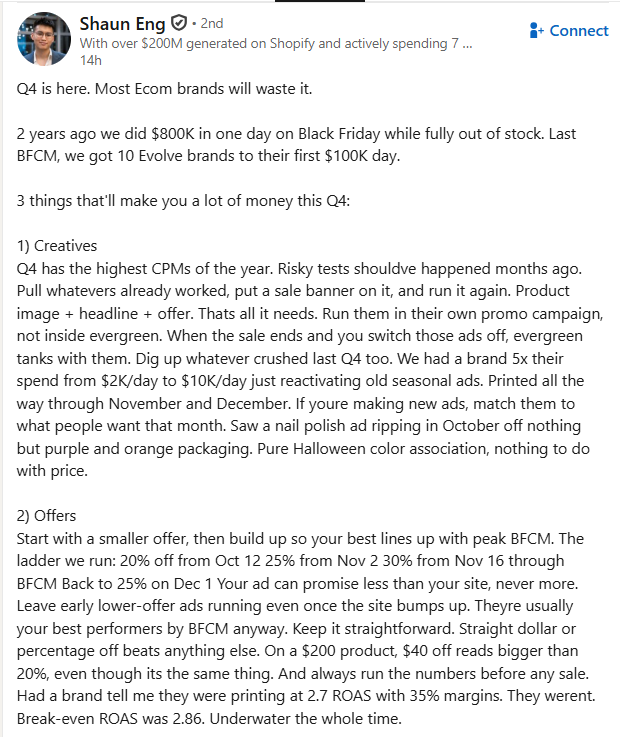
This framework breaks Q4 preparation into three priorities: reusing proven seasonal creatives, structuring promotional offers around peak demand, and ensuring operations can handle increased order volume.
Why it works: Proven creatives reduce testing uncertainty during expensive auction periods, while planned offers give brands a clear promotional calendar. Inventory, customer support, and payment readiness help prevent operational problems from undermining successful campaigns.
Where it needs balance: Reusing old winners doesn't guarantee performance, and escalating discounts can destroy contribution margins. Separating promotional campaigns from evergreen isn't universally necessary either. Brands should validate profitability, demand, and operational capacity before aggressively scaling spend.
🎥 Reel of the Day
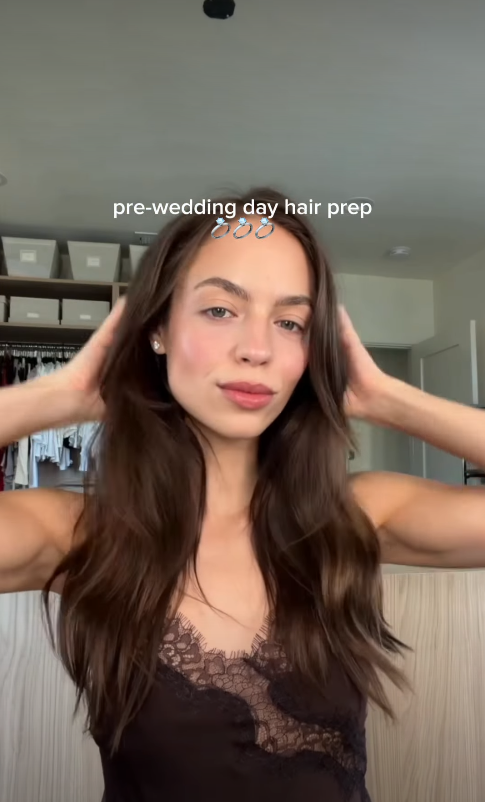
What Works:
1. Wedding Countdown Hook - The Reel connects K18's haircare products to Claudia's upcoming wedding, giving viewers a personal reason to follow her preparation journey while making the partnership feel relevant.
2. Routine-Based Product Placement - K18 products appear naturally in the shower, during serum application, and throughout her haircare routine. This repeated exposure shows how the products fit into everyday preparation without dominating the story.
3. Demonstrate Every Application - Close-up shots of the dropper, scalp application, and serum texture make the routine easy to understand. Showing the process helps viewers visualize using the products themselves.
Build product partnerships around meaningful life events, such as weddings, vacations, or celebrations. Show the complete routine, explain each step naturally, and finish with a visible result that connects back to the occasion.
🥳 Events
🔥 When “We Can’t Measure It” Becomes the Wrong Reason to Cut Spend
October 15 | Virtual Event
AirOps COO Matt Hammel and Bain’s Zak Prauer break down where traditional attribution undercounts AI search, why recommendations can matter more than citations, and what proof leadership should expect before increasing or cutting budget.
Can't attend the session live? Register anyway, and you’ll get the recordings in 24 hours.
Advertise with Us
Wanna put out your message in front of over 40,000 best marketers and decision makers?
Thanks for reading this edition! Keep pushing boundaries, testing ideas, and staying inspired. See you in the next edition with more ways to ignite your marketing success. 🥰