Google stops requiring hashed data
🔐 From November 16, Google's Data Manager won't require customer data to be pre-hashed for Customer Match and enhanced conversions; Marketplaces can compete for creators through higher earnings, and more!
Welcome to a space where every edition delivers insights, strategies, and inspiration to fuel your advertising brilliance. 🤯
Together with Omnisend
Your next customer already follows you. Stay in touch.

Someone follows your brand on Instagram because they like what you’re selling. But when your next launch or sale comes around, they might never see it.
Omnisend’s Instagram integration helps you capture that interest while it’s fresh. Social Capture automatically DMs anyone who comments or messages a keyword you’ve chosen, asking for their email.
Offer a discount to give them a reason to subscribe. Their email goes straight into your Omnisend list, ready for a welcome series that helps bring them closer to their first order.
No copying contacts or manually chasing replies. Social Capture is available on all paid plans.
New to Omnisend? Its e-commerce email and SMS platform is trusted by 150,000+ brands. Migration is free and takes up to five business days.
Give today’s interested followers a way to hear about tomorrow’s offer.
🔐 The November 16 checklist for Google's customer data change
Ask anyone who has debugged a Customer Match list: a capital letter or a stray space in an email address can sink the match. Each formatting quirk produced a different hash, so real customers went unmatched.
Google is removing that problem. According to PPC Land on October 18, from November 16, 2026, customer data sent through Data Manager no longer needs to be SHA-256 hashed first. That covers CRM connections, cloud storage imports, direct uploads and the Data Manager API, for Customer Match and enhanced conversions.
Google says it will accept encrypted data by default, then decrypt, normalize and match it in a "hardware-isolated trusted execution environment," and that this "improves match accuracy." It didn't share match-rate figures, and the notice doesn't clearly describe an opt-out.
Better matching sounds good. It also changes what leaves your systems. Work through this list.
Before November 16
☐ Screenshot match rates for every Customer Match list.
☐ Record enhanced conversions diagnostic status.
☐ List every path sending customer data to Google: CRM syncs, file uploads, tag-based enhanced conversions, scripts.
☐ Note which paths currently hash.
☐ Send the change to your privacy lead and confirm your privacy notice and data agreements cover it.
☐ Clean the data regardless: email formats, country codes on phone numbers, consistent names.
On or after November 16
☐ Pick one list to test the new unhashed path.
☐ Leave working setups alone during peak week. In my judgment, swapping a functioning pipeline right before Black Friday adds risk for little gain.
☐ Compare the test list's match rate with your baseline.
After Cyber Monday
☐ Migrate remaining paths if the test improved matching.
☐ Recheck remarketing and exclusion list sizes.
Why match rates matter more in Q4
Customer Match lists do two jobs in peak season. They let you bid more for past buyers, and they keep recent purchasers out of prospecting. A poorly matched list does both badly. Lift a list from 50% to 65% matched, and more loyal customers see the right offer while fewer recent buyers see ads they don't need. Those figures are illustrative.
Monitor
- Match rates before and after November 16
- Enhanced conversions diagnostics
- Audience sizes for remarketing and exclusions
Screenshot this today
Your current match rates are the only baseline you'll get. Without them, Google's promised improvement can't be checked.
⚡ Marketplaces can compete for creators through higher earnings
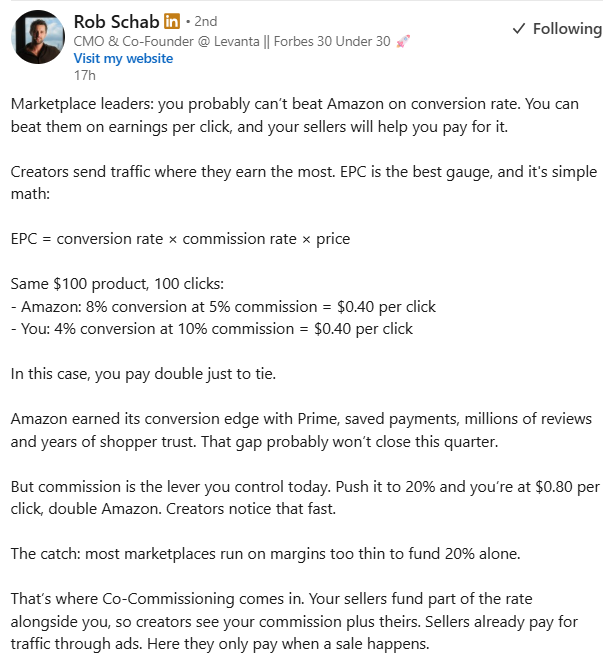
This framework argues that smaller marketplaces don't need to match Amazon's conversion rate to attract creators. By offering higher commissions and sharing those costs with sellers, they can increase earnings per click (EPC) despite converting fewer shoppers.
Why it works: Creators prioritize the revenue their traffic generates, not just conversion rates. Co-commissioning allows marketplaces and sellers to combine incentives, potentially making affiliate promotion more attractive without placing the entire commission burden on the platform.
Where it needs balance: Higher EPC doesn't automatically guarantee sustainable growth. Commission increases can reduce seller profitability, while conversion rates and average order values vary across audiences. Marketplaces should evaluate incremental sales, contribution margins, and creator retention before scaling commission incentives.
Together with AirOps
See what competitors are advertising in ChatGPT

Planning a ChatGPT ads test? Seeing what other brands are running gives you a clearer starting point for deciding what’s worth your budget.
The AirOps ChatGPT Ad Library lists 6,000+ brands. Search by brand name or domain to see competitor ad messaging, then explore the prompts where those ads appeared to understand the conversations behind the creative.
Bring those examples into your next campaign discussion. Use them to choose a messaging angle worth testing and explain why that test deserves budget.
You’ll have real ads to reference when your team asks what you want to run and why.
Before your next campaign brief gets locked, see what’s already out there.
🎥 Reel of the Day
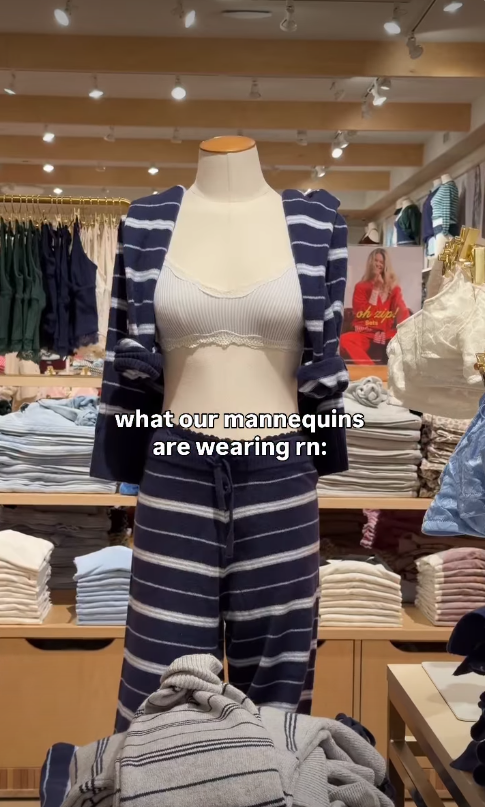
What Works:
1. Turning Store Displays Into a Style Series - Aerie uses the simple hook “What our mannequins are wearing rn” to turn everyday store displays into a recurring content format. It feels like a casual outfit roundup rather than a traditional promotional video.
2. The Mannequins Become the Influencers - Instead of hiring models or creators, the brand lets its mannequins showcase complete looks. This makes the content inexpensive to produce while giving viewers ready-made outfit inspiration.
3. A Virtual Walk Through the Store - The quick transitions between mannequins recreate the experience of browsing a physical Aerie store. Different colors, textures, and silhouettes keep the visuals changing without requiring elaborate production.
Turn existing in-store displays into a recurring social series. Use casual hooks, showcase complete outfits, and let visual styling drive product discovery without making the content feel like an advertisement.
Advertise with Us
Wanna put out your message in front of over 40,000 best marketers and decision makers?
Thanks for reading this edition! Keep pushing boundaries, testing ideas, and staying inspired. See you in the next edition with more ways to ignite your marketing success. 🥰