Bid more for bigger carts
🛒 Google Ads is adding cart-size bid multipliers, high-value mode for Shopping and retention goals ahead of the holidays, Amazon SQP helps separate traffic problems from conversion problems, and more!
Welcome to a space where every edition delivers insights, strategies, and inspiration to fuel your advertising brilliance. 🤯
Together with Omnisend
Get their email while you have their attention

You spend hours creating content that gets people interested. Then ask them to find your bio, open a link, and fill out a form.
Every extra step gives a potential subscriber another reason to drop off.
Omnisend’s Social Capture lets you collect their email right inside Instagram, while they’re already engaging with your brand.
Here’s how it works:
- Connect Instagram and choose a keyword, with an optional discount for subscribing.
- Omnisend automatically DMs anyone who comments or messages that keyword, asking for their email.
- Those who subscribe go straight into your Omnisend list, ready for your welcome series.
You’ll have a way to follow up with interested shoppers when your next offer goes live, without hoping they see another post.
New to Omnisend? Its ecommerce email and SMS platform is trusted by 150,000+ brands. Migration is free and takes up to five business days.
Start collecting subscribers before your next launch needs them.
🛒 Three new Google Ads levers for big carts and lapsed buyers, rated by a media buyer
Start with a table you probably haven't built. Last November, one store's orders under $75 earned a 48% margin. Orders from $75 to $150 earned 41%. Orders above $150 earned 29%, because the biggest baskets leaned on discounted bundles. Those figures are illustrative, but the pattern is common.
Keep that table in mind, because Google just made it easy to bid harder for big baskets. On October 22, Search Engine Roundtable reported holiday updates to Google Ads customer lifecycle goals. Here's each lever, with my take.
Lever 1: Percentage multipliers by cart size
What it is: bids scale with cart value across Search, Shopping, PMax, and Demand Gen in Google Ads and Search Ads 360. Google's example: a 20% boost bids as aggressively for a $500 cart as for a $50 cart.
My take: the riskiest of the three. In the table above, a cart-size multiplier pushes spend toward the least profitable band. Build your own margin-by-cart table first. If big carts earn less, fix bundle pricing or trim the discount before adding any multiplier. If they genuinely earn more, start at 10% to 20%.
Lever 2: High value mode for Shopping
What it is: the existing high-value mode, now expanding to Shopping campaigns and rolling out from late October.
My take: useful if your customer value data is solid. If it's patchy, the system optimizes toward noise. Check how you define a high-value customer before switching it on.
Lever 3: Retention goals
What it is: re-engagement mode and retention-only mode, rolling out for Performance Max, Search and Shopping.
My take: re-engagement is the best value of the three for Q4. Bidding more for customers who haven't bought recently is usually cheaper holiday revenue than cold prospecting, as long as your customer list is clean. Retention-only mode narrows campaigns to existing customers, which suits loyalty offers but caps new-customer growth. Use it on a dedicated campaign only.
The rule across all three
One new lever per campaign. A new goal, a multiplier, and a new ROAS target together make results unreadable, and Black Friday leaves no time to untangle them.
Measure by campaign
- Average order value and margin per order
- New versus returning customer share
- Cost per conversion for re-engaged customers
One table to build
Pull last November's orders, group them into cart value bands and calculate margin per band. That table decides whether Lever 1 helps you or just spends more on big, thin baskets.
⚡Amazon SQP helps separate traffic problems from conversion problems
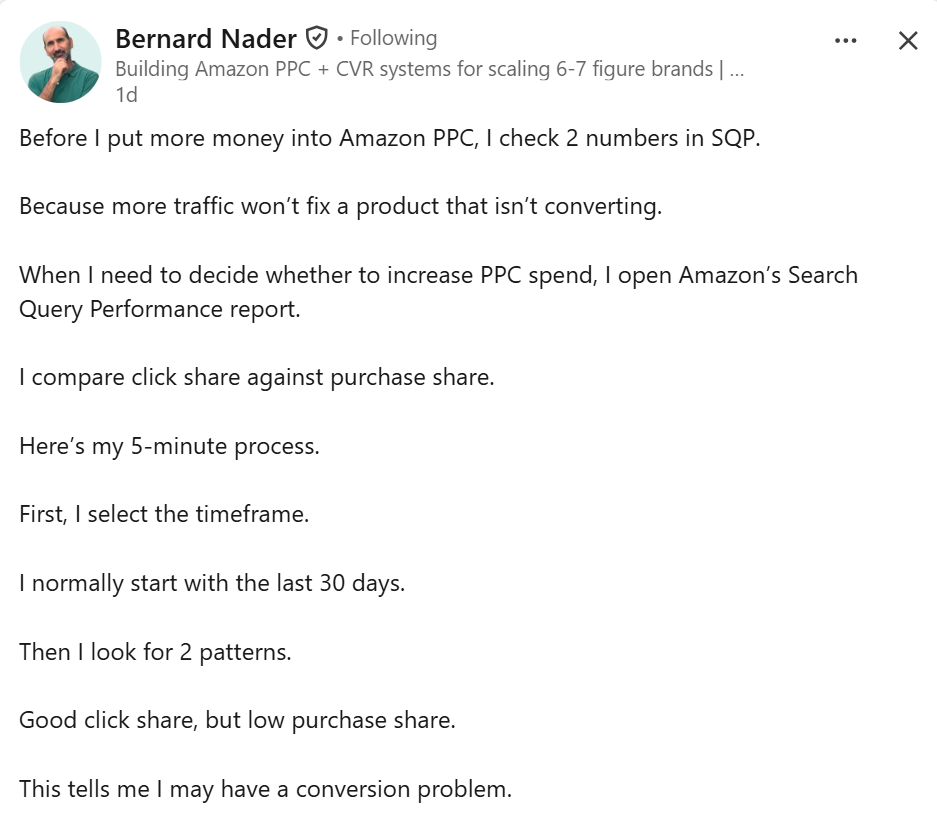
This framework uses Amazon's Search Query Performance report to compare click share against purchase share before increasing PPC spend. The goal is to identify whether a product needs better visibility or improvements to its listing and offer.
Why it works: Strong click share with weak purchase share can indicate conversion friction, while relatively strong purchase share with limited visibility may signal an opportunity to expand traffic. This helps brands prioritize listing improvements or advertising investment based on actual shopper behavior.
Where it needs balance: Click share and purchase share are diagnostic signals, not definitive proof of conversion or traffic problems. Competitor performance, organic sales, pricing, and limited data can influence both metrics. Brands should validate findings with conversion rates, profitability, and keyword-level trends before scaling spend.
Together with New Engen
Your next winning ad needs a different voice
Your product solves a real problem. But when every ad makes a promise, buyers need a reason to believe yours.
A qualified expert explaining how it works can give them that reason.
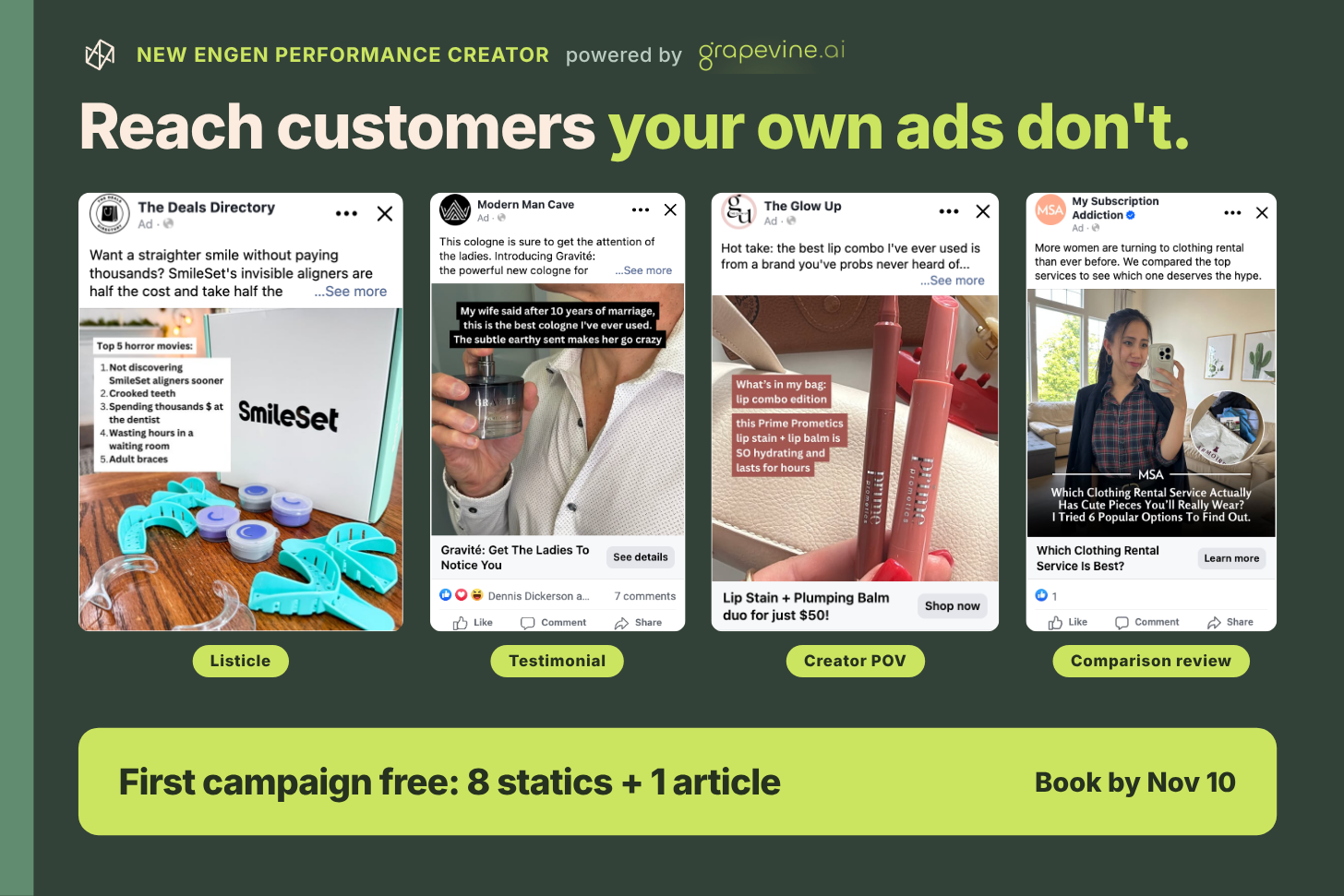
Grapevine, now part of New Engen, creates ads delivered through creator and publisher handles with production managed from brief to launch.
You approve the angles and ship product. Grapevine sources creators, handles briefs and payments, then produces and posts the content.
- Madison Reed achieved 20% efficiencies over target CPA and 50% higher LTV.
- Mathnasium cut Meta CPL by 33% in under 30 days.
- Cirkul achieved 15-50% lower TikTok CPA and nearly doubled CTR through creator whitelisting.
Put this approach to work with your first campaign on Grapevine.
🎥 Reel of the Day

What Works:
1. The Product Looks Almost Unreal - The unusual wine glass design makes viewers question what they're seeing. Its smooth, colorful finish creates a scroll-stopping moment that sparks curiosity and encourages closer inspection.
2. Every Color Is Another Reason to Watch - Instead of demonstrating one glass, the creator cycles through multiple shades. Each reveal creates anticipation while subtly encouraging viewers to imagine which color they'd choose.
3. The Christmas Wishlist Effect - The tiny “gift of the year” overlay does the selling without explaining anything. It positions the glasses as a trendy, gift-worthy discovery people would want to share with friends.
When a product is visually unusual, skip lengthy explanations. Let its design create curiosity, showcase variations to sustain attention, and make purchasing information easy to request.
Advertise with Us
Wanna put out your message in front of over 40,000 best marketers and decision makers?
Thanks for reading this edition! Keep pushing boundaries, testing ideas, and staying inspired. See you in the next edition with more ways to ignite your marketing success. 🥰