The Fate of your is decided
🥲Meta decided it before you opened the dashboard, Strong demand makes popups less necessary over time, and more!
Welcome to a space where every edition delivers insights, strategies, and inspiration to fuel your advertising brilliance. 🤯
🥲Meta Decided Your Ad’s Fate Before You Opened the Dashboard
There’s a filter inside Meta’s system that most media buyers never see because it doesn’t appear in any report. It runs before the learning phase. Before CPA registers. Before ROAS has anything to measure.
Meta watches how real people behave in the first moments of contact with your content and decides whether it’s worth distributing at scale.
Once that decision is made, budget becomes almost irrelevant. You can increase spend, tighten targeting, rewrite the hook, and none of it touches the actual problem. The gate already closed.
The Gate Is Behavioral, Not Creative
Meta isn’t reading your copy. It’s reading the audience’s body language in real time.
Within the first two seconds, the platform is measuring three things. Whether the viewer instantly recognizes what kind of content they’re watching without having to interpret it.
Whether the ad matches the consumption mode of the placement, someone mid-scroll in entertainment mode who suddenly gets pitched experiences friction, and that friction shows up as hesitation. And hold rate, not clicks, not swipe-ups, just whether people stayed.
Hesitation is the signal that kills eligibility. An ad can have a sharp offer, clean production, and a strong hook and still never scale because the opening forced the viewer to shift mental gears. That gear shift reads as resistance and resistance reads as a low-quality signal at the distribution layer.
Copy Tests Don’t Create New Learning. Containers Do.
Meta groups ads at the feature level. If multiple creatives share the same framing, pacing, visual environment, and camera behavior, the system treats them as variations of one idea regardless of how different the copy is. Running six copy versions inside the same creative container isn’t a test.
It’s six bets on the same horse.
This is also where influencer seeding quietly breaks down. Source creators who look alike, shoot alike, and speak to overlapping audiences and you’ve built a portfolio that Meta reads as one signal. You’re multiplying cost, not reach.
Containers that reliably generate fresh eligibility:
- A genuine shift in camera distance or point of view
- A new physical or social environment the platform hasn’t seen from your account
- A change in motion behavior, not just motion volume
- A creator whose content patterns and audience composition have zero overlap with your existing roster
That last point is where most programs fail silently. Finding creators with genuinely distinct audiences requires vetting at a level that gut feel and follower count can’t provide.
Insense gives you access to 80,000+ vetted creators with full visibility into audience composition and content style before you commit spend, so you’re building real creative diversity into the roster rather than discovering the overlap after the campaign runs. You can book a free strategy call by April 24 and get a $200 platform credit towards your first campaign.
The Execution Test That Keeps This Honest
Launch at minimal spend and watch behavior in the first three seconds. If the content isn’t earning attention immediately, don’t optimize it. Pull it. Paid media amplifies existing behavior patterns. No budget level fixes an asset the system has already decided to suppress.
Persuasion is downstream of eligibility. Clear the gate first and your optimization levers finally have something real to pull against. Until then you’re fine-tuning inside a system that already moved on.
Together with AirOps
ChatGPT judges a page by its cover.
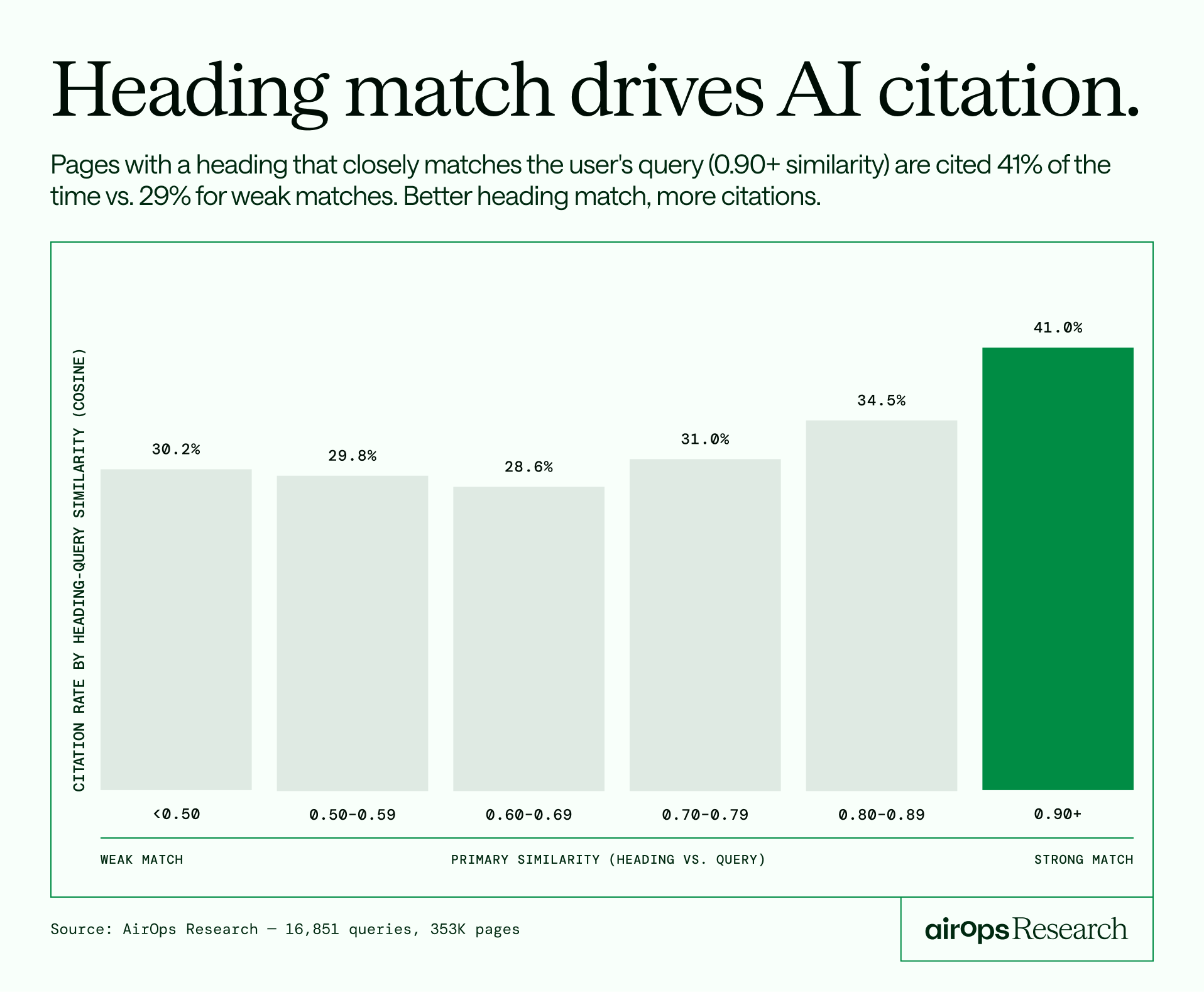
Pages with headlines that directly answer the query get cited 41% of the time. Loosely related headlines? 29%.
AirOps studied 16,851 ChatGPT queries and 353,799 pages across 10 industries to find what separates cited pages from ignored ones. A few findings that stood out to me:
- Retrieval rank is the top signal: A page at position 1 has a 58% chance of being cited. By position 10, that drops to 14%.
- Comprehensive guides don't always win: Pages covering 26-50% of ChatGPT's sub-queries get cited more often than pages covering 100%.
- Domain authority doesn't predict citation: Always-cited pages actually have lower DA than never-cited ones. Content quality is what counts.
The full report covers 20+ signals with controlled comparisons across each.
⚡Optimize for Demand First, Popups Second
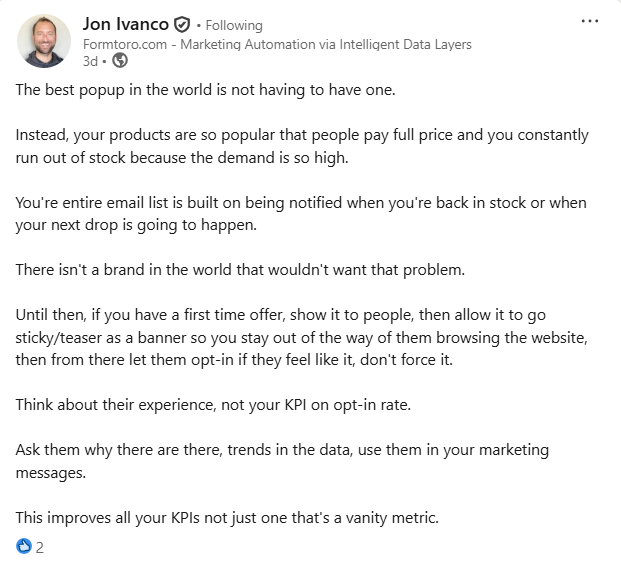
This perspective reframes popups as a fallback, not a growth engine. The ideal state is strong product demand where customers seek you out and subscribe for value like restocks or drops. Until then, popups should support the experience, not interrupt it, balancing visibility with user intent.
Why it works: High demand reduces reliance on discounts and forced capture tactics. When users opt in on their terms, intent and conversion quality increase. This improves downstream metrics like revenue, retention, and brand perception.
Where it needs balance: Most brands don’t have enough demand to rely purely on pull mechanics. Popups still play a role in list growth. The key is designing them to assist the journey, not dominate it.
🚀 Reel of the Day
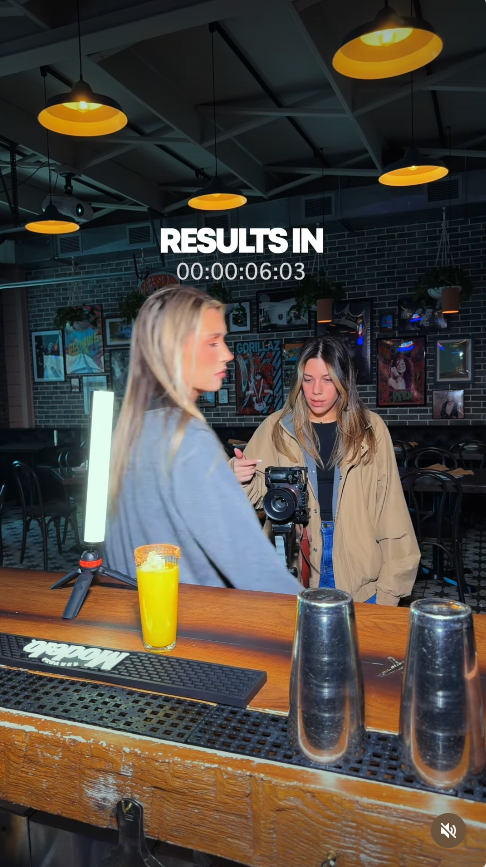
What Works:
1. Chaos Becomes Concept - They didn’t hide mistakes, they built the idea around them. The coworker “ruining” shots becomes the narrative hook, turning imperfection into creativity, which instantly feels more human and scroll-stopping.
2. BTS As Trust Engine - Showing lights, camera, awkward positioning removes the illusion of perfection. This builds credibility, making the final shot feel earned, not staged, which increases perceived authenticity and brand trust.
3. Before After Dopamine - The jump from messy behind-the-scenes to clean cinematic shot creates a sharp contrast. That contrast triggers satisfaction, making the final drink feel visually “rewarding” and more desirable.
Don’t remove friction or mistakes from your content. Turn them into the idea itself, because imperfections create relatability, and relatability is what earns attention before the product even appears.
Thanks for reading this edition! Keep pushing boundaries, testing ideas, and staying inspired. See you in the next edition with more ways to ignite your marketing success. 🥰