Your analytics show only half the picture
🧐The conversion happened because of a recommendation your analytics never saw, and more!
Welcome to a space where every edition delivers insights, strategies, and inspiration to fuel your advertising brilliance. 🤯
🧐The conversion happened because of a recommendation your analytics never saw
Someone asks ChatGPT for a recommendation today.
They don’t click anything.
The next morning they search Google for the brand by name, visit the website and eventually make a purchase. In almost every analytics setup, that conversion gets credited to organic search or direct traffic, even though neither channel created the demand in the first place.
That’s not a reporting mistake.
It’s a limitation of how attribution works.
The influence and the conversion happened in different sessions
Traditional attribution is designed to connect a click with a later conversion.
AI recommendations don’t always follow that path.
The recommendation often creates intent in one session, while the purchase journey begins later through a completely different channel.
By the time someone searches for the brand directly, the conversation that caused the search has already disappeared from the attribution chain.
The visit is measurable.
The influence that created it usually isn’t.
Look for patterns instead of direct attribution
The practical consequence is that successful AI visibility can appear invisible inside conventional reporting.
Instead of expecting analytics to connect the journey automatically, compare two separate datasets over time.

The timing matters.
You’re looking for movement that follows a citation, not necessarily activity that happens during the same session. The exact delay will differ between industries, buying cycles and customer intent, so the objective is identifying a consistent relationship rather than expecting a fixed attribution window.
Build a measurement system that reflects how people actually buy
People rarely purchase the moment they receive a recommendation.
They compare options, return later and often choose the most familiar path back to the brand.
That’s why AI visibility and website analytics should be reviewed together rather than treated as unrelated reports.
Semrush’s AI Visibility Toolkit tracks brand mentions and citations across ChatGPT, Perplexity, Gemini and Google’s AI experiences, making it easier to compare AI visibility with changes in branded demand instead of relying only on last-click attribution. You can try free for 7 days.
The recommendation that influenced the purchase usually won’t appear anywhere inside your analytics dashboard.
It shows up later as branded demand, and the brands that recognize that relationship are measuring something their attribution model was never designed to capture.
Together with Insense
You don't have a creator problem. You have a workflow problem.
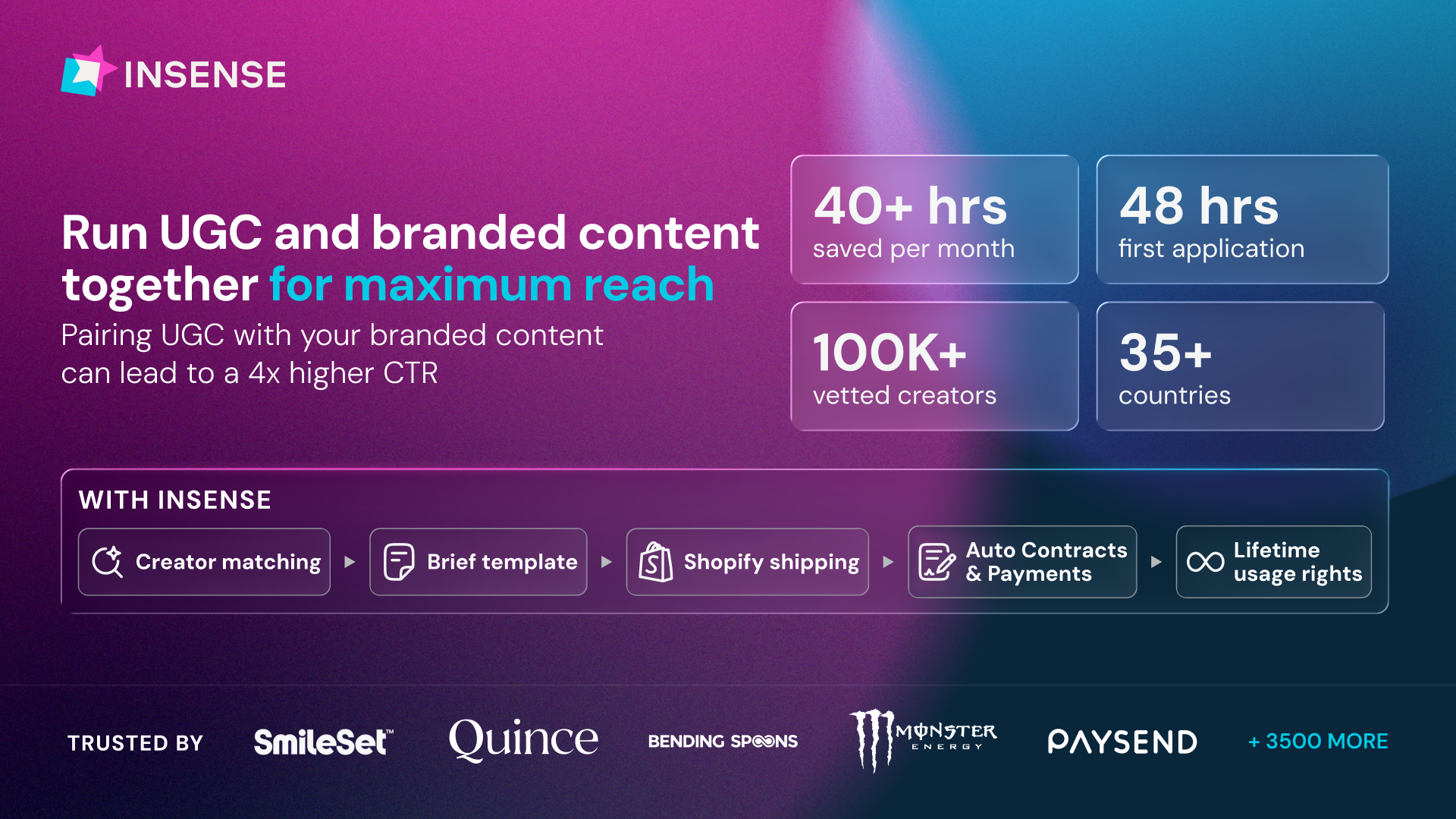
A creator disappears. A shipment stalls. Your paid team waits another week for content while someone tracks contracts and payments across separate tools.
Insense replaces that workflow with one self-serve platform.
One place to receive creator matches from 100,000+ vetted profiles, run briefs, ship product, automate contracts and payments, and own full lifetime content rights.
The results speak for themselves:
- Nurture Life cut turnaround time from 2 months to 2 weeks using just one marketer and Insense
- Solawave received 180+ ad-ready assets in a single month by simply shipping products
- Matys Health achieved 12× reach through Spark Ads on TikTok
More than 3,500 brands use Insense, with first creator applications arriving within 48 hours and teams saving 40+ hours monthly.
Book a free strategy call by August 28 and get $200 platform credits towards your first campaign!
⚡ Meta's scaling problem can be an ICP problem
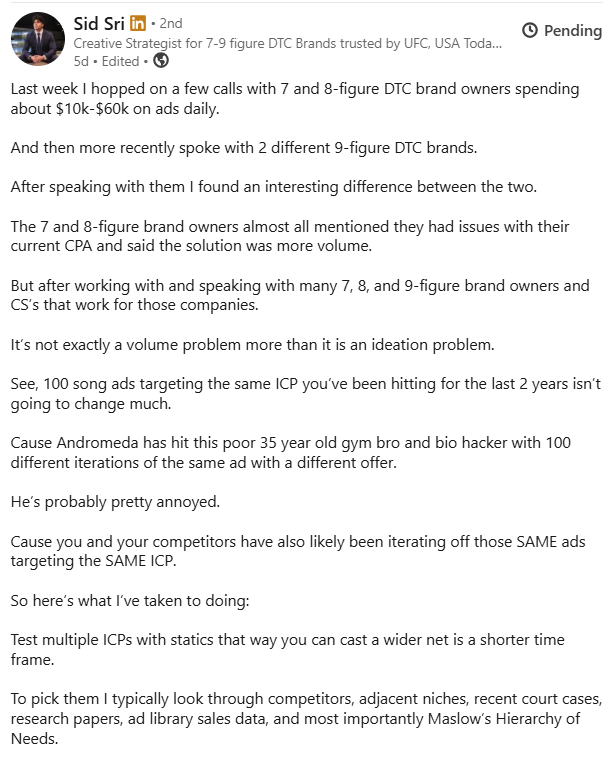
This framework argues that producing more creative for the same customer profile eventually hits diminishing returns. If every new ad speaks to the same buyer, creative volume increases without meaningfully expanding the market you're reaching.
Why it works: Testing different ICPs with inexpensive static creatives helps uncover new demand before investing heavily in production. Competitor research, adjacent markets, customer motivations, and frameworks like Maslow's hierarchy can reveal overlooked buyer segments.
Where it needs balance: More ICPs don't automatically create more scale. Expanding too broadly can weaken messaging and pull the brand away from its strongest customers. New personas should be validated with performance and customer-quality data before receiving serious budget.
🎥 Reel of the Day
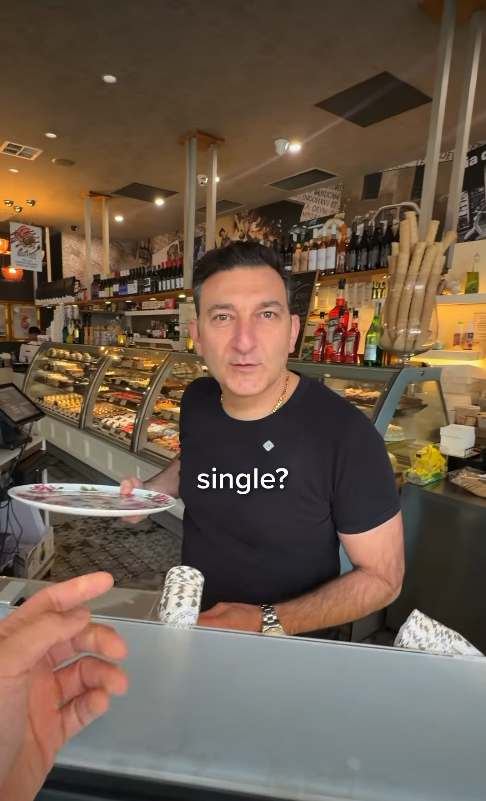
What Works:
1. It invents a product people did not know they wanted. “Tiramisu pizza” combines two familiar foods into something strange enough that viewers immediately need to see the result.
2. The owner is part of the product experience - His confusion, personality, accent, expressions, and eventual commitment make the Reel feel like visiting a real neighborhood Italian café rather than watching food advertising.
3. 141K likes shows novelty can outperform familiarity - The café did not need a complicated trend. One unexpected menu combination created the entertainment, demonstration and conversation simultaneously.
Create a “should this exist?” product. Combine two things customers already understand into one visually surprising item. Curiosity earns the view, preparation earns retention, and controversy earns the comments.
Advertise with Us
Wanna put out your message in front of over 40,000 best marketers and decision makers?
Thanks for reading this edition! Keep pushing boundaries, testing ideas, and staying inspired. See you in the next edition with more ways to ignite your marketing success. 🥰