Your flows need holiday rules
⚙️ Automations built for normal weeks can double-discount, over-email and confuse buyers during Cyber Week, so adjust them on a schedule.
Welcome to a space where every edition delivers insights, strategies, and inspiration to fuel your advertising brilliance. 🤯
⚙️ Five automation changes to make before cyber week (and undo after)
Your campaigns get planned in detail for BFCM. Your automated flows keep running as if it's an ordinary Tuesday, and that's where margin and goodwill quietly leak.
Before changing anything, audit what's live. Omnisend's BFCM AI playbook has a stress-test stage with prompts that review welcome and cart flows, and because Omnisend connects with Claude or ChatGPT, you can build editable email templates for each fix without leaving the chat. You can try the BFCM prompts.
Here are the five changes, each with a date to switch back.
1. Stop the welcome discount from stacking
A 15% welcome code on top of 30% sitewide takes 40.5% off if applied in sequence, or 45% if added together.
On a $100 product costing $40, your margin falls from $30 at 30% off to $15 at 45% off.
Change: set the welcome code so it can't combine with sale pricing, or swap it for free shipping from November 20. Switch back: December 3.
2. Send cart reminders sooner when the deal is ending
A four-hour delay works most of the year. On the final day of a sale, four hours can land after midnight, when the price is gone.
Change: on your last sale day, send the first reminder after one hour and mention the end time. Switch back: the morning after the sale ends.
3. Pause browse emails on heavy campaign days
On a day with two campaigns, a browse email makes three messages to the same person.
Change: cap each person at two emails a day across flows and campaigns. That cap is my judgment. Switch back: December 3.
4. Lead post-purchase emails with delivery dates
Carriers slow down in peak weeks. A cross-sell landing before the first order arrives invites "where's my order?" tickets.
Change: make the first post-purchase email about expected delivery dates, and push the cross-sell until after delivery. Switch back: mid-December, once shipping times return to normal.
5. Pause win-back
Lapsed customers already see your BFCM campaigns. A win-back offer of 10% arriving alongside 30% sitewide looks like an error.
Change: pause it from November 20. Switch back: December 8, so it catches people who didn't buy during the sale.
The switch-back calendar
Add every change to your team calendar with its revert date and an owner. Forgotten holiday settings are why a January welcome email still says "Black Friday."
List your live flows today: Write down every automation running now, mark which of the five changes applies, and set the dates before November.
Together with AirOps
Your Buyers Aren’t Waiting for Better AI Measurement
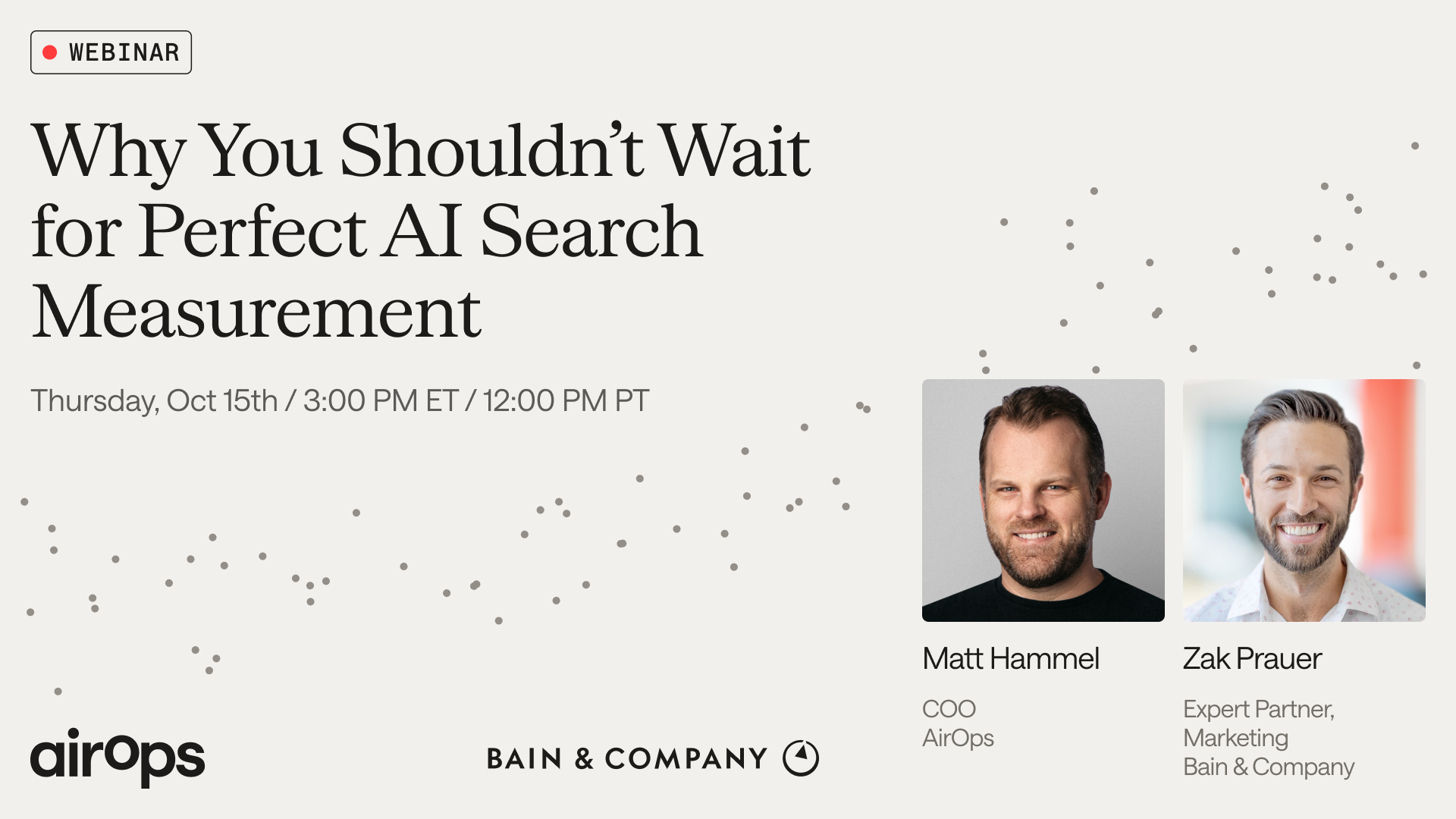
Your buyers are asking AI what to buy. But when leadership asks which sales it drove, your attribution report doesn’t give you a clear answer. Waiting for one could mean losing buyers before they ever reach your site.
On October 15, join Matt Hammel, COO of AirOps, and Zak Prauer, Expert Partner, Marketing at Bain & Company, for a live conversation to help you:
- Understand why waiting for perfect measurement could cost more than investing in AI search today.
- See how AI search shapes brand preference, and why a recommendation carries more weight than a citation.
- Decide how to invest now and what evidence to demand that your spending is creating additional growth.
You’ll leave knowing how to make the case for AI search when “we can’t measure it yet” is what’s holding your budget back.
Can't attend the session live? Register anyway, and you’ll get the recordings in 24 hours.
⚡Inventory problems can look like ad performance problems
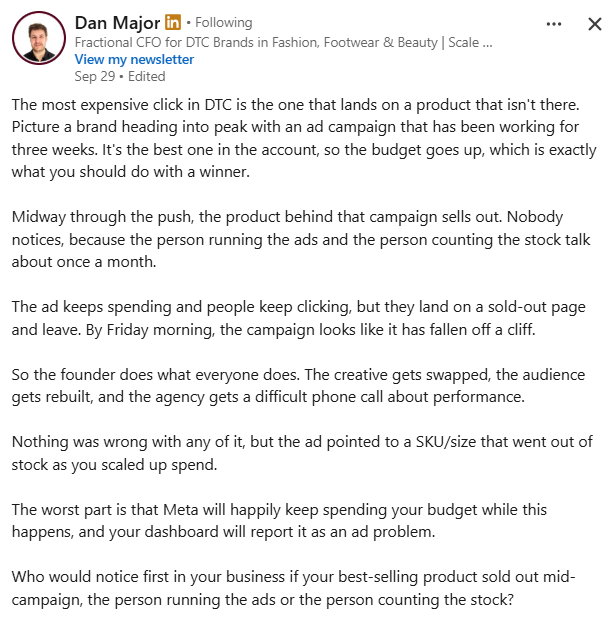
This framework highlights how stockouts can undermine otherwise successful DTC campaigns. When ads continue driving traffic to unavailable products or sizes, conversion rates fall even though the creative, targeting, and campaign structure haven't changed.
Why it works: Connecting inventory availability with advertising decisions helps prevent wasted spend. Real-time stock monitoring and communication between marketing and operations allow teams to pause, redirect, or adjust campaigns before performance deteriorates.
Where it needs balance: Not every conversion decline comes from inventory issues, and low stock doesn't always require pausing ads. Brands can redirect traffic to available variants or alternatives. The key is checking product availability alongside campaign metrics before assuming the advertising strategy has failed.
🎥 Reel of the Day
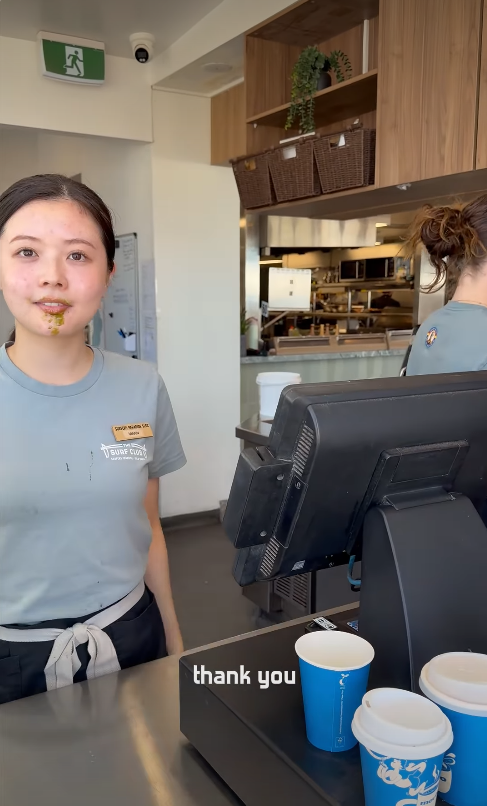
What Works:
1. Unexpected Visual Hook - The Reel opens with employees sporting matcha-covered mouths, creating an absurd visual that immediately grabs attention. Viewers become curious about what happened, encouraging them to keep watching.
2. Build Comedic Suspense - A seemingly ordinary customer interaction escalates when someone asks to speak to the manager. The familiar complaint scenario creates tension before the unexpected reveal delivers the joke.
3. Integrate Products Naturally - Matcha drinks appear throughout the Reel, from the counter display to the employees' green-stained faces. This repeated visibility reinforces the café's matcha offering without interrupting the entertainment.
Turn a familiar customer-service situation into a humorous skit with an unexpected ending. Feature real employees, keep the product visible, and let the joke carry the promotion.
Advertise with Us
Wanna put out your message in front of over 40,000 best marketers and decision makers?
Thanks for reading this edition! Keep pushing boundaries, testing ideas, and staying inspired. See you in the next edition with more ways to ignite your marketing success. 🥰