AI isn’t breaking your content
🧐You are aiming it at the wrong target.
Welcome to a space where every edition delivers insights, strategies, and inspiration to fuel your advertising brilliance. 🤯
🧐 AI isn’t breaking your content
The brands panicking right now built content factories. AI in, content out, publish, repeat. Volume was the strategy. Speed was the competitive advantage.
Google just repriced that advantage to zero.
But the brands quietly holding rankings aren't publishing less. They're publishing differently. AI is still in the workflow; it's just operating on inputs that actually matter.
The workflow shift that separates surviving strategies from collapsing ones
The failed model: AI generates the content. Human reviews and publishes.
The surviving model: Human provides the unreplicable input. AI builds the content around it.
Same tools. Completely different output. The first model produces content any competitor can replicate with the same prompt. The second produces content competitors can't replicate without access to your specific knowledge, data, or experience.
The switch isn't about using AI less. It's about what you feed it.
Extract the knowledge AI cannot fabricate
Every team has unreplicable knowledge sitting unused in the wrong places. Client calls with specific results nobody has written up. Operational experiments with real outcome data sitting in a spreadsheet. Practitioner observations about what actually works that never made it into a brief.
This is your content inventory. Not your published archive. The knowledge your team holds that a competitor's AI prompt cannot access.
Build a systematic extraction process. Weekly knowledge pulls from practitioners, operators, and client-facing team members. Specific questions that surface ownable insights: what worked this month that surprised you, what failed that contradicts conventional advice, what do clients consistently get wrong that you correct.
Those answers become briefs. AI writes the content around them. The result passes every quality classifier because the signal at the center is real and unreplicable.
Track whether the workflow shift is moving performance across both traditional and AI search surfaces. SEMrush's AI Visibility Toolkit shows visibility across ChatGPT and Google AI Mode so you can confirm the new workflow is gaining retrieval where the old one lost it. You can try it free for 7 days.
Set differentiation density as your new production KPI
Volume metrics built the strategies now collapsing. Differentiation density replaces them: what percentage of your published content contains at least one signal Google cannot find replicated elsewhere.
Measure it. Set a minimum threshold. Raise it each quarter.
AI didn't break your content strategy. Publishing content that forgot why it existed did. The fix isn't slowing down. It's changing what you put into the machine.
Together with Alison
Your creative cleared every internal check and failed every platform one.
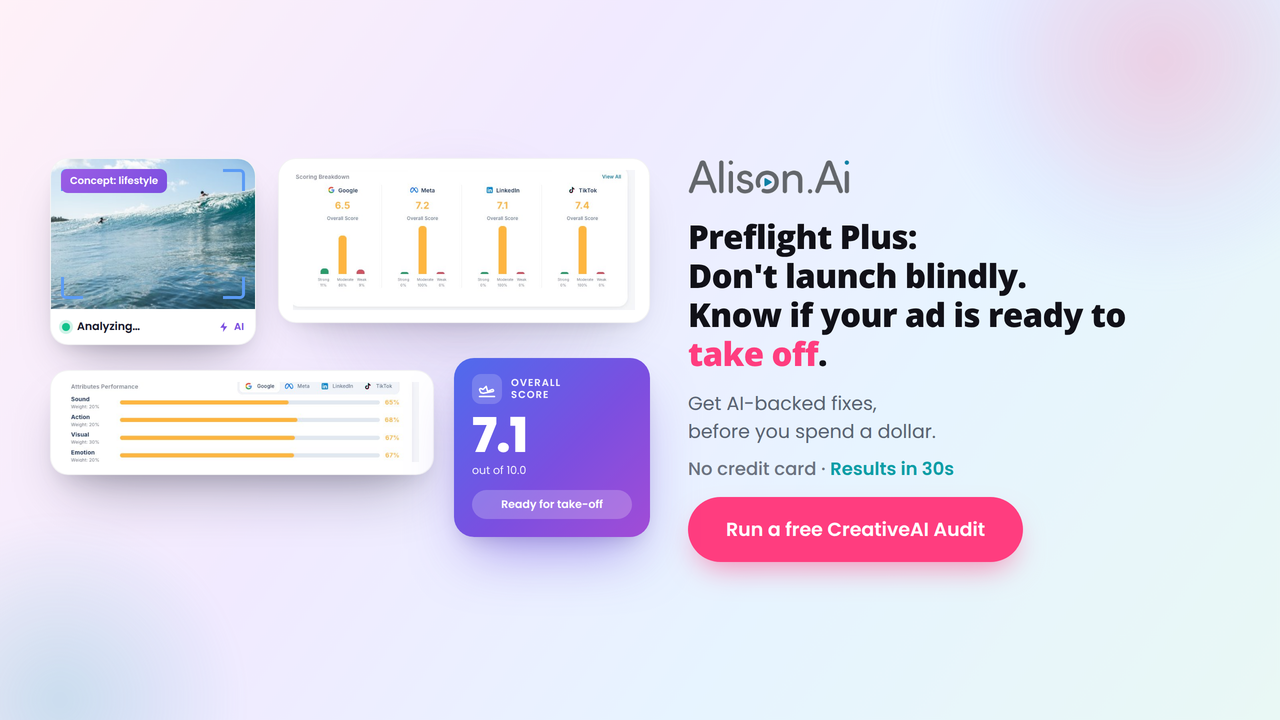
Everyone reviewed the creative, everyone signed off, and it still tanked because nobody was checking the right things. The worst part is it was all fixable before it ever went live.
Alison.ai's Preflight Plus scores your video against Meta, Google, TikTok, and LinkedIn frameworks in 30 seconds before a single dollar leaves your account. You get an Adherence Score plus specific, actionable fixes so only your strongest assets ever see paid media.
- Ferrara caught a weak hook in pre-flight and walked away with 84% more 3-second views.
- Tango audited before spending a dollar and saw IPM lift 56% on launch day.
- Murka rebuilt fatigued creatives using audit insights and pulled 68% higher ROAS on every new concept.
One upload. Thirty seconds. You'll know exactly what's broken and how to fix it.
Run your free CreativeAI Audit now - no credit card needed.
⚡Pop-Up Conversion Often Improves More From Friction Reduction Than Bigger Offers
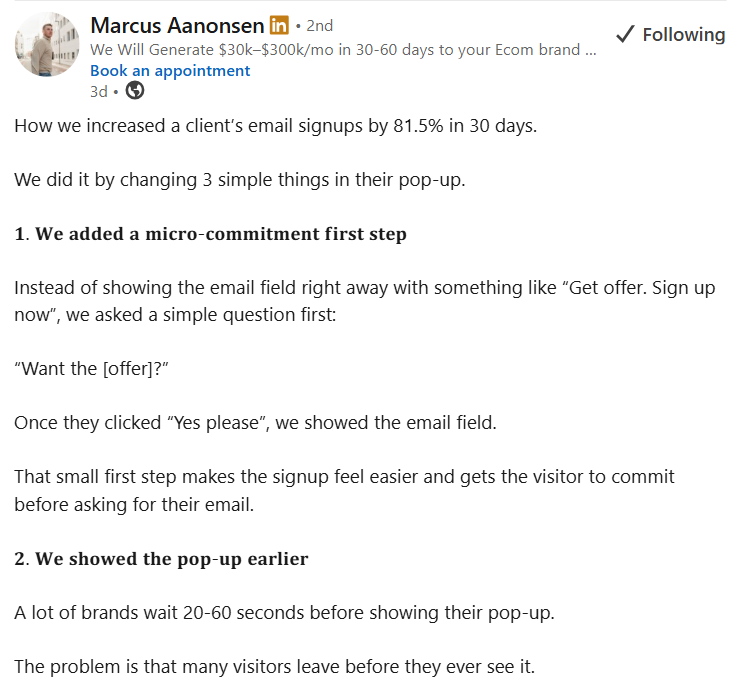
This case study shows that significant list growth gains can come from small UX improvements rather than changing discounts, design, or traffic sources. The focus is reducing psychological friction, increasing visibility, and simplifying the signup decision. Often the biggest lift comes from making the existing offer easier to accept.
Why it works: Micro-commitments create momentum before asking for personal information. Earlier display timing increases exposure, and removing unnecessary copy reduces cognitive load. Together, these changes make the signup process feel faster and easier to complete.
Where it needs balance: Earlier pop-ups can increase signups while hurting user experience if they feel intrusive. Micro-commitments also do not automatically improve subscriber quality. Success should be measured by downstream revenue, engagement, and customer value, not just email capture volume.
🎥 Reel of the Day
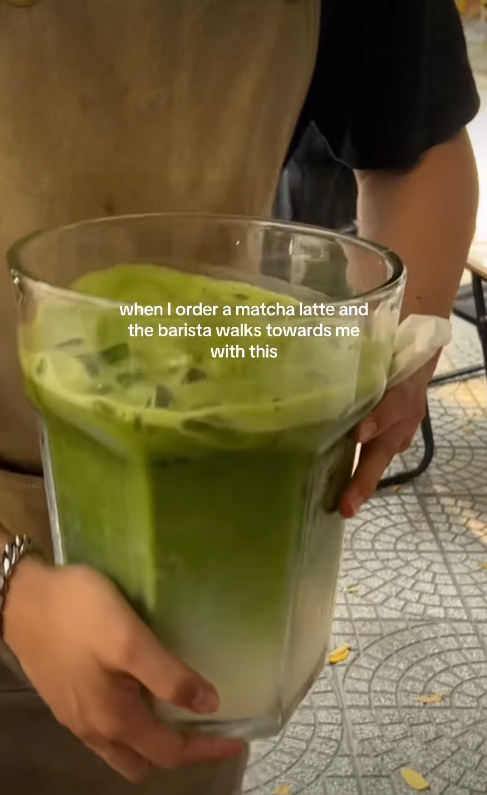
What Works:
Scale Shock Attention Design - The drink wins attention before viewers process the caption because extreme size instantly violates expectations for a familiar product category.
Trend Magnification Strategy - Matcha is already culturally desirable. Enlarging it dramatically amplifies existing demand rather than creating interest from scratch.
Visual Hyperbole Without CGI - Because the giant drink appears real, the exaggeration feels more impressive than digital effects or editing tricks ever could.
Take the thing your audience already loves and exaggerate it to absurd but believable levels, because amplified desire is often more powerful than introducing something new.
Advertise with Us
Wanna put out your message in front of over 40,000 best marketers and decision makers?
Thanks for reading this edition! Keep pushing boundaries, testing ideas, and staying inspired. See you in the next edition with more ways to ignite your marketing success. 🥰