Are those sales coming with risks?
💪 The question isn’t whether your review campaign works. it’s whether you could defend it, Rankings depend on search intent, not just keywords, and more!
Welcome to a space where every edition delivers insights, strategies, and inspiration to fuel your advertising brilliance. 🤯
🧐Are those sales coming with risks?
A review campaign can generate hundreds of authentic purchases and still expose a brand to unnecessary risk because the weakness often isn’t what happened. It’s what the campaign looks like afterward.
Imagine reviewing every creator agreement, payment record, campaign brief and review from your last launch. Would the workflow clearly demonstrate independent customer experiences, or would someone have to infer your intent from incomplete documentation and inconsistent processes?
That’s the standard worth designing for.
Amazon prohibits compensation in exchange for reviews outside approved programs such as Vine and uses machine learning, behavioral analysis and human investigation to detect review abuse.
Start by auditing the campaign, not the reviews.
1. Separate content creation from review creation.
Open every creator agreement, payment record and campaign brief.
Answer four questions.
- Is compensation tied only to content creation?
- Would the creator still be paid without reviewing?
- Does any document request a positive review or rating?
- Can every payment be explained without mentioning reviews?
If any answer raises doubt, fix the process before another campaign launches.
2. Audit independence, not positivity.
Read the last thirty creator-driven reviews without looking at reviewer names or ratings. Do the reviews naturally emphasize different experiences, use cases and product details, or do they repeatedly highlight the same benefits in similar language?
Independent customers rarely describe products identically. If every review feels interchangeable, investigate the campaign before Amazon ever does.
3. Build a defensibility file.
Keep one folder containing Amazon purchase confirmations, creator agreements, payment invoices, campaign briefs, internal approval notes and written confirmation that reviews were never requested, edited or approved. If someone unfamiliar with the campaign understands exactly how it operated from that folder alone, you’ve reduced future risk.
4. Investigate your own workflow.
Before launch, ask someone outside marketing to review the campaign. Can they distinguish payment for content from customer reviews? Can they explain every payment? Can they identify any instruction that could influence review sentiment? Fix every uncertainty before going live.
Before investing thousands into your next Amazon creator campaign, pressure-test the workflow first. Stack Influence gives you a proven model where creators purchase through Amazon themselves, content and reviews stay separate, and every campaign is built around independent customer experiences instead of coordinated review generation.
See what a defensible review program looks like before rolling it out across your catalog. Sign up in the next two weeks and take 10% off your first campaign. You can book a free demo call today
The strongest review programs aren’t simply compliant. They’re easy to explain, document and defend long after the campaign ends.
Together with AirOps
The Content That's Dying in Google Zero (and What's Replacing It)
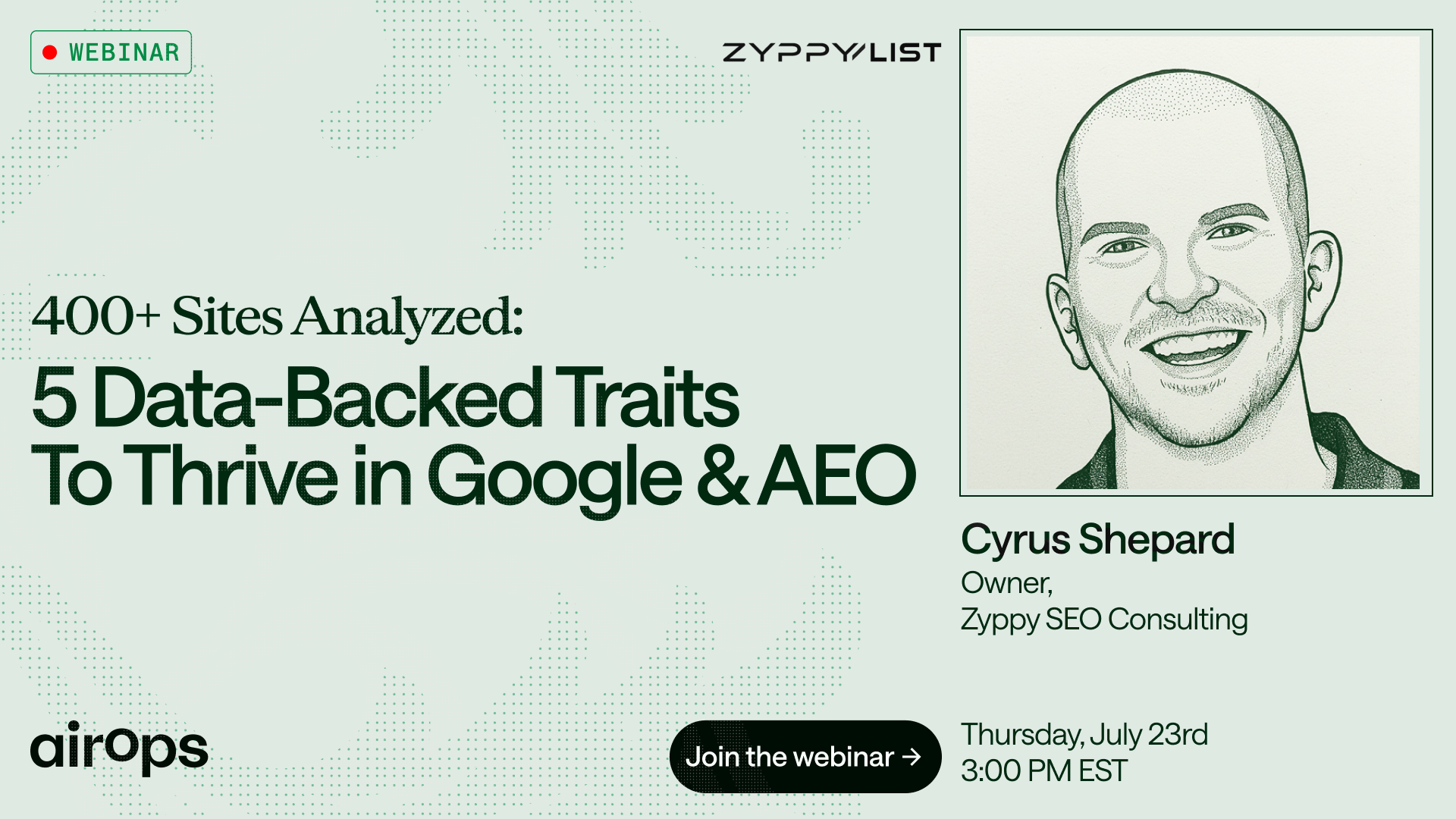
Google Zero is what happens when the answer shows up right in search results, and nobody clicks through to your site. Your rankings look fine. Your traffic doesn't.
Cyrus Shepard studied 400+ sites to find out why some are still growing through it and mapped what's actually driving organic growth right now
AirOps is hosting Cyrus live on July 23rd to break down exactly what those sites are doing differently:
- The exact 5 traits separating sites that grew from sites that stalled
- The 17 content types Cyrus flags as still worth producing, and likely to survive
- How to turn proprietary assets you already own into content
- Where AI fits now: what to stop producing faster, what to build instead
Score your content calendar against the 5 traits and 17 formats live, and leave the session knowing exactly which pieces to keep and which to kill.
Can't make it live? Register anyway and get the recording in your inbox within 24 hours.
⚡ Rankings Depend on Search Intent, Not Just Keywords
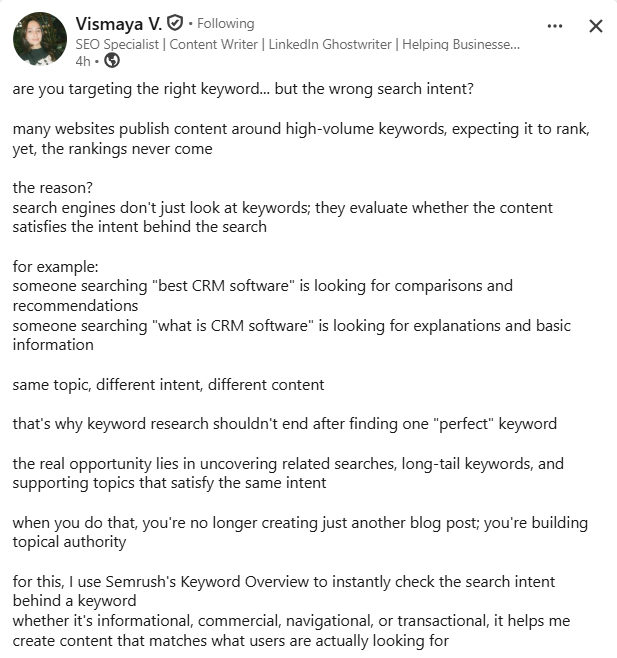
This framework highlights a common SEO mistake: targeting high-volume keywords without matching the intent behind them. Search engines increasingly rank content that best satisfies what the user is trying to accomplish, not simply pages that contain the keyword.
Why it works: Aligning content with informational, commercial, navigational, or transactional intent improves relevance. Supporting the primary keyword with related topics and long-tail queries also builds topical authority, helping pages rank more consistently.
Where it needs balance: Search intent is essential, but it's only one ranking factor. Authority, backlinks, technical SEO, and content quality still influence performance. The best results come from combining intent alignment with comprehensive, high-quality content.
🎥 Reel of the Day

What Works:
Relatable Problem First - The hook opens with an exaggerated, funny snoring visual before mentioning the mattress. That curiosity-first structure creates strong hook efficiency because viewers stay to discover the unexpected solution.
Feature Demonstration Wins - Instead of describing the technology, the reel physically shows one side of the bed lifting. Visual proof creates a stronger retention curve than technical specs or feature-heavy explanations.
Education Feels Native - The creator explains the product like a helpful recommendation, not a salesperson. Creator-led storytelling lowers resistance while making premium technology easier to understand, remember, and trust.
Lead with a universally relatable frustration, reveal the product only after viewers emotionally buy into the problem, then demonstrate the solution visually to maximize watch-through, recall, and conversion potential.
💃 Events
🔥 The 17 Content Formats Most Likely to Survive Google’s AI Overviews
July 23 | 60 Minutes | Virtual Event
Not every content format is losing traffic equally. Cyrus Shepard’s analysis of 400+ sites reveals which formats are still driving growth, the five traits separating winners from stalled sites, and how to turn proprietary assets into content Google and AI systems cannot easily replace.
Can't make it live? Register anyway, you'll get the recordings within 24hours.
Advertise with Us
Wanna put out your message in front of over 40,000 best marketers and decision makers?
Thanks for reading this edition! Keep pushing boundaries, testing ideas, and staying inspired. See you in the next edition with more ways to ignite your marketing success. 🥰