Opens aren’t the goal anymore
🧐Your most valuable email metric probably isn’t on your dashboard, Agency communication matters more than most performance reports suggest, and more!
Welcome to a space where every edition delivers insights, strategies, and inspiration to fuel your advertising brilliance. 🤯
🧐Your Most Valuable Email Metric Probably Isn’t On Your Dashboard.
Gone are the days of chasing “opens”
Gmail now uses Gemini to summarize long email conversations, while changes to Gmail’s image handling have also made opens less reliable as a proxy for attention. At the same time, AI assistants can help subscribers extract value from an email without interacting with it the way they once did.
That leaves one signal that’s becoming more valuable than almost every engagement metric:
A human taking the time to type back.
A reply isn’t just engagement.
It’s intent, confusion, curiosity, or resistance, written in the customer’s own words.
Most brands collect thousands of these signals every year and never analyze them.
Start there.
1. Build a Reply Intelligence Dashboard. Export the last 90 days of email replies into a spreadsheet or AI tool. Ignore opens, clicks, and purchases for now. Tag every reply into four buckets: buying question, objection, product feedback, and advocacy.
Then calculate the percentage of replies in each bucket for every campaign. If one campaign generates three times more buying questions than another, you’ve identified content that creates commercial intent, even if open rates look identical.
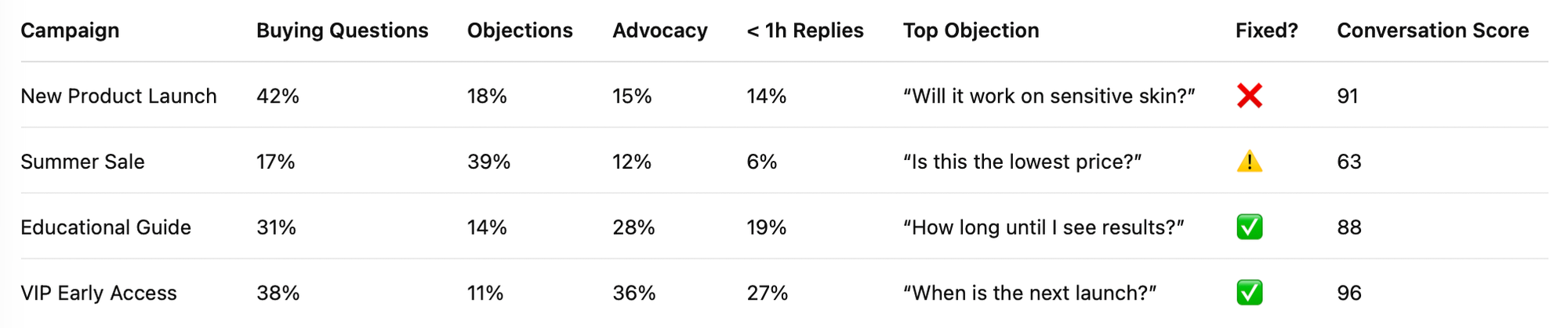
2. Measure Reply Velocity. Add one more column: hours between send time and reply. Fast replies usually indicate active buying consideration, while slower replies often reflect lower urgency or support requests.
Segment subscribers who reply within the first hour, first day and after 24 hours. Those groups deserve different follow-up sequences because they’re at different stages of the buying decision.
3. Build an Objection Library. Every month, rank the ten objections appearing most often in replies. Then check whether each objection is answered before subscribers have to ask it.
If “Does this work on sensitive skin?” appears repeatedly, add the answer to future emails, landing pages, product pages and FAQs. When the same objection disappears from future reply data, you’ve confirmed the content solved a real buying barrier instead of just improving copy.
4. Score Conversations, Not Campaigns. Instead of asking which email generated the most revenue, ask which email generated the highest percentage of meaningful replies.
Campaigns that start conversations often become your best source of product insights, FAQ improvements, testimonial requests and future content ideas. Revenue is the outcome. Conversations tell you why it happened.
Omnisend can automate much of this workflow by connecting AI directly to your account, categorizing incoming replies, identifying themes and drafting responses for review instead of leaving them buried in a shared inbox. Brands using Omnisend generate an average of $79 for every $1 spent, with free migration in up to five days. Get started with a ready-made prompt.
The inbox has become a conversation.
The brands still optimizing for opens are measuring the invitation, while everyone else is reading the response.
In case you need the math for the table here’s how it works:
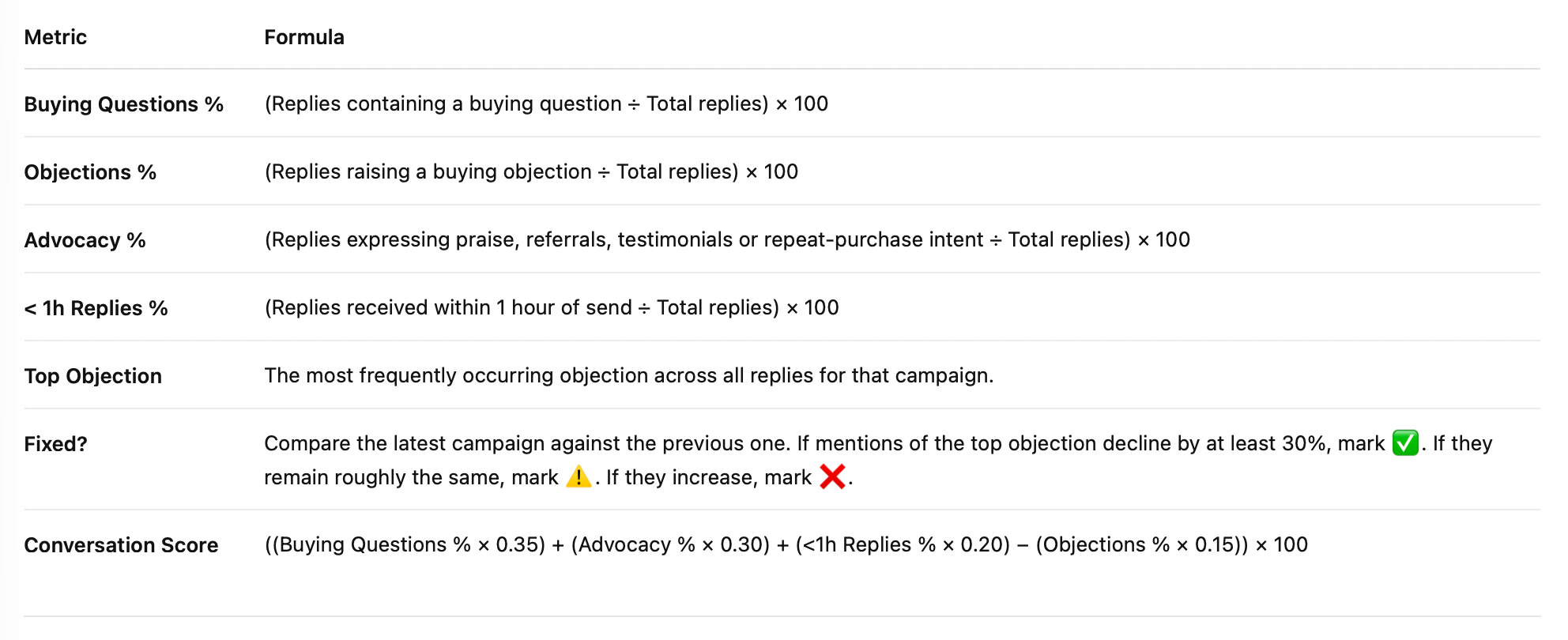
P.S. The weights aren’t fixed. If your business values support reduction over new customer acquisition, increase the Objections weighting. If referrals are your priority, increase the Advocacy weighting. The goal isn’t a universal score, but a single KPI that lets you compare campaigns consistently over time.
Together with AirOps
What 400+ Sites Reveal About Surviving Google's AI Overviews
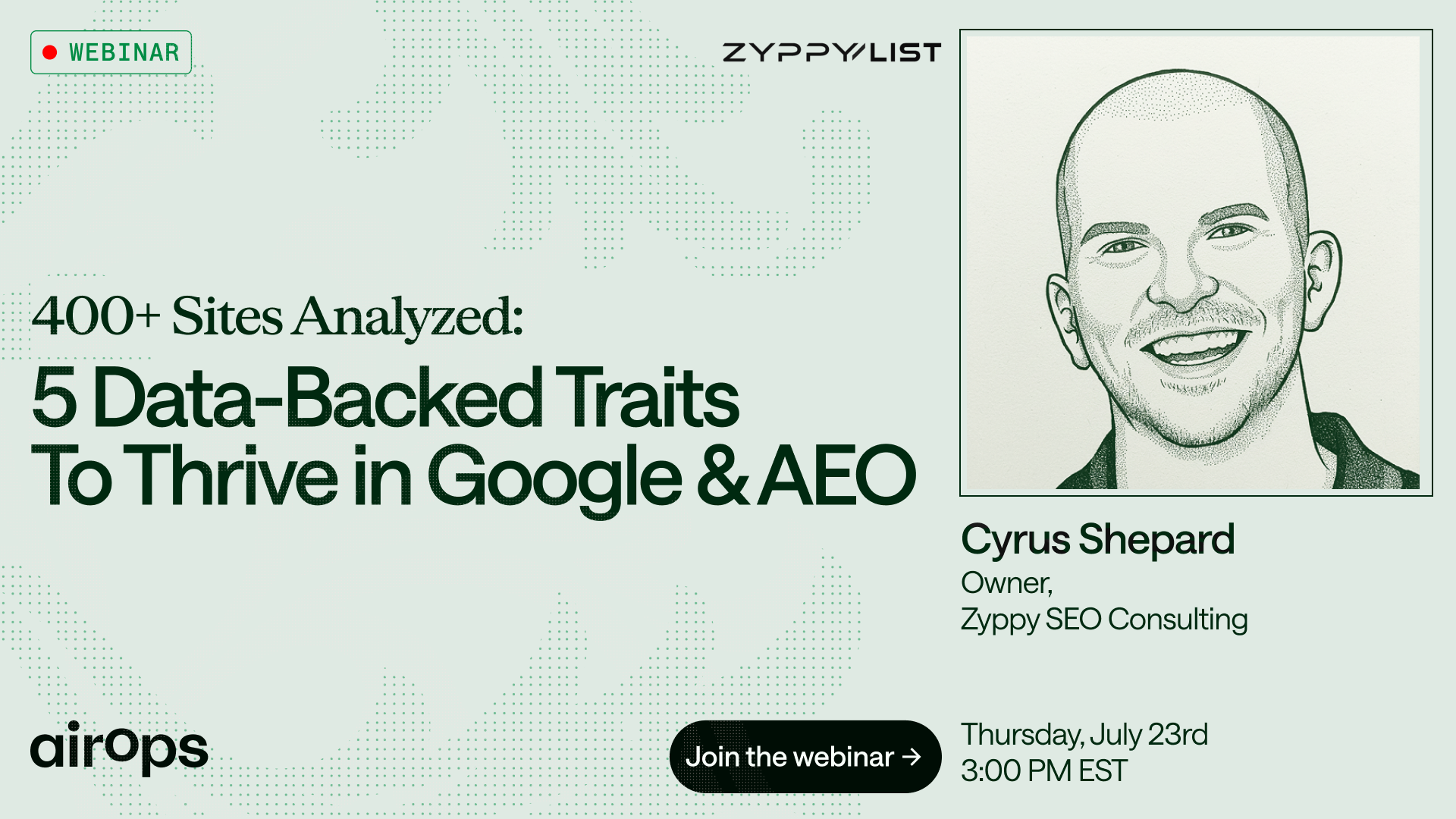
Everyone's bracing for Google Zero. Cyrus Shepard studied 400+ sites and found the ones still growing share five specific traits.
Zero-click search is real. The "SEO is dead" takes are not the full story.
Cyrus mapped what's actually driving organic growth right now, plus the 17 content types most likely to survive Google Zero.
On July 23rd, AirOps is hosting Cyrus for a practical session on what every content team is trying to decide: what to keep investing in, what to rethink, and where AI actually helps.
You'll walk away with:
- The five traits behind sites still growing in Google
- Which content formats still earn their keep, and which are getting harder to justify
- How to turn proprietary assets you already own into content
- Where AI fits now: what to stop producing faster, what to build instead
This webinar is built for everyone, from SEO and content leaders to content directors and growth teams.
Can't make it live? Register anyway and get the recording in your inbox within 24 hours.
⚡ Clients Churn From Uncertainty More Than Underperformance
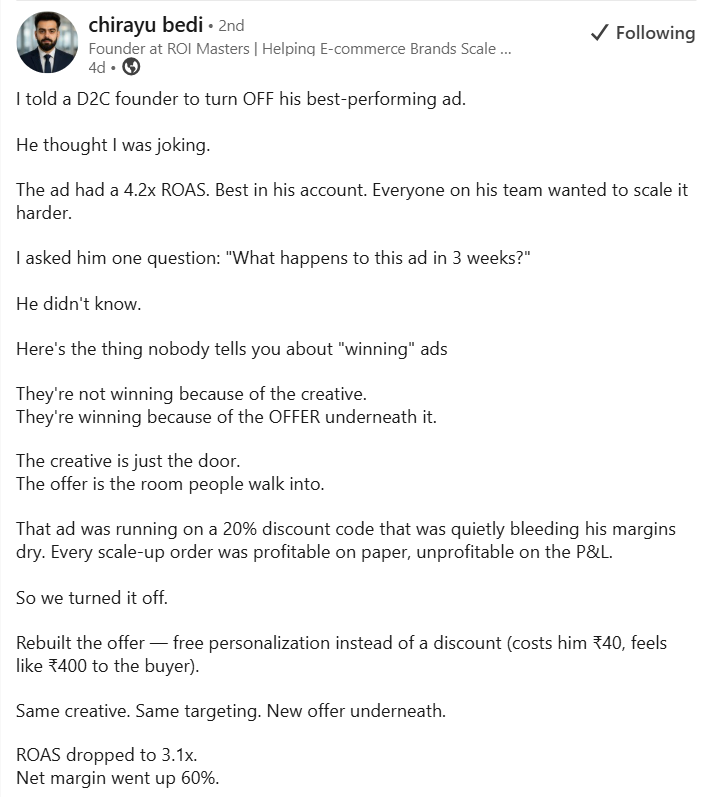
This framework argues that agency relationships often break down because of poor communication rather than poor results. When performance declines without context, clients naturally create their own explanations—and those assumptions are usually worse than reality.
Why it works: Proactive communication builds confidence during difficult periods. Explaining trends, seasonality, demand shifts, or external factors early helps clients understand what's happening and reinforces that the agency is actively managing the situation.
Where it needs balance: Communication should provide context, not excuses. External factors don't eliminate accountability, and clients still expect a clear action plan. The strongest agencies explain why performance changed while showing what they're doing to improve it.
🎥 Reel of the Day
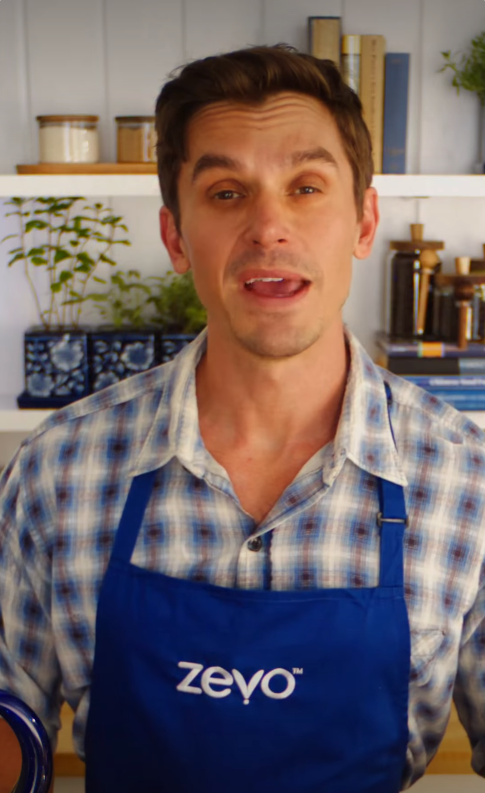
What Works:
Context Before Brand - The reel earns attention with a seasonal recipe before introducing the product. Zevo enters only after the fruit-fly problem naturally appears, making the integration feel inevitable instead of sponsored.
Problem Escalation - Every ingredient increases audience anticipation because citrus, honey, and herbs visually signal "fruit flies." The brand becomes the logical payoff, preserving hook efficiency and keeping the retention curve intact.
Creator-Led Integration - Antoni never stops being himself to sell. His cooking style, personality, and storytelling remain unchanged, making the partnership feel like native content behavior rather than a scripted advertisement.
Let viewers first become invested in the primary story, then introduce your product exactly when it solves the emerging problem. That delayed reveal strengthens brand recall without hurting watch-through or authenticity.
💃Events
🔥 How to Tell Which Content Will Survive Google’s AI Overviews
July 23 | 60 Minutes | Virtual Event
Not every format is losing value equally. Cyrus Shepard’s research across 400+ sites reveals the 17 content types with the best chance of surviving, the five traits growing sites share, and how to turn proprietary assets into content Google cannot easily replace.
Can't make it live? Register anyway, you'll get the recordings within 24hours.
Advertise with Us
Wanna put out your message in front of over 40,000 best marketers and decision makers?
Thanks for reading this edition! Keep pushing boundaries, testing ideas, and staying inspired. See you in the next edition with more ways to ignite your marketing success. 🥰