Briefed the wrong creator
The creator brief problem nobody talks about, and more!
Welcome to a space where every edition delivers insights, strategies, and inspiration to fuel your advertising brilliance. 🤯
The Creator Brief Problem Nobody Talks About
Creative underperformance almost always gets blamed on the hook or the brief. Rarely on the match between the creator type and the format they were asked to execute. A lifestyle UGC creator executing an expert explainer produces awkward content regardless of how tight the brief is. The brief did not fail. The sourcing decision did.
1. Map Creator Type to Format Credibility First
Different creator types carry native credibility in different formats, and credibility is not something a brief can manufacture after the fact.
- A talking head format requires someone with natural on-camera authority.
- A street interview format requires someone who can facilitate genuine spontaneous reactions.
- A native lifestyle format requires someone whose existing content already looks like the format you are trying to produce.
Before briefing, the question is not what do we want the ad to say, but who can make this format feel real.
2. Write the Brief at the Format Execution Level
A brief for a native testimonial and a brief for a POV faceless ad are fundamentally different documents, and treating them the same way is the source of most production inconsistency at scale.
The testimonial brief specifies the objection to address, the outcome to articulate, and the language pattern that sounds natural from this creator's voice. The POV brief specifies the exact scene, the ambient sound environment, the behavioral hook in the first three seconds.
Most briefs are written at the concept level when the format requires production-spec precision.
3. Source by Format Category, Not by Audience Demographics
When building a format-mapped creative library, the sourcing question is not who has the right audience profile but who can execute this specific format credibly.
These are different pools of creators, and building them manually across multiple format categories simultaneously is where most production operations hit their ceiling.
Insense is built for this stage. Access to 80,000+ vetted creators across all format types, 48-hour first applications, automated contracts and payments through Shopify integration, and content delivered in 14 days with full usage rights means you can source simultaneously for talking head, native testimonial, and street interview without running three separate searches. You can book a free strategy call and get a $200 platform credit towards your first campaign.
Together with Dreem
Fashion AI that turns one product image into model shots, product shots, and video.
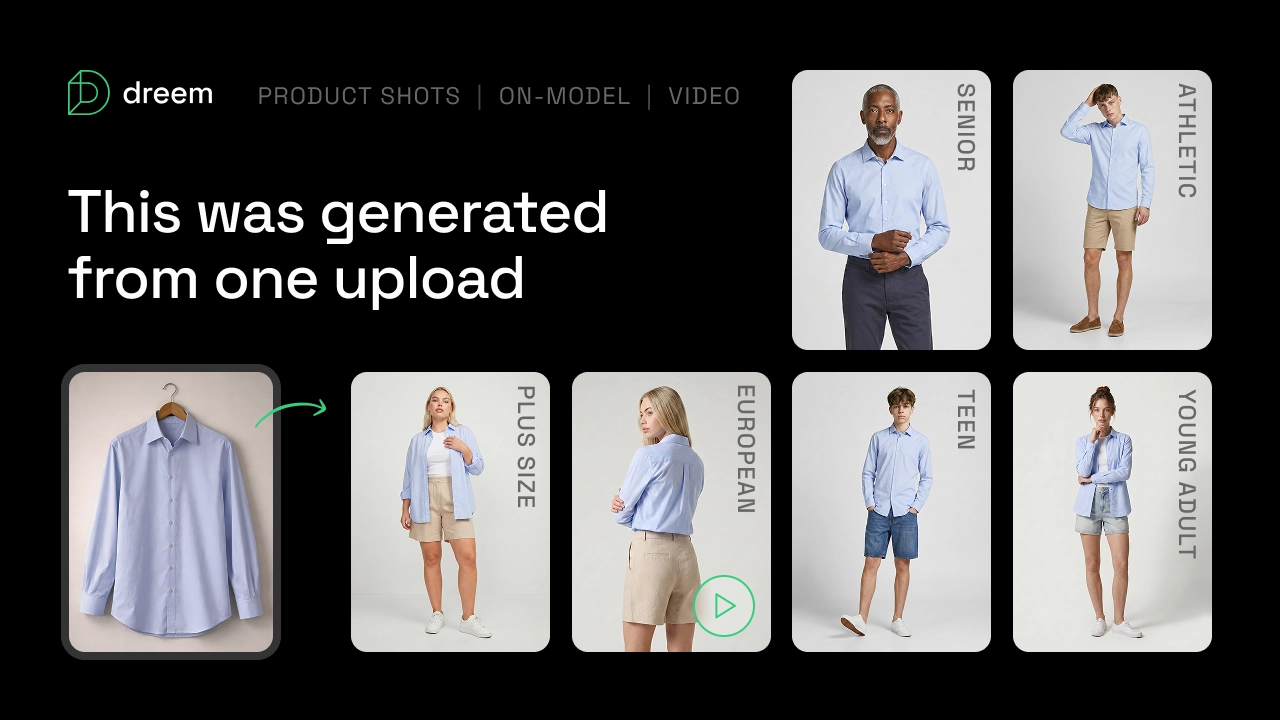
Buyers don't buy clothes. They buy the version of themselves wearing them. When the model on the page doesn't look like the person browsing, the mental picture breaks; they leave. Or they buy, realize it doesn't match, and return it.
Until now, showing your products on diverse models cost more than the conversion lift could justify. So every visitor saw the same model. One body type, one age, one skin tone. One chance to connect.
Dreem changes that.
Upload one product image and get:
- Model shots, product shots, and video from one upload
- 400+ virtual talents across body type, age, and skin tone (or create your own)
- ~$2 per image, matched to each segment
- Works from a phone photo
The person browsing sees themselves in your product. The mental picture holds. They buy. They keep it.
Our readers get 600 free credits before July 30.
⚡A "Losing" Ad Can Be Valuable If It's Creating Future Demand
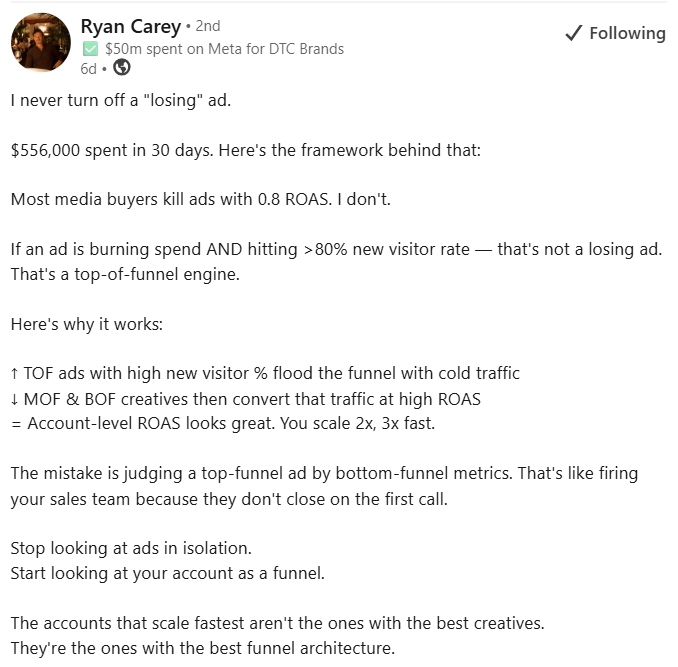
This framework challenges the habit of judging every ad by immediate ROAS. Some creatives are designed to introduce new people to the brand, not close the sale directly. Looking only at last-click performance can lead brands to kill the very ads that are feeding future conversions.
Why it works: Different funnel stages have different jobs. Top-of-funnel ads generate awareness, traffic, and new visitor volume, while middle and bottom-funnel campaigns monetize that attention. Evaluating TOF ads based on new visitor rate, reach quality, and contribution to downstream conversions gives a more complete view of performance.
Where it needs balance: Not every low-ROAS ad deserves to stay live. A high new visitor rate only matters if those visitors eventually convert at a profitable rate. The strongest advertisers measure account-level efficiency while still holding TOF campaigns accountable for creating qualified demand, not just traffic
🎥 Reel of the Day
What Works:
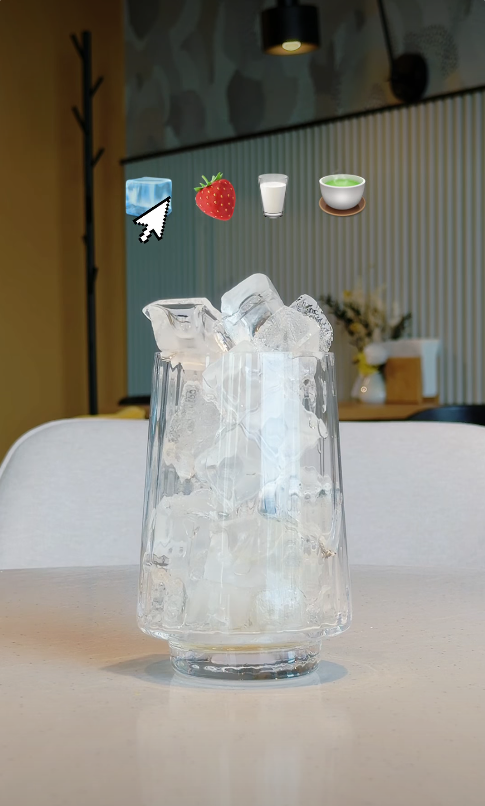
Interactive Assembly Metaphor - The clickable ingredient icons make drink creation feel like building a character loadout, increasing engagement through familiar digital behavior.
Cause-and-Effect Satisfaction Loop - Every click produces an immediate visual result, rewarding attention continuously instead of saving all payoff for the final reveal.
Ingredient Transparency Gamification - Viewers learn exactly what's inside the drink without feeling educated because ingredient disclosure is disguised as entertainment.
Turn your product-building process into an interactive visual game where every step creates a visible transformation, making education feel like play.
Advertise with Us
Wanna put out your message in front of over 40,000 best marketers and decision makers?
Thanks for reading this edition! Keep pushing boundaries, testing ideas, and staying inspired. See you in the next edition with more ways to ignite your marketing success. 🥰