The only meta metric you need
💪The one meta metric that tells you if you're growing or just getting louder, and more!
Welcome to a space where every edition delivers insights, strategies, and inspiration to fuel your advertising brilliance. 🤯
💪The only meta metric you need
CPM tells you what it costs to show your ad. It doesn't tell you if you're showing it to someone new. That distinction is the entire difference between scaling and spinning.
The metric that surfaces it is CPMr, cost per 1,000 unique people reached, and in 2026, with Andromeda weighting creative signals harder and CPMs up 20 percent year over year, reading it correctly is the fastest way to diagnose what's actually happening in an account before changing anything.
How to Read CPMr Against Frequency
Pull both metrics together, and you get four states:
- CPMr low, frequency low: your creative is reaching fresh audiences efficiently. Healthy prospecting. Don't touch it.
- CPMr low, frequency climbing: still reaching cheap audiences but showing them the same ad too often. Creative refresh, not budget adjustment.
- CPMr rising, frequency flat: the audience itself is getting more expensive. Competition, demand shift, or a delivery move toward a pricier segment. Budget conversation, not creative conversation.
- CPMr high, frequency high: you've saturated your audience, and you're paying more for every repeat impression. The account needs new audiences, not just new creative.
A healthy CPMr benchmark in 2026 sits below $20. Once it climbs past that, you're likely paying to recycle reach you already bought.
Where Teams Go Wrong
The mistake is pulling CPMr at the account level and treating it as a single signal. One campaign targeting a retargeting list and one targeting cold audiences will have wildly different CPMRs, and averaging them produces a number that explains nothing. Pull it segmented by audience type, placement, age group, and country. CPMr spikes that look account-wide usually trace to one segment with a delivery shift.
What Rising CPMr Is Actually Telling You
A rising CPMr with nothing changed in the account is an audience inventory signal. Meta is running out of new people who match your targeting at your price. The accounts scaling profitably in 2026 treat this as a creative and audience brief: build for a broader segment, test a different demographic angle, or expand placement. Raising budget into a saturated audience only inflates CPMr further.
The question isn't how much you're spending per impression. It's whether the impression went to someone who hadn't seen your ad before.
Together with Insense
1 UGC creator = 20+ ad variations to scale your ad creatives
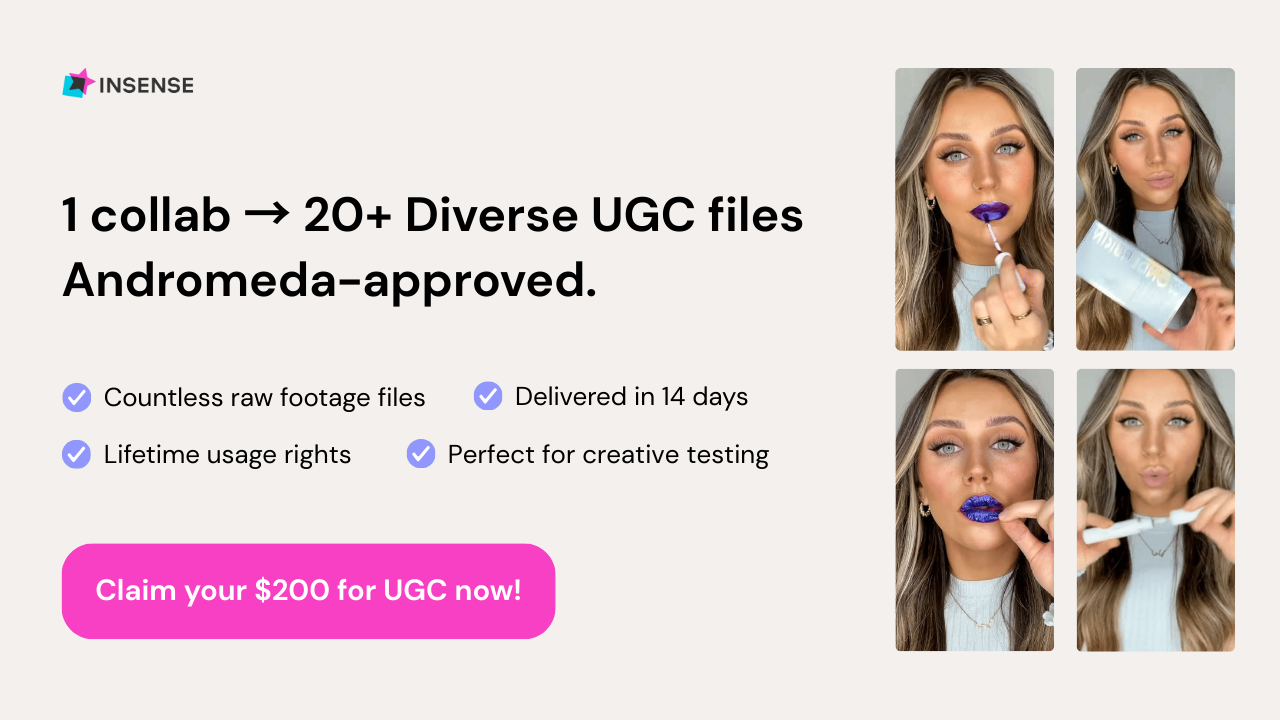
Insense makes UGC ads insanely cost-effective - and Andromeda-approved!
From one brief, get numerous raw footage clips to mix, match, and turn into multiple scroll-stopping creatives for your paid social ads.
Source 20+ pieces of raw content (per creator) with lifetime usage rights, all delivered in 14 days or less.
That’s how over 3500+ brands and agencies like Beauty Pie, Bones Coffee, Flo Health, and Aceable scale UGC without killing team bandwidth.
Cost-effective UGC with lifetime usage rights? Yes please!!
Book a free strategy call and get $200 for your first campaign.
⚡ The Real Goal of a Pop-Up Is Capturing Intent, Not Giving Discounts
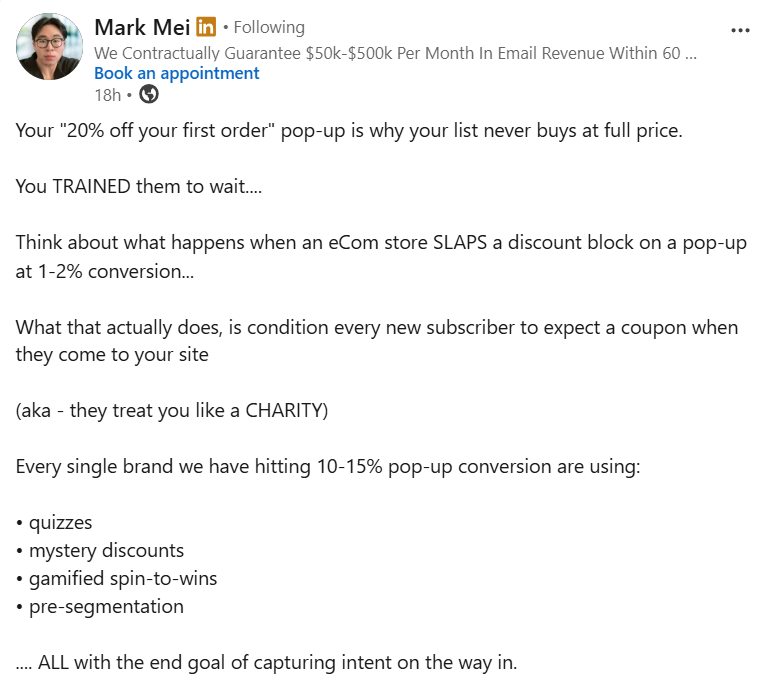
This post challenges the default "10-20% off your first order" approach by arguing that many brands train customers to expect discounts before they've experienced any value. Instead of buying intent, they create discount dependency. The strongest pop-ups collect information that improves future personalization and selling.
Why it works: Quizzes, preference selectors, and segmentation-based pop-ups reveal customer motivations before email one is sent. This allows brands to personalize offers, messaging, and product recommendations, often increasing both opt-in rates and downstream conversion quality.
Where it needs balance: Not every audience responds well to gamification or quizzes. In highly price-sensitive categories, a straightforward discount can still outperform more complex experiences. The best pop-up strategy should be measured by subscriber value and full-price purchase behavior, not just opt-in rate alone.
🎥 Reel of the Day
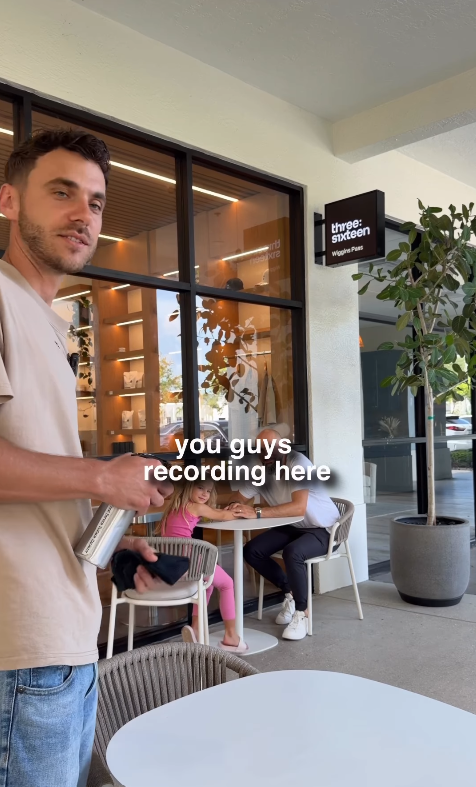
What Works:
Recruitment Camouflage Strategy - The hiring message hides inside a social interaction, bypassing job-post blindness because viewers initially believe they're watching entertainment.
Environmental Proof Hiring - Instead of listing benefits, the café demonstrates culture, atmosphere, customers, and vibe in the background while recruiting simultaneously.
Unexpected Purpose Reveal - Viewers assume the interaction concerns filming etiquette, then discover it's a recruitment pitch, creating a small but effective narrative twist.
Turn operational announcements into human interactions. When the business message emerges naturally from a real-world moment, audiences consume it as content instead of advertising.
💃Events
🔥 Why Some Pages Get Cited In AI Search While Higher Rankings Get Ignored
Today | 60 Minutes | Virtual Event
Google's AI Mode is changing how buyers discover brands, and rankings alone no longer guarantee visibility. Learn the content signals AI uses to choose citations, how to identify visibility gaps before they cost pipeline, and the workflows top B2B teams are using to earn references in AI answers, with insights from Chris Long, co-founder of Nectiv.
Can't make it live? Register anyway, you'll get the recordings within 24hours.
Advertise with Us
Wanna put out your message in front of over 40,000 best marketers and decision makers?
Thanks for reading this edition! Keep pushing boundaries, testing ideas, and staying inspired. See you in the next edition with more ways to ignite your marketing success. 🥰