Let Google Know You First
✋Smart bidding doesn't work when google doesn't know you yet, and more!
Welcome to a space where every edition delivers insights, strategies, and inspiration to fuel your advertising brilliance. 🤯
✋Smart Bidding Doesn't Work When Google Doesn't Know You Yet
Google's Smart Bidding is trained on purchase-intent signals, conversion history, and behavioral patterns built up over time. A brand new campaign has none of that. So what does Smart Bidding do?
It explores. It tests impressions to see who converts. It bids conservatively on first-position slots. And for the first two to six weeks, it burns budget learning things you could have told it upfront. Here's how to bypass it.
The Cold Start Override
One campaign. One ad group. One exact-match keyword. Manual CPC, bid high enough to hold top position consistently.
This isn't a permanent structure. It's a data-collection mechanism. Smart Bidding can't outbid you for a slot it doesn't have conversion signals for, so you force your way in manually while the algorithm catches up. Once the account accumulates 30-plus conversions, Smart Bidding has enough signal to take over with confidence.
What to build while you wait:
→ Informational modifiers seeded as broad-match negatives before launch (buy, free, how, where, cheap) to keep the search term report clean → Intermediate conversion events like product page views or add-to-carts feeding auxiliary signals so the algorithm learns faster → A realistic CPA target set 20% above your current average so Smart Bidding has room to explore without blowing the account
The Bigger Problem
Here's what the cold-start override doesn't solve: AI Mode. Even when your paid account is running cleanly, and Smart Bidding is optimized, Google's search agents are now intercepting informational and decision-stage queries before anyone reaches a results page at all. That's the layer sitting above the auction you just learned to win.
The fix for that layer is different: citations in AI answers, prompt coverage, content built for fan-out queries. Not bids.
On June 17, Chris Long, co-founder of Nectiv, walks through the I/O 2026 changes and the exact workflows that get you cited in AI search, hosted by AirOps. You can secure your free spot here.
Win the paid auction with manual control while the algorithm learns. Then start building for the AI search layer that's replacing the organic one above it.
Together with Dreem
Your shoppers leave because they couldn't picture it on themselves
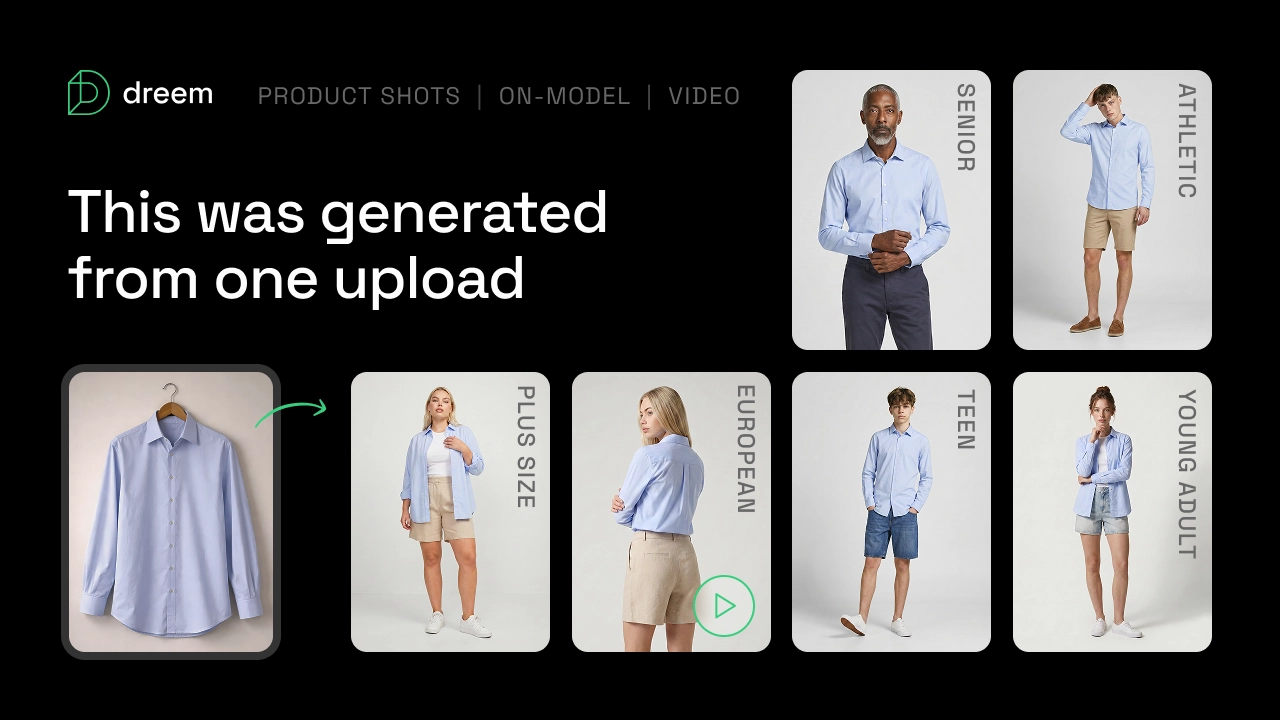
Most product pages lose the sale in the last three seconds. The image doesn't match the person looking at it, and they leave without ever knowing why, and neither do you.
Dreem puts your product in front of the people who are actually browsing. One upload and you have model shots, product shots, and video across 400+ virtual talents that match your actual customer base.
- Show every body type, age, and skin tone without a photoshoot
- Match your visuals to each audience segment automatically
- Around $2 per image; works from a phone photo
The shopper who sees themselves in your product stays longer, clicks add to cart, and doesn't second-guess at checkout.
Our readers get 600 free credits before July 30.
⚡Customers Buy Confidence, Not Just Products
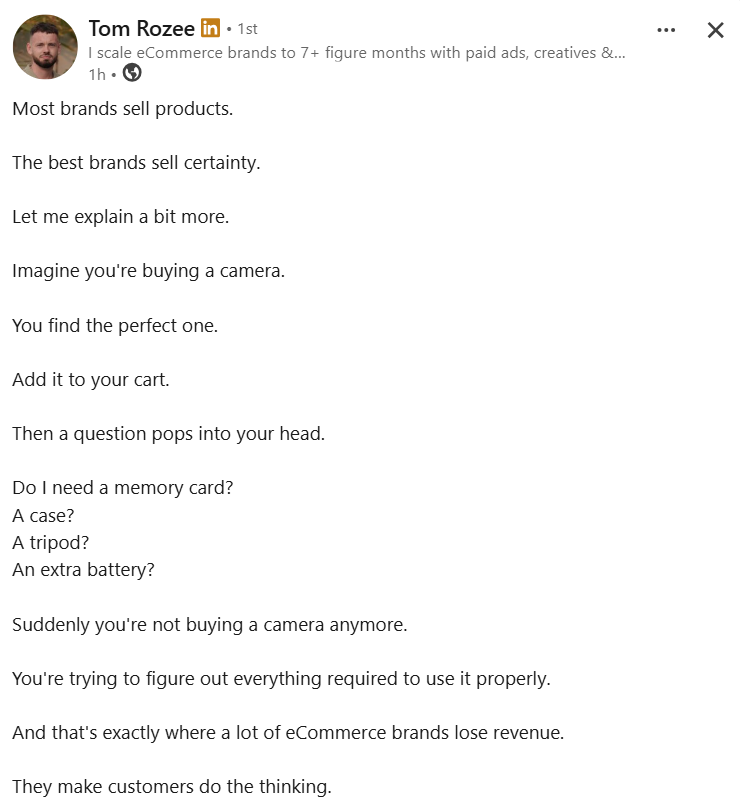
This post reframes bundling as a decision-reduction strategy rather than a pricing tactic. Customers often hesitate not because they dislike the product, but because they are unsure whether they have everything needed to achieve the desired outcome. The best brands remove that uncertainty before it appears.
Why it works: People prefer complete solutions over assembling their own. Bundles, starter kits, and guided setups reduce decision fatigue, increase confidence, and often raise average order value because customers feel certain they are making the right choice.
Where it needs balance: Not every customer wants the full package. Experienced buyers may prefer flexibility and customization. The strongest approach offers both: a complete solution for customers seeking certainty and individual products for customers who already know exactly what they need.
🎥 Reel of the Day

What Works:
Perceptual Rule-Breaking - The upside-down composition forces the brain to spend extra milliseconds decoding the scene, creating attention without relying on shock.
Suspended Completion Tension - The uninterrupted stream creates a visual question mark. Viewers instinctively wait for the liquid journey to complete before scrolling.
Kinetic Brand Signature - The pouring technique becomes a recognizable visual asset, creating memory through process rather than logos or verbal messaging.
Find one visually impossible-looking moment within your product experience and build the entire piece around that single mesmerizing action instead of showcasing everything.
💃 Events
🔥 Why Some Pages Get Cited In AI Search While Higher Rankings Get Ignored
Tomorrow | 60 Minutes | Virtual Event
Google's AI Mode is changing how buyers discover brands, and rankings alone no longer guarantee visibility. Learn the content signals AI uses to choose citations, how to identify visibility gaps before they cost pipeline, and the workflows top B2B teams are using to earn references in AI answers, with insights from Chris Long, co-founder of Nectiv.
Can't make it live? Register anyway, you'll get the recordings within 24hours.
Advertise with Us
Wanna put out your message in front of over 40,000 best marketers and decision makers?
Thanks for reading this edition! Keep pushing boundaries, testing ideas, and staying inspired. See you in the next edition with more ways to ignite your marketing success. 🥰