Gemini citation drop might not be real
🔧 Google says Gemini's missing citations are just a bug not a redesign, Competitor brand searches may not be worth fighting as hard as you think, and more!
Welcome to a space where every edition delivers insights, strategies, and inspiration to fuel your advertising brilliance. 🤯
🔧 Gemini stopped linking to its sources. Google confirmed it's a bug.
The latest Gemini model has been unlikely to link or cite the sources behind its answers, and Google has confirmed this is a bug rather than an intentional design change, with a fix expected.
That confirmation matters more than it might first appear, since it rules out the alternative explanation a team might otherwise reach for: that Gemini had deliberately shifted toward synthesizing answers without attribution as a permanent product direction. It hasn't. Something broke, and it's getting fixed.
That distinction changes what's worth doing right now. A permanent shift in how Gemini handles citations would justify a real strategy change, rethinking what content format earns visibility on that platform specifically.
A temporary bug justifies almost the opposite response: don't overreact to a citation drop that traces to this specific window, and don't mistake a broken pipe for a closed door.
Timestamp any citation-rate drop against the bug window before treating it as a real trend.
A brand watching its Gemini citation rate fall right now has two very different explanations available, and conflating them leads to the wrong fix.
Check whether your citation decline on Gemini specifically started around when this bug was first reported, versus a decline that predates it or continues well past when Google's fix is expected to land. A drop that maps cleanly onto the bug window is very likely not about your content at all.
Don't rebuild your content strategy around a broken measurement window
The instinct when a metric drops is to start changing things, adjusting content structure, testing new formats, revising what's published. Doing that in response to a confirmed platform bug means optimizing against noise rather than signal.
Hold your current content approach steady through this window rather than making structural changes based on data collected while the underlying citation mechanism wasn't functioning normally. Changes made now risk getting credited or blamed for a shift that had nothing to do with them.
Recheck citation behavior once the fix actually ships, not just once Google announces it
An announced fix and a fully deployed fix aren't always the same moment, and confirming your own citation rate has genuinely recovered is worth doing directly rather than assuming a platform announcement means the issue is already resolved for every account.
Tracking citation behavior across ChatGPT, Perplexity, Gemini, and Google AI Mode continuously, so a platform-specific anomaly like this one gets caught and correctly attributed rather than triggering a strategy change based on broken data, is what Semrush's AI Visibility Toolkit is built to surface. You can try it free for 7 days.
A citation drop feels urgent the moment you see it. Whether it's actually telling you something depends entirely on whether the thing measuring it was working right.
Together with Tatari
Forward 2026: A Forum for the Future of TV Advertising on Oct. 29, NYC
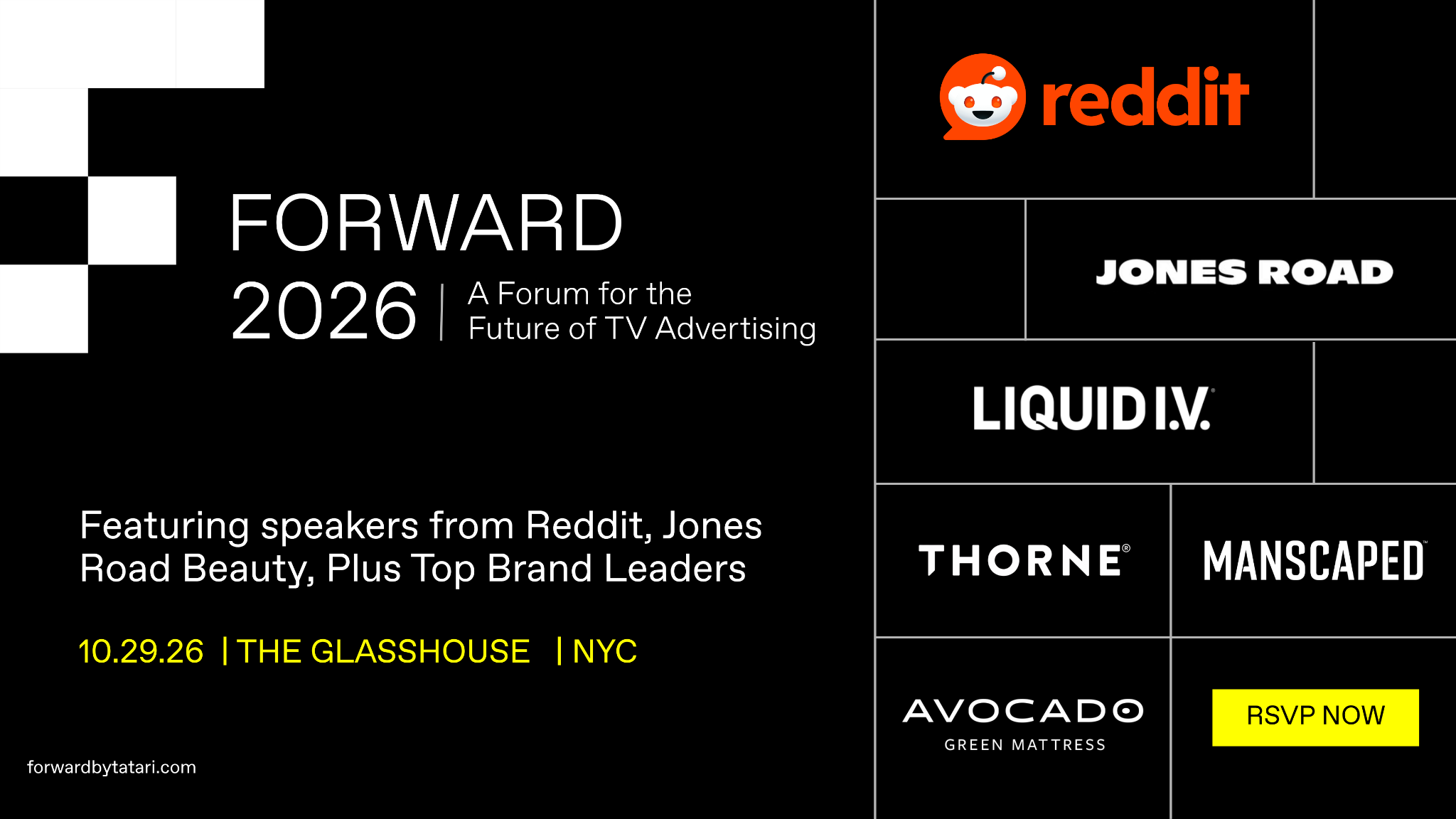
Paid social is getting harder to scale, while creator discovery and AI are changing how customers find brands.
If you keep relying on the same digital playbook, your acquisition costs can rise before your team finds the next reliable growth channel.
On October 29 in New York City, Forward by Tatari puts you in the room with leaders already adapting.
- Hear Reddit CEO and co-founder Steve Huffman share how one of the internet’s biggest communities thinks about discovery, followed by an open Q&A.
- See how Cody Plofker and leaders from Liquid I.V., MANSCAPED, Thorne, and Avocado Green Brands are approaching customer acquisition and full-funnel growth.
- Learn how brands use TV to produce measurable growth beyond crowded digital channels.
Bring your toughest growth question for a chance to have it answered by Reddit’s CEO or the marketer who helped take Jones Road to nine figures.
Attendance is free, but in-person space is limited.
⚡Competitor brand searches may look more threatening than they are
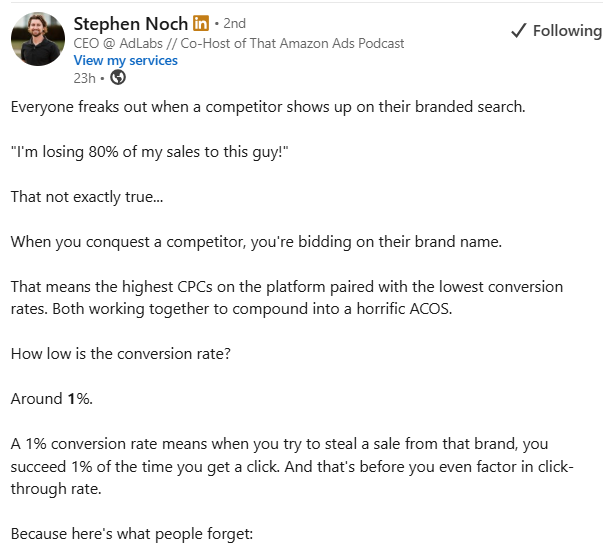
This framework argues that Amazon competitor conquesting can be difficult because branded searches carry strong existing intent. Even when competitors win clicks, converting shoppers who specifically searched for another brand can be challenging.
Why it works: Competitor ASIN targeting can reach shoppers while they are actively comparing products without relying entirely on expensive branded keywords. It can also expose advertisers to broader non-brand demand connected to those products.
Where it needs balance: The 1% conversion rate and 90%+ sales-share figures won't apply universally. Brand strength, pricing, category, placement, and differentiation can materially change conquest performance. Brands should measure actual incremental loss and conversion data before deciding how aggressively to defend branded searches.
🎥 Reel of the Day
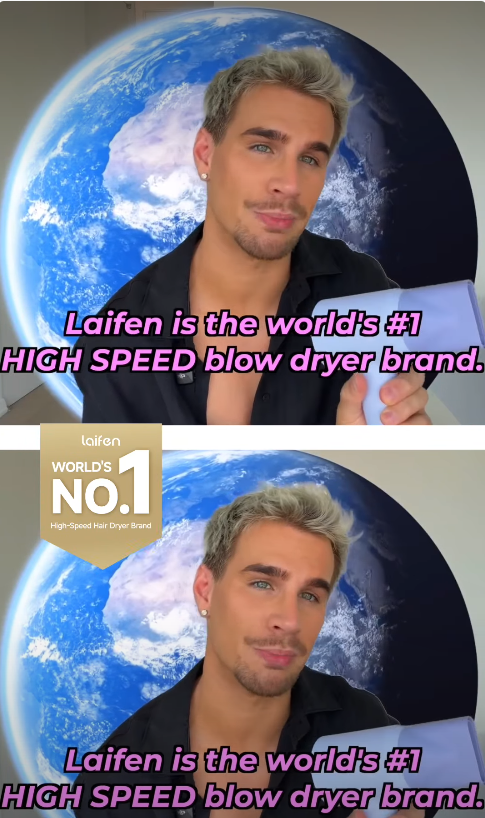
What Works:
1. Lead With Authority - Opening with “world’s #1 high-speed blow dryer brand” gives Laifen immediate credibility. Pairing the claim with Brad Mondo creates expert endorsement before viewers hear product details.
2. Turn History Into Proof - Brad references years of working with Laifen and shows older clips. This creator-brand history makes the endorsement feel established rather than like a one-off sponsored recommendation.
3. Use Variety To Broaden Appeal - Displaying multiple Laifen colors and models turns one recommendation into a mini product showcase. Viewers can imagine which version fits them while the creator remains the consistent selling anchor.
For creator-led product ads, combine authority, previous brand history, competitor comparison, and visible demonstrations. Let each new scene answer another reason someone might hesitate before buying.
🥳 Events
🔥 Which Sources Actually Decide Whether AI Recommends Your Brand?
Today | 1 PM ET | Virtual Event
Using research across 81 enterprise software topics and nearly 380,000 AI answers, Ross Simmonds and Josh Spilker show how G2, Reddit, YouTube, Capterra, Gartner, and other sources influence AI recommendations. Leave knowing where to earn visibility before allocating your next quarter’s content budget.
Can't attend the session live? Register anyway, and you’ll get the recordings in 24 hours.
Advertise with Us
Wanna put out your message in front of over 40,000 best marketers and decision makers?
Thanks for reading this edition! Keep pushing boundaries, testing ideas, and staying inspired. See you in the next edition with more ways to ignite your marketing success. 🥰