Hook Rate Saves the Quarter
📈Your ROAS dropped to 1.4. The creative broke six weeks ago; high-performing email programs rarely rely on a single format, and more!
Welcome to a space where every edition delivers insights, strategies, and inspiration to fuel your advertising brilliance. 🤯
📈 Your ROAS Dropped To 1.4. The Creative Broke Six Weeks Ago.
By the time blended ROAS collapses, the broken creative has already spent weeks bleeding budget. ROAS is a lagging indicator built to confirm damage, not prevent it.
Hook rate is the leading indicator your dashboard is hiding.
What You're Looking For
Hook rate = 3-second video plays divided by impressions. Visible in Meta Ads Manager. Pull it for every active creative now.
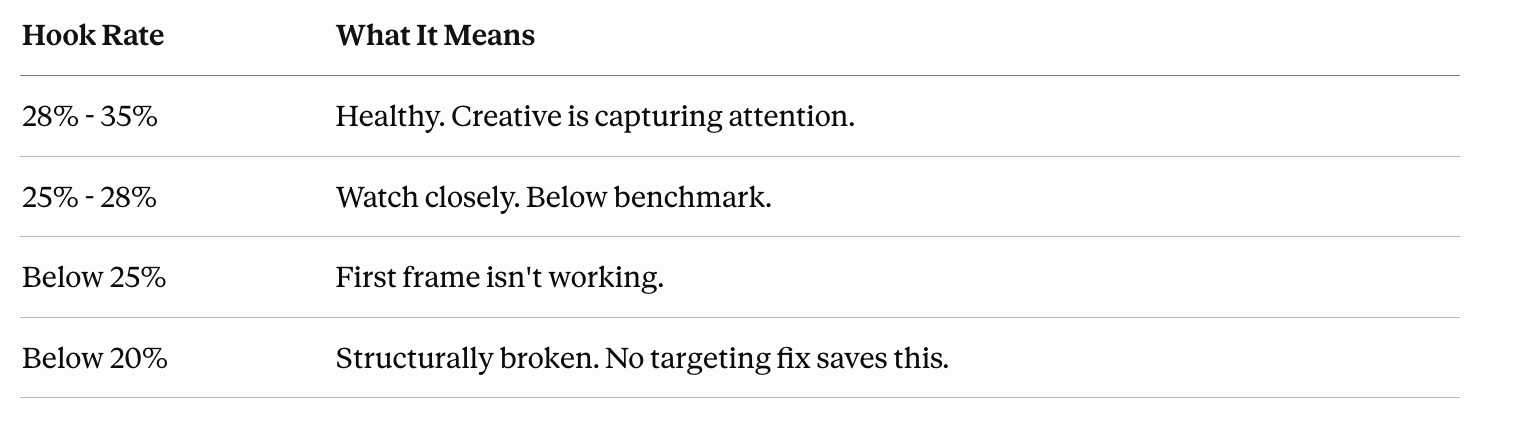
Without the benchmark, "low hook rate" is a feeling. With it, it's a number that demands a specific action.
Before You Rewrite The Hook, Diagnose The Actual Problem
Most teams assume a broken hook rate is a first-frame problem and rewrite ad copy. It is one of three possible causes, and the fix for each is different.
- First-frame problem: the visual in the first three seconds doesn't capture attention. Fix the frame.
- Audience-mismatch problem: the creative is reaching the wrong people so the hook is irrelevant to them. Fix the targeting.
- Product-mismatch problem: the product doesn't generate interest at the price point regardless of how the hook is written. Fix the offer or the positioning.
Rewriting copy when the real problem is audience-mismatch is how teams spend three weeks solving the wrong thing.
The Pull Threshold Most Teams Don't Have
The biggest cost of broken creative is not the wasted spend per impression. It is the weeks spent trying to optimise something that should have been killed.
The rule: any creative below 22% hook rate after 1,000 impressions gets pulled, not iterated.
22% sits below benchmark but above noise. It is a confident signal the creative is structurally weak, not unlucky. Every impression spent optimising below that threshold is the slowest possible path back to a working ad.
ROAS tells you when the creative is dead. Hook rate tells you while it's still dying.
Together with AirOps
AI search doesn't wait for teams still figuring out prompts.
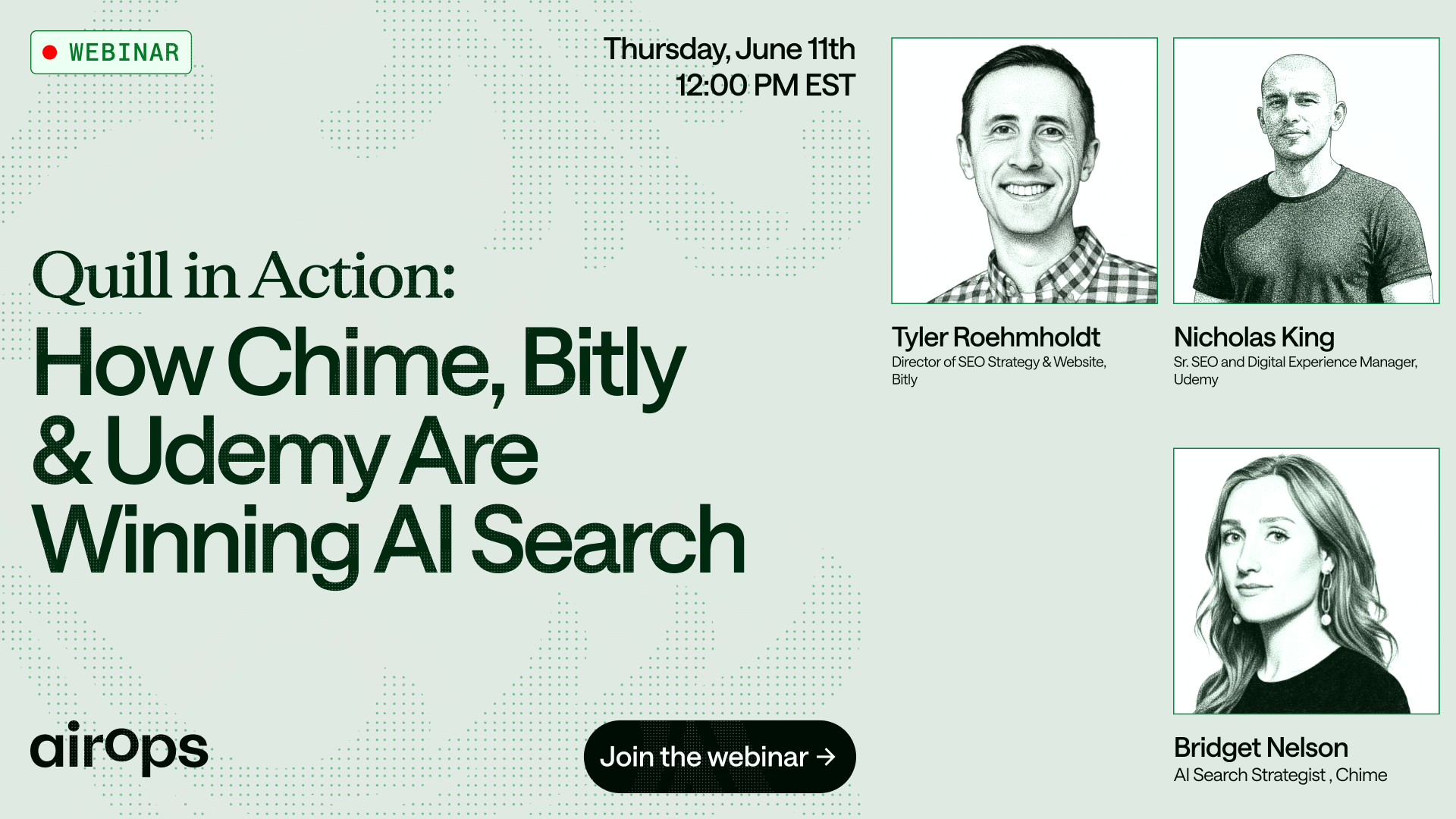
The shift from traditional search to AI search happened fast. What didn't follow was execution. Most teams are still figuring out the workflow while their AI search visibility slips.
On June 11, SEO leaders from Chime, Bitly, and Udemy are showing exactly how they use Quill to move past one-off prompts into agentic Playbooks that execute and scale without manual intervention.
You'll walk away with:
- What to say to leadership to get AI initiatives approved fast
- What's working in AI search right now, straight from teams doing it at scale
- Where to start with agentic Playbooks and what to prioritize first
Tyler Roehmholdt (Director of SEO Strategy, Bitly), Nicholas King (Sr. SEO and Digital Experience Manager, Udemy), and Bridget Nelson (AI Search Strategist, Chime) are walking through what they've built and what's moving the needle right now.
One session. A system you can start building the same week.
Can't make it live? Register anyway and get the recording in your inbox within 24 hours.
⚡The Best Email Format Is Often a Blend of Trust and Conversion
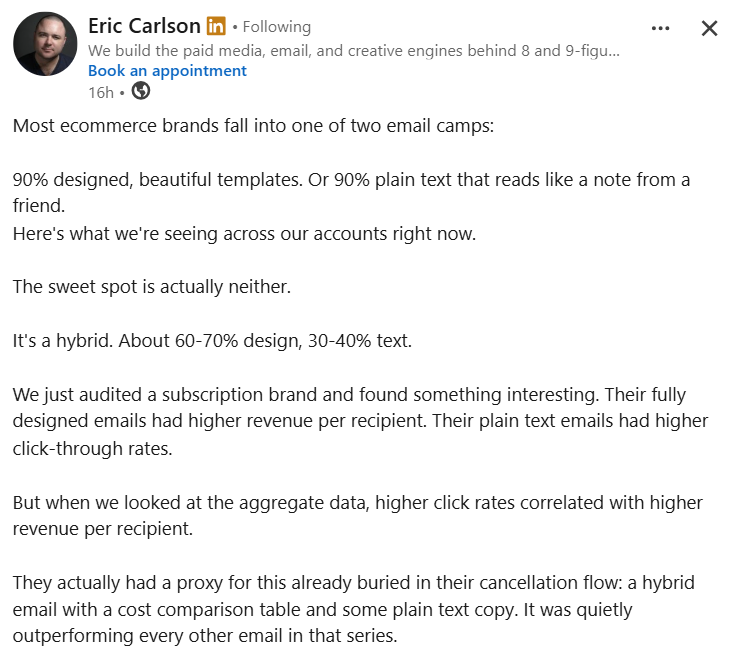
This post challenges the idea that brands must choose between heavily designed emails and plain-text emails. The argument is that each format serves a different purpose: text builds authenticity and engagement, while design improves clarity and conversion. The highest-performing emails often combine both.
Why it works: Plain text feels personal and increases attention, while design helps communicate offers and reduce decision friction. Combining them captures the strengths of both formats, improving engagement and revenue potential.
Where it needs balance: The ideal mix varies by audience, product, and email objective. Retention, newsletters, and promotional campaigns may require different levels of design. Testing should guide the balance rather than relying on a fixed percentage split.
🎥 Reel of the Day

What Works:
Competence Release Sequencing - Multiple failed ice flips manufacture uncertainty before success arrives, making the final landing feel earned rather than staged or guaranteed.
Micro-Tension Compression - Repeated near-misses create escalating anticipation within seconds, proving small unresolved moments can outperform dramatic storytelling in short-form content.
Skill-to-Product Transfer Effect - Viewers first admire execution precision, then subconsciously transfer that competence, care, and craftsmanship perception directly onto the drink experience.
Delay the product reveal until a tension-filled micro-challenge resolves successfully, making the brand the reward rather than the interruption.
💃Events
🔥 What Rand Fishkin, Co-Founder of SparkToro, Knows About AI Brand Visibility That Most CMOs Don't Yet
June 9 | Virtual Event | Free
AI recommendations aren't random. They follow a signal logic most marketing teams haven't mapped yet. Rand Fishkin, Co-Founder of SparkToro, and Crystal Carter, Head of AI Search at Wix, are on stage June 9, showing exactly how that logic works and how to build around it. Can't make it? Recordings land in your inbox.
✅ Reserve Your Free Spot
Can't attend every session live? Register anyway, you'll get the recordings within 24hours.
🔥 How the Creator Marketing Lead at Edelman Predicts Whether a Creator Will Drive Sales or Just Impressions
June 11 | Virtual Event | Free
Most brands only find out a creator was wrong for them after the budget is spent. Brooks Miller, EVP of Creator Marketing at Edelman, and Eric Ford, formerly Global Communications at L'Oréal, share the exact framework brand-side teams use to call that before the contract is signed.
✅ Reserve Your Free Spot
Can't attend every session live? Register anyway, you'll get the recordings within 24hours.
Advertise with Us
Wanna put out your message in front of over 40,000 best marketers and decision makers?
Thanks for reading this edition! Keep pushing boundaries, testing ideas, and staying inspired. See you in the next edition with more ways to ignite your marketing success. 🥰