Is your cross sell killing sales?
🫢Your cross-sell flow might be creating fewer purchases than it sends, Email deliverability is more about engagement than bounce rate, and more!
Welcome to a space where every edition delivers insights, strategies, and inspiration to fuel your advertising brilliance. 🤯
🫢 Your Cross-Sell Flow Might Be Creating Fewer Purchases Than It Sends
Most cross-sell strategies begin with the same question:
“What products are frequently bought together?”
It’s a useful question.
It just isn’t the only one that matters.
The more expensive question is this:
“Which products are rarely bought together, even though they should be?”
Those pairs often reveal something most recommendation engines never surface. Customers don’t see them as complementary. They see them as alternatives.
That’s where many cross-sell flows quietly work against themselves.
Find the products customers have already mentally replaced.
Pull the last 12 months of order history.
For each product pair, compare the expected co-purchase rate based on individual purchase frequency with the actual co-purchase rate.
When two products appear together far less often than probability predicts, don’t assume poor merchandising.
Assume customers believe they solve the same problem.
Sending a cross-sell email for Product B immediately after someone buys Product A doesn’t create demand. It reminds the customer they’ve already made that decision.
Stop assuming product relationships are symmetrical.
A customer who buys a starter skincare kit before a refill behaves differently from someone who buys the refill after discovering the product another way.
The same is true across supplements, apparel, electronics and home goods.
Treating A → B and B → A as the same journey ignores how customers actually buy.
Measure the lift separately.
You may discover one direction deserves a dedicated flow while the other should be suppressed entirely.
Let AI audit your setup.
The analysis isn’t difficult.
Knowing whether your email setup is actually built to act on those insights is.
Omnisend now works with Claude and ChatGPT, so you can ask Omnisend AI to score your account out of 100 based on campaign cadence, automation coverage and catalog completeness, then list the top three areas to improve. In seconds, you’ll know whether you’re missing key automations, relying on outdated flows or leaving cross-sell revenue on the table before changing a single email.
Not yet an Omnisend user? Brands using Omnisend generate an average of $79 for every $1 spent. Migration is free and takes up to five days, while pricing is up to 35% lower than Klaviyo’s. You can get started with ready-made prompts.
Before your next cross-sell campaign goes live, ask two questions. Are you recommending a complement? Or reminding the customer they already chose its substitute?
Together with Billo
Most hooks fail in 2 seconds. These 3 types don't.
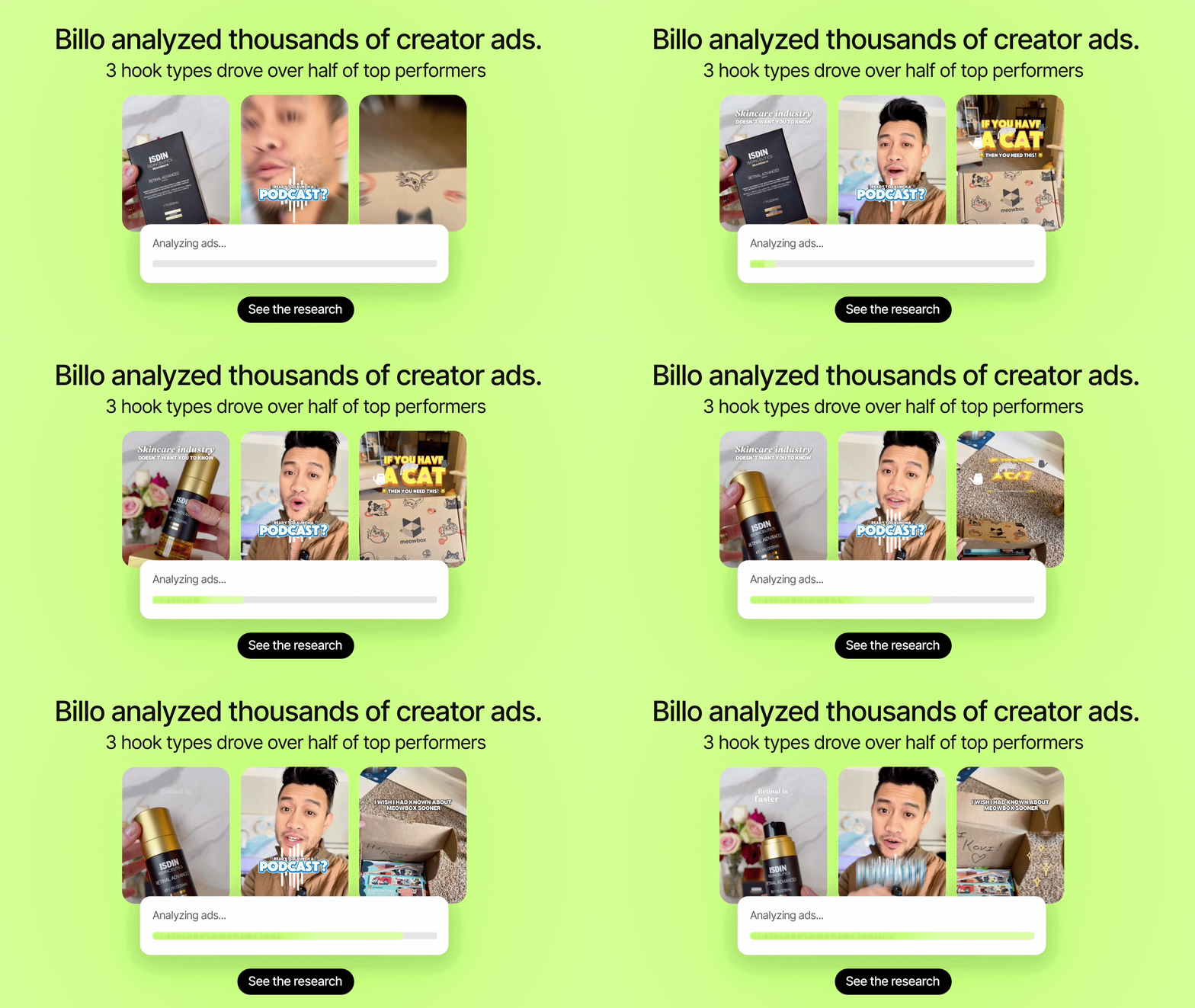
Billo pulled 6 months of creator ad data and tagged every top performer by hook type. Most of what's in your current brief barely showed up.
- Authentic Moment hooks made up over a quarter of top performers alone, and most had no script at all
- Audience Call-out hooks skipped the product completely in line one. Just named the viewer. "Husbands." "Hockey mom."
- List hooks, FOMO countdowns, and "forget X, try Y" setups were almost nowhere in the top tier
If your brief leans on that last one, you're fighting for attention exactly where people tune out fastest.
The breakdown has every hook type plus the actual lines that made the top tier, so you can steal the structure instead of guessing at it.
Read it before your next round of creator ads.
⚡ Email Deliverability Is More About Engagement Than Bounce Rate
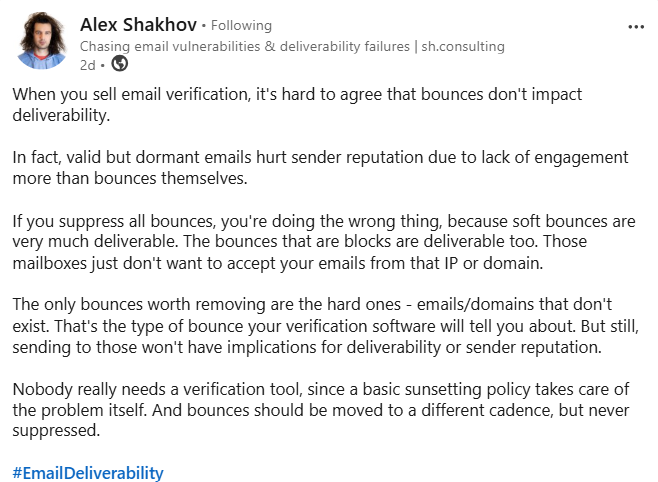
This framework challenges the belief that reducing bounces is the primary driver of email deliverability. While hard bounces should be removed, the bigger issue is sending repeatedly to inactive subscribers who never engage. Poor engagement signals often have a greater impact on sender reputation than occasional bounces.
Why it works: Mailbox providers prioritize recipient engagement when determining inbox placement. Maintaining healthy engagement through sunsetting policies, segmentation, and appropriate sending cadences is often more effective than focusing solely on email verification.
Where it needs balance: This view is intentionally opinionated. Email verification still has value for preventing hard bounces, maintaining database hygiene, and reducing unnecessary sends—especially for purchased, legacy, or rapidly growing lists. The strongest strategy combines verification with engagement-based list management rather than treating them as alternatives.
🎥 Reel of the Day
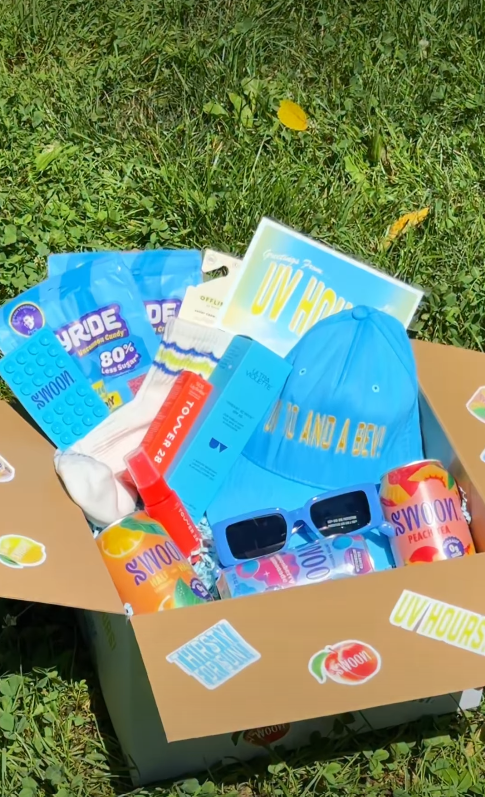
What Works:
Sunlit Product Showcase - Natural sunlight makes every product pop without feeling staged. The bright, lifestyle aesthetic instantly signals summer, boosting hook efficiency while making the giveaway feel genuinely desirable.
Curiosity Through Reveals - Instead of showing everything at once, each item is unboxed individually. Every reveal becomes a pattern interrupt that extends the retention curve and keeps viewers watching for what's next.
Community First Giveaway - The reel sells the lifestyle before the prize. Multiple partner brands expand reach while the detailed caption handles mechanics, letting the video stay entertaining instead of instruction-heavy.
Don't announce a giveaway. Build an aspirational collection around one seasonal theme, reveal every item sequentially, and move entry rules into the caption to maximize watch-through and shares.
Advertise with Us
Wanna put out your message in front of over 40,000 best marketers and decision makers?
Thanks for reading this edition! Keep pushing boundaries, testing ideas, and staying inspired. See you in the next edition with more ways to ignite your marketing success. 🥰