Sometimes it’s just a learning
🛑Stop reacting to your own account's normal noise, Traffic quality can depend as much on placements as targeting, and more!
Welcome to a space where every edition delivers insights, strategies, and inspiration to fuel your advertising brilliance. 🤯
🛑Stop Reacting to Your Own Account's Normal Noise
A good week reads as a breakthrough. A bad week reads as a crisis. Most accounts never check whether either one is actually unusual, which means most account changes are reactions to noise, not signal. Three strategies fix this.
Build your baseline
Export weekly ROAS for the last 12 months, no smoothing, no excluding bad weeks. Pull the median instead of the average, since a few extreme weeks distort an average badly. Pull the 25th and 75th percentile too, marking the range your account normally lives inside.
Segment into at least two versions, since promo weeks and non-promo weeks behave differently and a blended number hides that. Refresh quarterly as spend and audience size shift the range.
Find out what platform ROAS is actually claiming credit for
Pick your highest-spend channel and run a geo holdout. Split comparable markets into two groups, confirm they track together for four to six weeks beforehand, then pause ads in one group for three to four weeks while running normally in the other.
The revenue delta between groups, not the platform's reported number, is your real incremental lift. In mature accounts this often comes in 20 to 40 percent below what the platform claims. That gap is what the platform has been taking credit for.
Set the bar for calling anything a real result
A new tactic only counts as a win if it holds at least 1.5 standard deviations above the right baseline for three consecutive weeks, and, where a holdout is feasible, if the incremental lift confirms it independently.
One good week that reverts is not a signal. Write the threshold down before running the next test, not after seeing a number you like, since deciding what counts as good enough after the fact is exactly the bias this removes.
Log every test against this system in one document: the baseline it was measured against, whether it cleared the bar, whether a holdout confirmed it. A year of that log is your account's real track record, built on your own data instead of platform noise or a stranger's screenshot.
Together with Stack Influence
Why a stranger's selfie outsells your best-performing ad
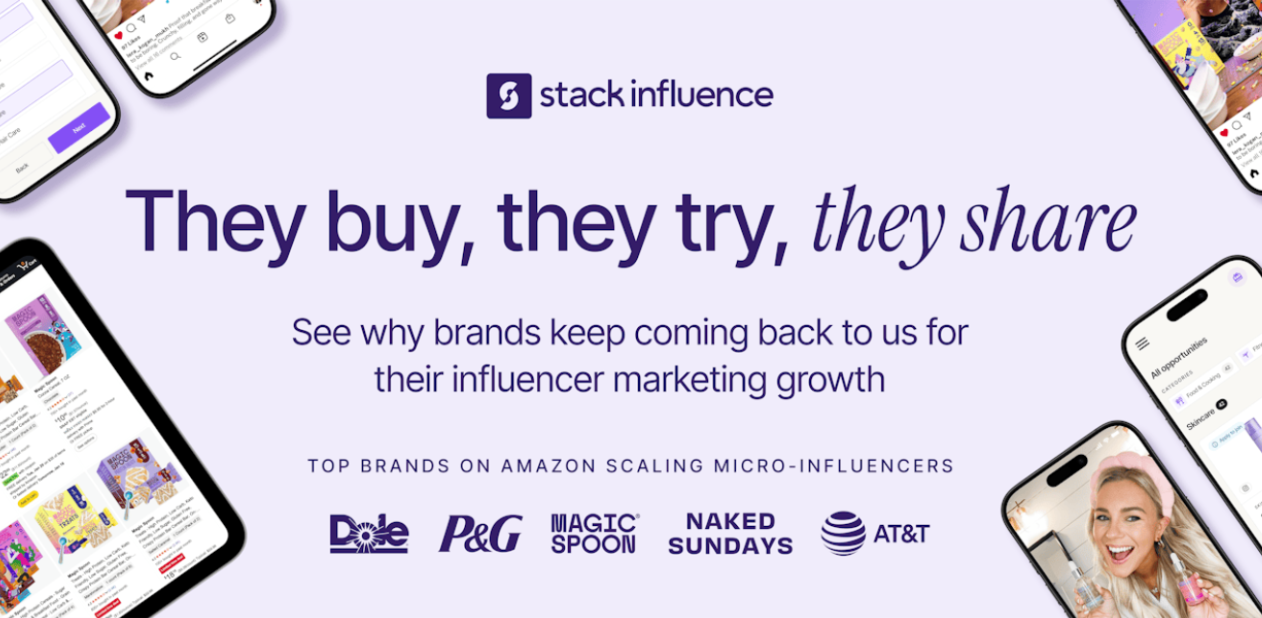
Your audience has learned to discount advertising. But a real person, holding a product they paid for, recommending it to people who follow them by choice?
That bypasses the skepticism filter entirely - it is social proof, authority, and the bandwagon effect firing at once.
Stack Influence turns that psychology into a repeatable channel.
Vetted micro-influencers buy your product on Amazon and post authentic content to their own audiences. The purchases drive sales velocity, the velocity lifts organic rank, and the external traffic compounds both.
The numbers downstream: one brand activated 187 creators and saw BSR improve 11X with recurring sales up 8X ($342K YoY). Another hit $150K a year and an Amazon's Choice badge from a standing start. Magic Spoon, Unilever, and Thrasio run the same play.
Now you can run the same motion and save 10% on your first campaign if you sign up this week.
Book a free demo call and get started today.
⚡Traffic Quality Can Depend as Much on Placements as Targeting
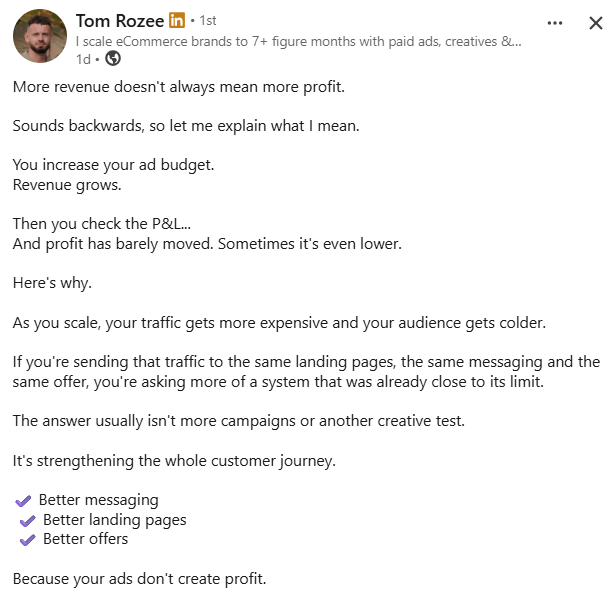
This framework highlights a common optimization mistake: assuming poor conversion performance is always caused by creative or audience targeting. In some cases, automatic placements can deliver large volumes of low-intent traffic, making campaign metrics appear healthy while reducing actual business outcomes.
Why it works: Different placements attract different user behaviors and levels of purchase intent. Reviewing placement performance helps identify where quality traffic is coming from, allowing budget to shift toward environments that generate stronger engagement and conversions rather than simply more clicks.
Where it needs balance: Audience Network and automatic placements are not inherently ineffective. Their value depends on campaign objective, product, and account data. Before excluding placements, compare conversion quality, CPA, and incremental performance by placement to ensure you're removing genuine inefficiencies rather than limiting Meta's optimization unnecessarily.
🎥 Reel of the Day
What Works:
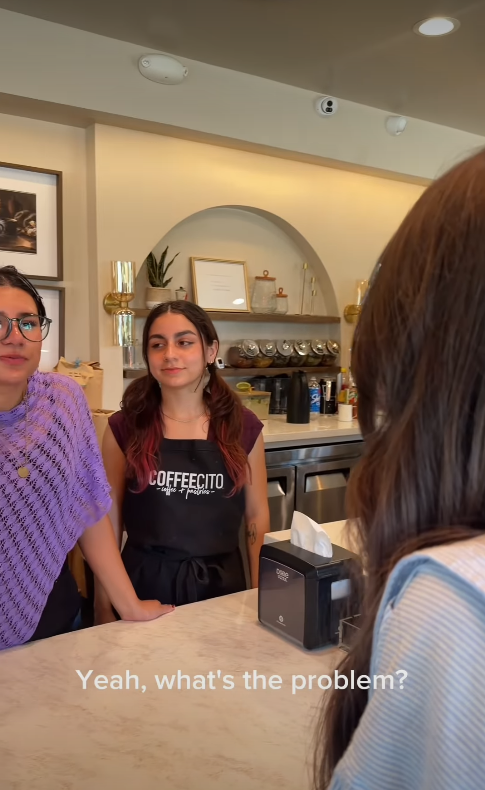
Curiosity Gap - The opening feels like a confrontation. "Is your manager here?" immediately makes viewers expect a complaint, forcing them to stay for the reveal. The actual payoff completely flips expectations, creating a satisfying surprise.
Workplace Relatability - Every service employee has dealt with customers asking for managers, while every customer has secretly wondered about workplace gossip. The joke lands because both sides recognize themselves in the scenario.
Brand Environment - The café is visible throughout without forcing product shots. The clean interior, uniforms, coffee equipment, and branding create constant exposure while the audience focuses entirely on the conversation instead of an advertisement.
Turn routine customer interactions into mini sitcoms with an unexpected twist. Keep products in the background, let personalities drive the entertainment, and make the brand feel like the setting rather than the subject.
Advertise with Us
Wanna put out your message in front of over 40,000 best marketers and decision makers?
Thanks for reading this edition! Keep pushing boundaries, testing ideas, and staying inspired. See you in the next edition with more ways to ignite your marketing success. 🥰