Is your best content useless?
😤The content you are proudest of may not exist to the machines citing everyone else, and more!
Welcome to a space where every edition delivers insights, strategies, and inspiration to fuel your advertising brilliance. 🤯
😤The Content You Are Proudest of May Not Exist to the Machines Citing Everyone Else
The assumption: if a page renders beautifully in a browser, its content exists. Your team ships a rich, interactive resource, the analytics show engagement, and everyone reasonably concludes the content is out there working.
The reality: most AI crawlers do not execute JavaScript. They fetch raw HTML, and whatever loads client-side after that fetch, content injected by frameworks, product details rendered from API calls, reviews loaded on scroll, comparison tables built in the browser, simply is not in the document they read.
A page can be your best work for human visitors and a near-empty shell to the systems assembling AI answers. The competitor whose plain server-rendered page contains its content in the initial HTML gets read, extracted, and cited while your richer page contributes nothing.
The exposure test takes five minutes per page and requires no tooling: load the page, view the raw page source rather than the rendered inspector, and search for your key content, the core claims, the product details, the data points you want cited. If the text is not in the source, it is not in what most AI crawlers receive.
Run this against your ten most important pages and the result is usually a split: some fully present, some partially hollow, one or two effectively invisible.
The fixes run from cheap to structural. Server-side rendering or static generation for content-critical templates puts the material back in the initial HTML.
Where full SSR is not feasible, targeted fixes work: render the core content server-side and hydrate interactivity on top, or ensure critical claims exist in the HTML even if enhanced presentation loads after.
The July 9 AirOps session with Jairo Guerrero of Organic Hackers goes deep on exactly this failure class: which structured data and template fixes make pages easier to cite, and where pages break in the crawl-to-citation pipeline, drawn from years of watching AI crawler behavior in server logs. You can secure your free spot.
Run the view-source test on your top ten pages this week. It is the fastest possible answer to a question most teams have never asked: can the machines deciding your visibility actually read you?
Together with Dreem
Every SKU needs 60 assets. You're making two.
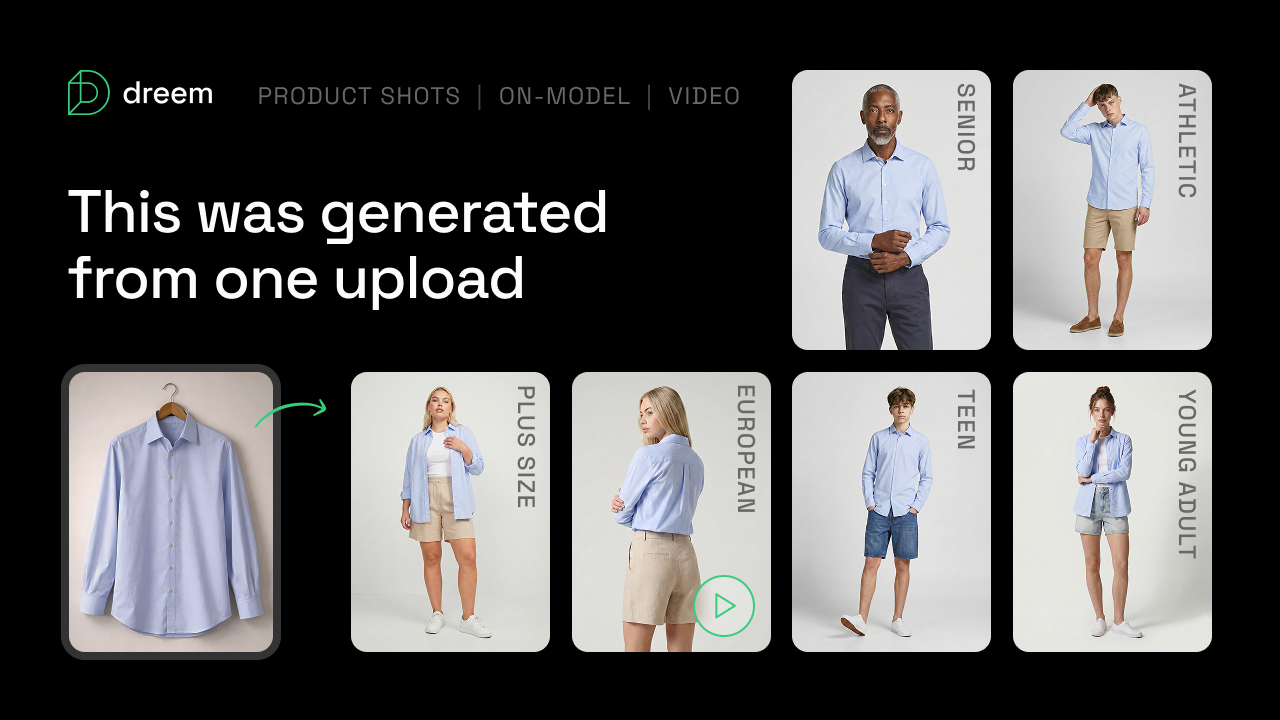
One model, one lighting setup, one PDP shot, and you call it done.
Here's the actual math: 4 segments × 5 channels × 3 formats = 60 assets per SKU. At $5K a shoot, most brands make a handful and call it a launch. The other 50+ never get shot - so your paid team recycles the same three creatives for a year.
Dreem makes the other 58.
Upload one product image and get model shots across 400+ virtual talents covering every body type, age, ethnicity, and size, product shots front and back, and video ready for your PDP, paid and organic.
Different looks, different styles, different audiences, all from one upload.
Your customers aren't all the same. Your content probably looks like it thinks they are.
Sign up before July 30 and you get 600 bonus credits, enough for 50 full per-segment kits on your top SKUs.
⚡Scaling Meta Requires More Creative Variety, Not More Creative Copies
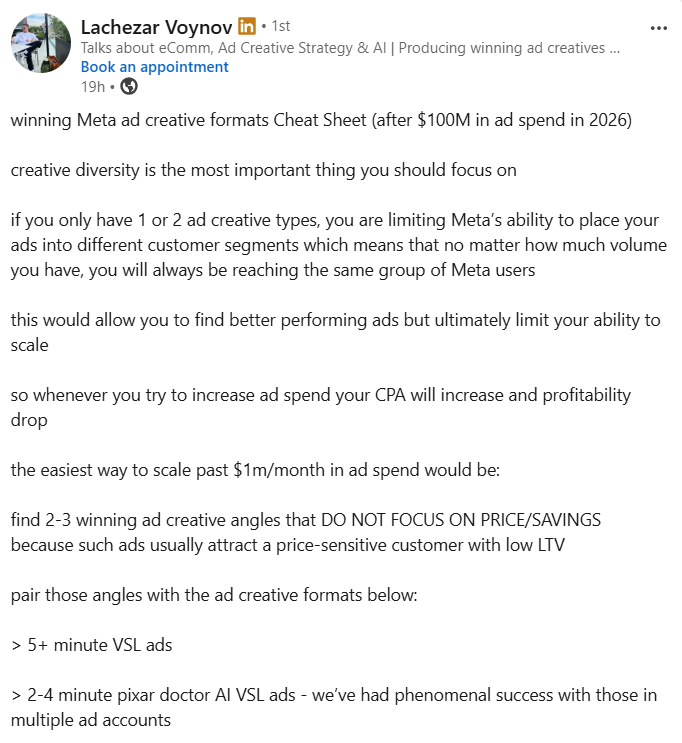
This framework argues that Meta's scaling ceiling is often determined by creative diversity rather than creative volume. Instead of producing dozens of similar ads, brands should identify a few proven messaging angles and express them through multiple creative formats. This gives Meta more opportunities to match the same message with different audience preferences and placements.
Why it works: Different creative formats appeal to different user behaviors. Founder stories, demonstrations, podcasts, transformations, VSLs, skits, and statics all communicate the same value in different ways, helping Meta find incremental audiences without relying solely on new targeting or budget increases.
Where it needs balance: Creative diversity alone won't unlock scale. The underlying angle, offer, and product-market fit still determine success. Likewise, avoiding price-led messaging isn't universally correct. For promotional events, commodity products, or highly price-sensitive markets, discount-focused creatives can still be the strongest performers when used strategically.
🎥 Reel of the Day
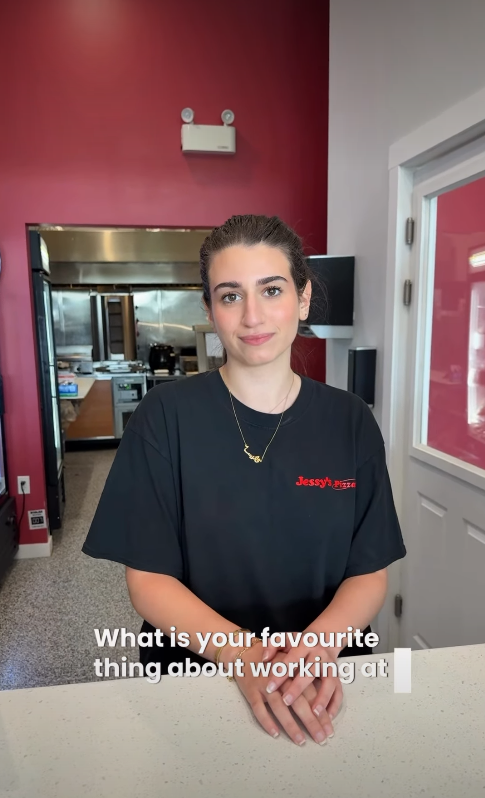
What Works:
Product Validation - Employees admitting they stay for the free food feels more believable than any advertisement because internal enthusiasm signals genuine product confidence naturally.
Conversation Hook - The interview format builds curiosity, encouraging viewers to anticipate each employee's unexpected answer rather than simply watching another food preparation video unfold.
Food Without Selling - The pizza barely needs promotion because employee reactions become social proof, letting desire form through authentic behavior instead of direct product claims.
Interview employees with one unexpected question, letting honest, humorous answers naturally showcase product quality, workplace culture, and brand personality simultaneously.
Advertise with Us
Wanna put out your message in front of over 40,000 best marketers and decision makers?
Thanks for reading this edition! Keep pushing boundaries, testing ideas, and staying inspired. See you in the next edition with more ways to ignite your marketing success. 🥰