The Audit You Need
🚀Your creator roster is optimized for the wrong variable, Creative diversity may matter more than creative volume going forward, and more!
Welcome to a space where every edition delivers insights, strategies, and inspiration to fuel your advertising brilliance. 🤯
🚀Your Creator Roster Is Optimized For The Wrong Variable
Follower count is what gets screenshotted in the debrief deck. It is not what moves product. A creator with 80k followers and genuine category authority outperforms a creator with 800k followers and category indifference on every metric that compounds past launch week.
The selection mistake is not picking the wrong creators. It is optimizing against the wrong criterion from the start.
The Audit Your Roster Has Never Had
Pull every active creator and score them against two columns: reach and perception-shift potential within your category.
Reach is easy. Perception-shift potential is four questions:
- Does the creator post in your category regularly, without being paid to?
- Does their audience respond to category content specifically, not just their content generally?
- Do they hold credibility their audience associates with category expertise?
- Do they take public positions on category-relevant topics?
A creator hitting four of four against these questions beats a creator hitting zero with three times the reach. Most rosters, scored honestly, reveal three or four creators doing real perception work and a long tail of expensive impressions.
The Three Traits That Predict Perception Movement Before Launch
The selection criteria that actually predicts performance splits along one axis: can this creator shift how their audience thinks about the category, not just whether they can show the product.
The three observable signals: category fluency (they speak the language without coaching), audience overlap with your actual buyer (their followers index against your customer profile), and recommendation credibility (their audience has converted on category recommendations before).
Modash is running a free 3-hour session on June 11th with brand-side teams from Moroccanoil, Edelman, and L'Oréal on exactly this: which creators on your roster do not belong there, and the three criteria that separate perception-shifters from impression-generators. You can secure your free spot now!
Restructure The Launch Roster Logic
Most rosters get built by maximizing total reach, then checking whether any creators have category credibility. That order produces the same roster every time.
Reverse it. Score perception-shift potential first. Assemble the roster against that. Then validate that the combined reach clears the minimum threshold.
Optimizing reach first and adding perception after is how you end up with a 5M-reach launch that moves nothing.
Reach is what shows in the report. Perception is what shows in the reorder rate.
Together with Planable
The AI event for marketing leaders: BreakingSilos 2026 On June 9th
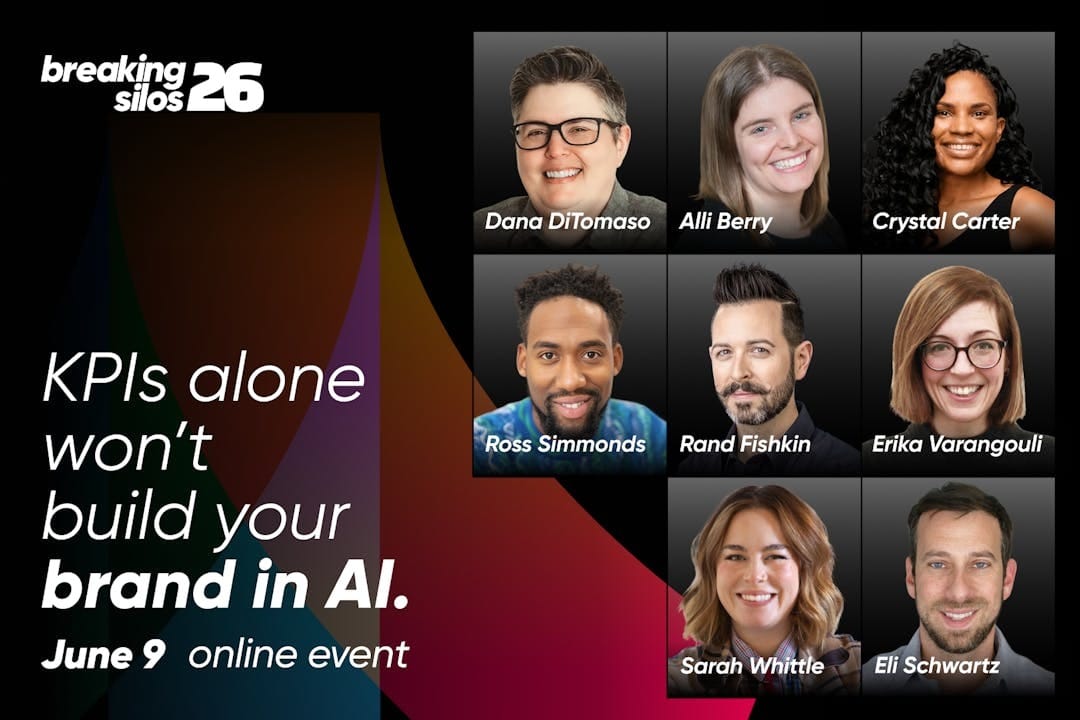
AI is answering for your brand. You didn't write those answers.
AI tools are already forming opinions about your brand using signals you never curated. Recommending competitors. Shaping buyer decisions before your funnel even starts.
BreakingSilos 2026 brings together the practitioners who've cracked this. Free. Online. June 9th.
The sessions go deep on why AI forms brand opinions from signals you never controlled, where attribution is silently bleeding your BOFU performance, and what a cross-channel signal strategy actually looks like in 2026.
You'll leave with:
- A clear map of how AI decides which brands to surface and what inputs actually move the needle
- A cross-channel framework connecting your SEO, social, PR, and content signals into one strategy
- The language and data to get your org aligned around ecosystem thinking
30+ sessions. 70+ speakers. Zero vendor pitches.
Reserve your free spot today and find out where the signal breaks.
⚡Creative Diversity Beats Creative Volume in Modern Meta Ads
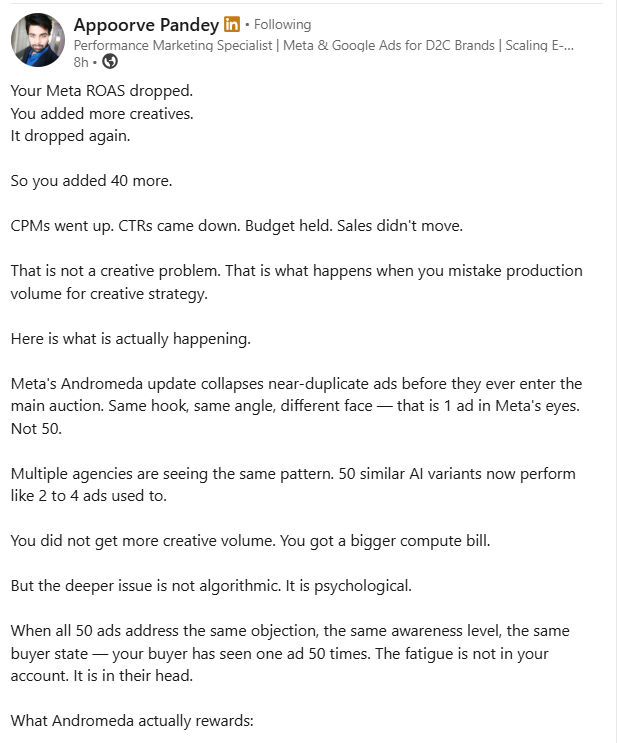
Adding more ads does not necessarily create more testing opportunities. As Meta gets better at identifying similar creatives, small visual changes no longer count as meaningful variation. The real advantage comes from testing different customer beliefs, objections, awareness levels, and motivations.
Why it works: Buyers respond to new ideas, not new thumbnails. Distinct angles, objections, and awareness stages create genuinely different demand pathways, giving Meta more meaningful signals and expanding addressable audiences.
Where it needs balance: Creative volume still matters for scaling and combating fatigue. Some categories benefit from frequent refreshes even when messaging stays similar. The strongest accounts combine psychological diversity with consistent production velocity, rather than treating them as opposites.
🎥 Reel of the Day

What Works:
The Product Is Hidden Inside A Mystery, Not A Sales Pitch - Viewers are not watching for Rhode, they're watching to discover what is buried beneath the snow which makes the reveal feel earned.
The Reel Sells Through Luck, Not Marketing - Finding a lost Rhode product feels like discovering treasure, transforming an ordinary lip treatment into something scarce, valuable, and desirable.
The Caption Creates An Open Story Loop - "Someone was probably having their worst day" instantly creates empathy and curiosity, making viewers imagine the owner before seeing the product.
Hide the product behind a discovery moment because people are naturally more interested in finding something than being sold something.
Advertise with Us
Wanna put out your message in front of over 40,000 best marketers and decision makers?
Thanks for reading this edition! Keep pushing boundaries, testing ideas, and staying inspired. See you in the next edition with more ways to ignite your marketing success. 🥰