What to stop, not what to add
⛔ Every resourcing ask defaults to "more." The harder, more useful question is what a team should stop doing entirely, Amazon traffic is only valuable when it’s relevant, and more!
Welcome to a space where every edition delivers insights, strategies, and inspiration to fuel your advertising brilliance. 🤯
⛔ The hardest resourcing question isn't what to add. It's what to stop.
Every resourcing conversation defaults to the same framing: what do we need more of, more budget, more headcount, more tools.
That framing skips a harder and often more valuable question entirely, which is what the team should stop doing to free capacity for what actually matters right now. A team that's never run that exercise is implicitly treating everything currently on its plate as equally worth doing, and that's rarely true once anyone actually looks.
The reason this question gets skipped isn't that it's less useful. It's that it's harder to ask out loud, since stopping something visible feels like an admission that it wasn't worth doing in the first place, while asking for more feels forward-looking and ambitious.
That asymmetry means teams accumulate work faster than they ever consciously choose to shed it, and the accumulated weight becomes the actual resourcing problem long before anyone frames it that way.
Inventory everything currently consuming real capacity, not just what's top of mind
Most teams can rattle off their three or four headline initiatives without difficulty. Far fewer can produce a complete list of every recurring report, every standing process, every "we've always done this" task actually eating hours each week.
Build that full list deliberately, including the unglamorous recurring work nobody thinks to mention in a strategy conversation. The gap between what a team says it does and what it actually spends its time on is usually where the real capacity is hiding.
Score each item by what actually breaks if it stops
Not every item on that list deserves the same scrutiny, and the useful next step is separating what would cause a real, specific problem from what would just quietly not happen anymore.
For each item, ask directly what specific negative outcome follows from stopping it, and who would notice within a month. An item with no clear answer to either question is a strong candidate to cut, regardless of how long it's been running or how routine it feels to keep doing.
Redirect what gets freed toward the work actually constrained by capacity right now
Stopping something without a plan for the freed capacity just means it gets reabsorbed into whatever feels urgent that week, and the actual gain from the exercise never shows up anywhere measurable.
This exact discipline, identifying what to deliberately stop rather than only asking what to add, is what Krithika Shankarraman and AirOps CMO Christy Roach unpack on September 17, from a survey of 300+ marketing leaders navigating rising targets against flat resources. You can reserve your free spot here.
Together with Zenty
You don't have a catalog problem. You have a coverage problem.
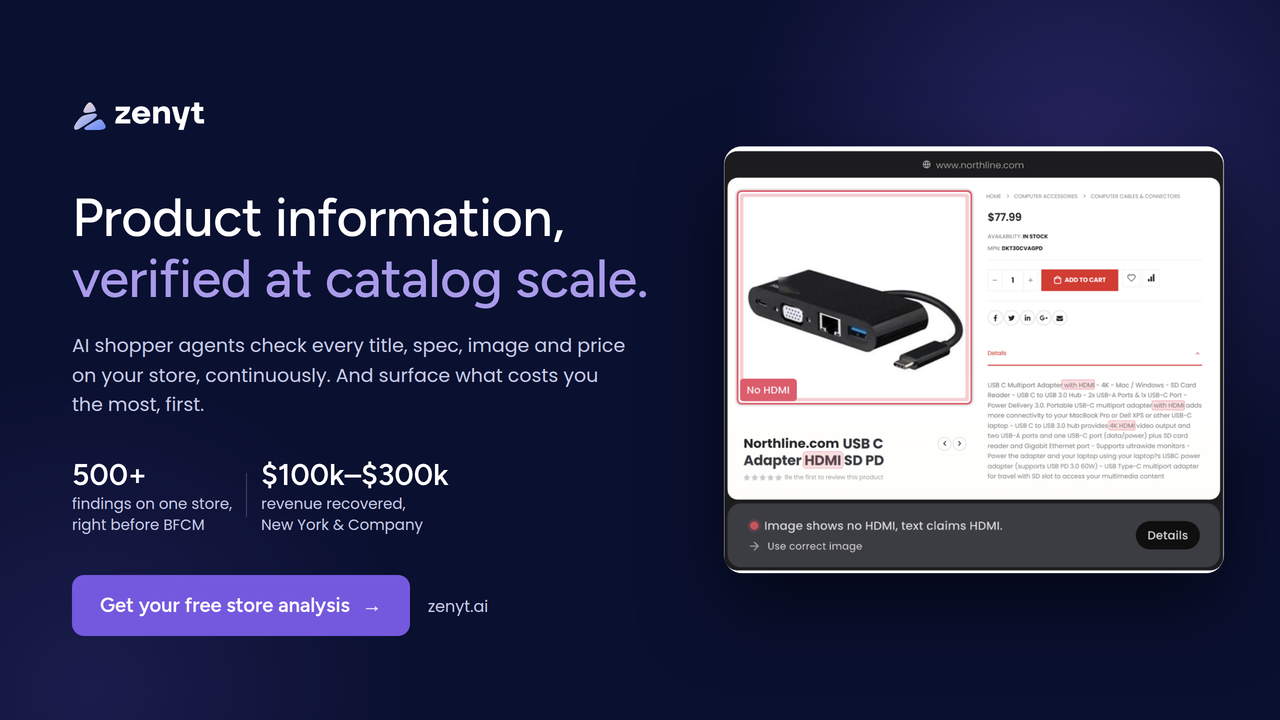
Right now, somewhere on your store, a photo shows pockets while the description says none.
A midi dress is labeled full length. A price reads one thing on the page and another in the cart. Across thousands of SKUs and variants, no team can browse every page before customers do.
Zenyt's AI shopper agents review your entire store the way a customer would, checking every title, spec, image, and price against your source of truth, continuously. Then they rank what is costing you the most first.
- New York & Company identified 500+ findings before BFCM and uncovered $100K–$300K in potential revenue.
- Caudalie generated €700K in incremental revenue within 12 weeks.
- LG protected $900K in EBITDA and saved 2,100 working hours.
Your catalog changes every day between now and Black Friday. Get your free store analysis before peak traffic finds the gaps first.
⚡Amazon traffic is only valuable when it’s relevant
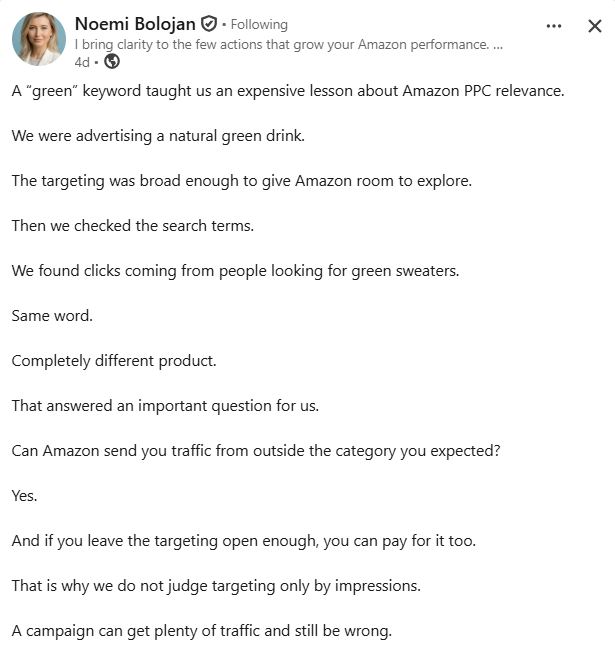
This framework highlights the risk of giving Amazon too much freedom with broad targeting. A keyword can generate impressions and clicks while attracting shoppers with completely different purchase intent, quietly wasting budget.
Why it works - Reviewing actual search terms alongside clicks, conversions, and spend reveals whether Amazon is finding commercially relevant shoppers. Negative targeting then removes obvious mismatches while preserving useful discovery.
Where it needs balance: Broad targeting isn't inherently wasteful. It can uncover unexpected search terms and adjacent audiences that convert well. The goal isn't to eliminate exploration, but to regularly separate valuable discoveries from irrelevant traffic.
🎥 Reel of the day

What Works:
1. Performance Opens The Story - “The Heat Test” starts on the tennis court, connecting Tommy Paul’s physical exertion directly to recovery. Tempur-Pedic becomes part of athletic performance rather than simply another mattress endorsement.
2. Credibility Comes From Two Sides - Pairing a top professional tennis player with his fitness coach strengthens the recommendation. Tommy provides personal experience while Franco reinforces it from a performance perspective, making the endorsement feel earned.
3. Recovery Becomes Performance - The strongest positioning is bigger than “better sleep.” Tommy connects a cold, comfortable night’s sleep with feeling capable the next day, reframing the mattress as part of an athlete’s recovery system.
For products tied to recovery, don’t stop at the immediate benefit. Show what that benefit enables tomorrow. Tempur-Pedic sells cooler sleep, but the emotional payoff is waking ready to perform.
Advertise with Us
Wanna put out your message in front of over 40,000 best marketers and decision makers?
Thanks for reading this edition! Keep pushing boundaries, testing ideas, and staying inspired. See you in the next edition with more ways to ignite your marketing success. 🥰